A group of living things
Perching birds
Passeriformes
One bird family tree, more than half the species
This branch is shown at about 47 million years ago; its age is a rough estimate.
You and perching birds meet in the Amniotes branch, shown at about 320 million years ago (on 4 December, in a calendar from life's shared ancestor to today).
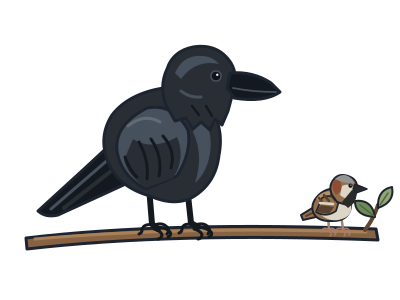
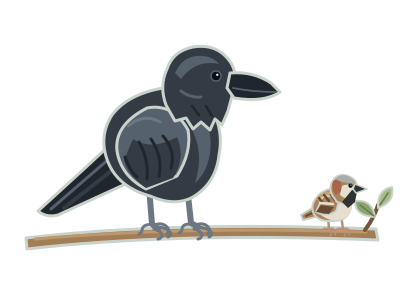
More than half of all bird species are perching birds: about six in every ten. A common raven and a house sparrow both belong here. Their different sizes can hide that family connection. This is a much broader group than just little birds on branches.
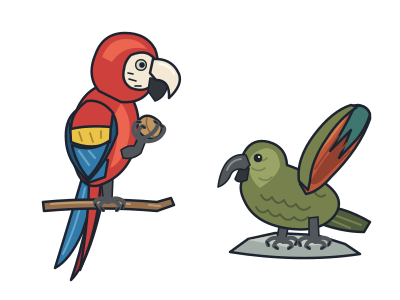
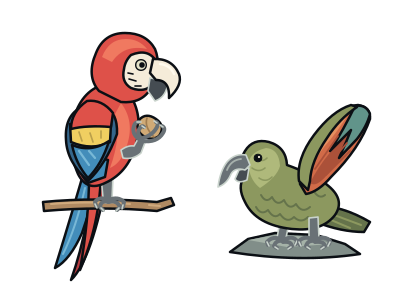
Their closest living relatives are parrots. These two branches are sister groups: each is the other’s nearest living branch on the bird family tree. Falcons sit just outside this pair. So a falcon’s place in the family is closer to parrots and perching birds than to hawks and eagles.
Songbirds are one branch within perching birds, not another name for the whole group. Members also lead very different lives. House sparrows favour buildings, gardens and farmland, while common ravens use places ranging from deserts to forests and cold northern tundra.
A croaking songbird
The common raven is a songbird, even though its familiar call is a deep, gurgling croak.
Small wingspan
A house sparrow measures about 19–25 cm from one outstretched wingtip to the other.
A tail clue
A common raven’s tail looks wedge-shaped in flight.
Inside perching birds
- New Zealand wrensTiny New Zealand birds that form the oldest branch of all perching birds.
- SuboscinesPerching birds whose songs are mostly inborn rather than learned; most live in tropical America.
- SongbirdsAbout 5,000 kinds of perching birds that learn their songs from adults, as children learn to speak.