A species
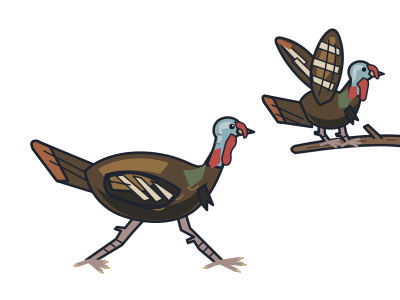
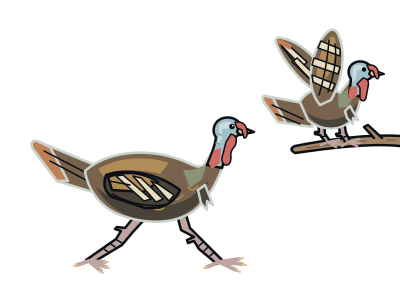
Wild turkey
Meleagris gallopavo
A fast runner with a treetop bedtime.
You and the wild turkey meet in the Amniotes branch, shown at about 320 million years ago (on 4 December, in a calendar from life's shared ancestor to today).
A wild turkey can run fast on the ground, then fly into a tree to sleep. At sundown, it flies onto lower branches before moving upwards to its sleeping place. Wild turkeys usually sleep in groups, so a tree can become a shared bedroom rather than a perch for one bird.
This big bird belongs to the same family as chickens and Indian peafowl, alongside pheasants and grouse. They are related branches of the family tree, not ancestors of one another. That family connection may be less surprising once you picture a turkey walking beside a chicken.
Wild turkeys live in woodland mixed with clearings, fields and grassy areas. Mature trees provide sleeping places, but females make their nests on the ground, in shallow hollows usually hidden by plants. Mothers raise their chicks without help from males. Several mothers and their young may join into a larger flock.
Stones help with dinner
Wild turkeys swallow grit that helps break down food inside their bodies.
A beard is not proof
Most males have a dark breast tuft called a beard. Some females have one too.
Walking on day one
Chicks can walk and feed themselves within a day of hatching, but still need their mother for warmth and protection.
Next to it on the tree
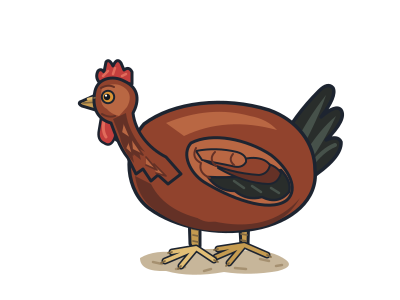
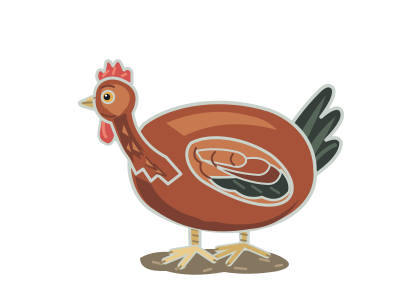
- ChickenDescended from the red junglefowl; the most numerous bird on Earth.
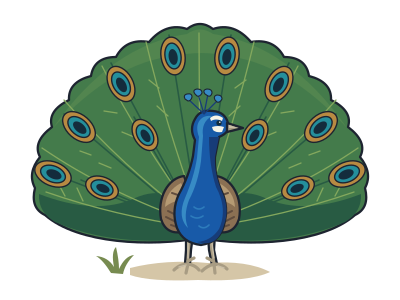
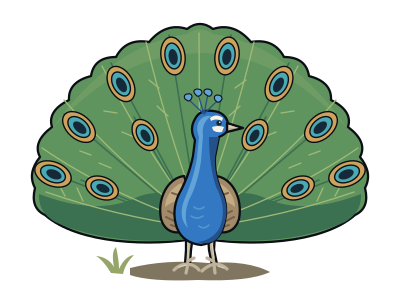
- Indian peafowlThe peacock's tail of eyespots is one of the most famous products of mate choice.
- Common pheasantA copper-and-green Asian bird released in its millions for hunting across Europe and North America.
- Japanese quailA palm-sized farm bird whose speckled eggs hatch after just 17 days; it has even flown in space.
- Helmeted guineafowlA polka-dotted African bird with a bony helmet that patrols farms in noisy flocks.
- MalleefowlBuries its eggs in a huge compost mound and checks the heat with its beak to keep them just warm enough.
- Willow ptarmiganTurns from brown to snow-white each winter and grows feathered 'snowshoes' on its feet.