A species
Chicken
Gallus gallus
From wild junglefowl to the world’s most numerous bird.
You and the chicken meet in the Amniotes branch, shown at about 320 million years ago (on 4 December, in a calendar from life's shared ancestor to today).
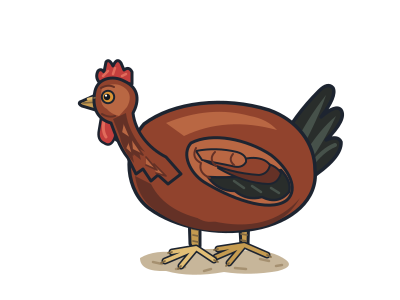
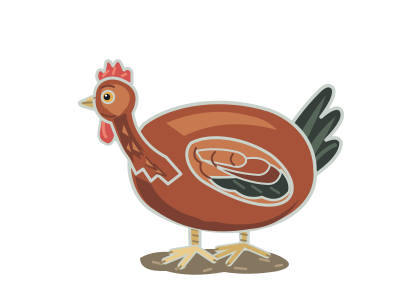
Domestic chickens descend from red junglefowl, wild birds native to southern Asia. Today, there are more chickens on Earth than birds of any other species. Their family includes wild turkeys and Indian peafowl: those showy birds beside them on the tree are relatives, not ancestors.
The familiar farmyard chicken has a rounded body, a small head, a short beak and short wings. Different breeds can look very different, with white, black, reddish-brown or patterned feathers. These varieties are not separate species. Males, called roosters, usually grow larger than females, called hens, and have more eye-catching feathers.
Chickens are social birds, active during daylight. A rooster’s crow helps announce its patch to other males. Short wings do not mean every chicken is flightless: some breeds can reach trees. Given the chance, Leghorns may even settle in a tree to sleep.
Eggs without a rooster
Hens can lay eggs without a rooster. Only fertilised eggs can develop into chicks.
A dusty clean
Chickens roll and shuffle in loose soil to clean their feathers.
No teeth needed
Chickens have no teeth. Swallowed grit helps break down food inside their bodies.
Next to it on the tree
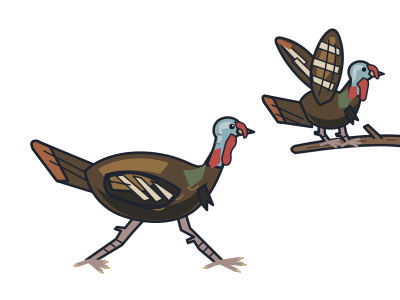
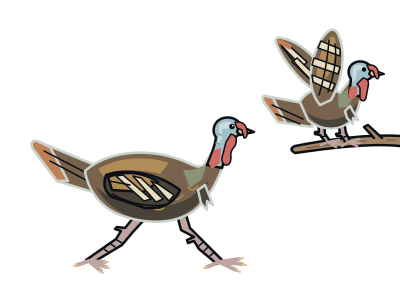
- Wild turkeyCan run at 40 km/h and fly into trees to roost at night.
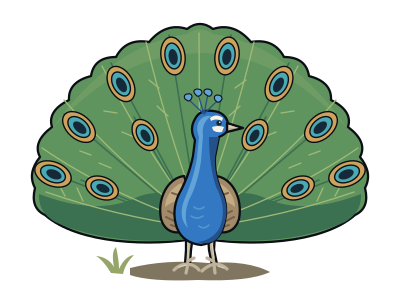
- Indian peafowlThe peacock's tail of eyespots is one of the most famous products of mate choice.
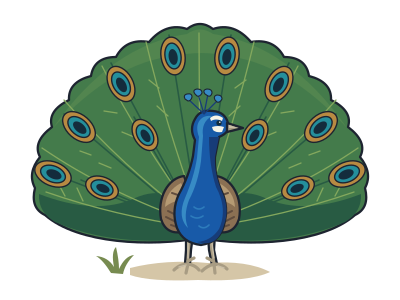
- Common pheasantA copper-and-green Asian bird released in its millions for hunting across Europe and North America.
- Japanese quailA palm-sized farm bird whose speckled eggs hatch after just 17 days; it has even flown in space.
- Helmeted guineafowlA polka-dotted African bird with a bony helmet that patrols farms in noisy flocks.
- MalleefowlBuries its eggs in a huge compost mound and checks the heat with its beak to keep them just warm enough.
- Willow ptarmiganTurns from brown to snow-white each winter and grows feathered 'snowshoes' on its feet.