A species
Indian peafowl
Pavo cristatus
A chicken relative with a fan shaped by mate choice
You and the indian peafowl meet in the Amniotes branch, shown at about 320 million years ago (on 4 December, in a calendar from life's shared ancestor to today).
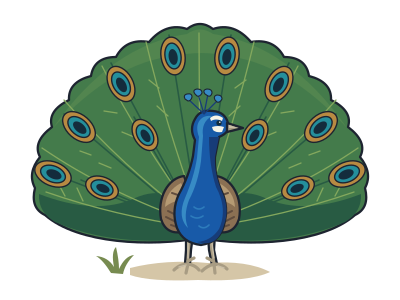
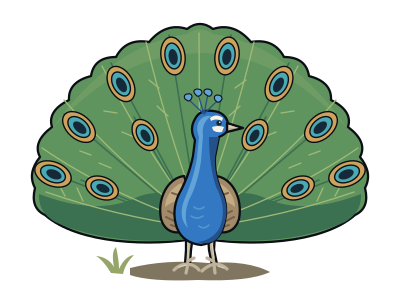
The peacock’s fan of eyespots is one of the most famous examples of female mate choice shaping evolution. This showy bird belongs to the pheasant family, alongside wild turkeys and domestic chickens. A male is called a peacock, a female a peahen and a youngster a peachick. Together, they are peafowl.
The huge fan is not actually the tail. It is a train of extra-long feathers that normally cover the tail’s base. The shorter, stiffer true tail supports the train when the male raises it. Males may display in small neighbouring territories, giving females a chance to inspect several possible mates.
Away from the display, these birds search the ground for fruit, grain, green plants, insects and small animals. They live in woodland, scrub, forest edges and farmland on the Indian subcontinent. A peahen usually nests in a shallow hollow hidden among plants. She keeps the eggs warm and raises the chicks without the male’s help.
A fresh train each year
The peacock sheds and regrows his long train feathers every year.
Still able to fly
Indian peafowl usually walk or run, but make short flights to escape danger or reach sleeping branches.
White, but the same species
White Indian peafowl are a genetic colour variation, not a separate species.
Next to it on the tree
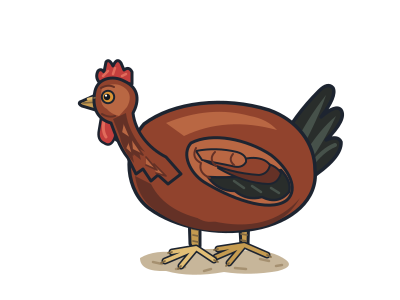
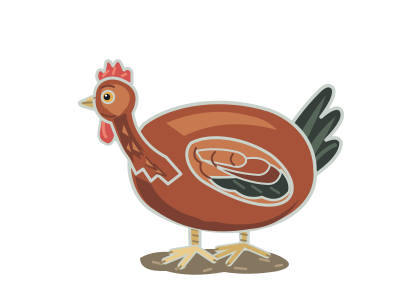
- ChickenDescended from the red junglefowl; the most numerous bird on Earth.
- Wild turkeyCan run at 40 km/h and fly into trees to roost at night.
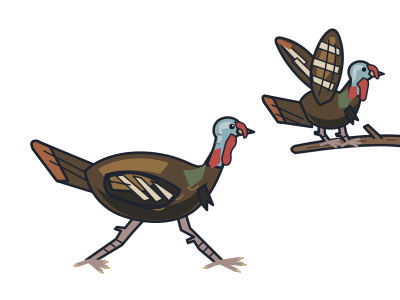
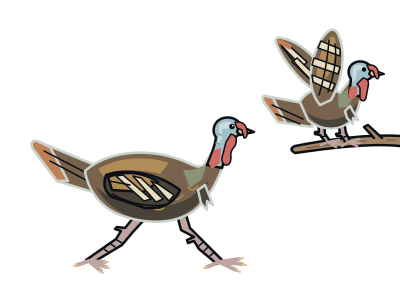
- Common pheasantA copper-and-green Asian bird released in its millions for hunting across Europe and North America.
- Japanese quailA palm-sized farm bird whose speckled eggs hatch after just 17 days; it has even flown in space.
- Helmeted guineafowlA polka-dotted African bird with a bony helmet that patrols farms in noisy flocks.
- MalleefowlBuries its eggs in a huge compost mound and checks the heat with its beak to keep them just warm enough.
- Willow ptarmiganTurns from brown to snow-white each winter and grows feathered 'snowshoes' on its feet.