A species
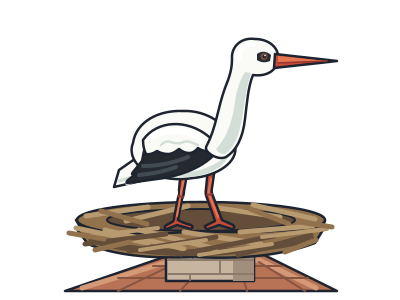
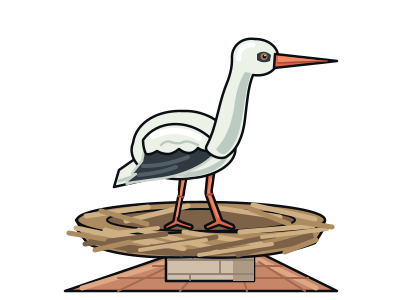
White stork
Ciconia ciconia
A rooftop neighbour whose winter journeys puzzled people.
You and the white stork meet in the Amniotes branch, shown at about 320 million years ago (on 4 December, in a calendar from life's shared ancestor to today).
White storks build large nests on rooftops and chimneys, living close to people. But their seasonal disappearance once puzzled observers. There is another surprise in their family tree: these rooftop neighbours belong to a broad waterbird branch that also includes penguins and albatrosses, despite their very different ways of life.
Before migration was properly understood, some people thought missing birds slept through winter. Aristotle wrongly included storks among these winter sleepers. In fact, many European white storks spend the northern winter in Africa, then return to Europe in spring to breed. For these travelling birds, winter means a journey, not a long sleep.
A nest can remain a building project across breeding seasons, as the birds repair and enlarge it. Some grow to about 2 metres across and weigh more than 500 kilograms. Roofs are not their only building sites: white storks also nest on pylons and tall trees.
A clattering hello
At the nest, storks greet one another by rapidly striking the two halves of their bill together.
Room for smaller neighbours
Sparrows and starlings sometimes nest within the shelter of a stork's huge nest.
Stretched out in flight
A flying white stork holds its neck forwards and its legs backwards.
Next to it on the tree
- KumimanuA giant penguin about as tall as a person that lived just after the dinosaurs.
- Common loonA deep-diving lake bird famous for its eerie, wailing call echoing across northern lakes.
- PenguinsFlightless seabirds whose wings became flippers; almost all of the 18 or so kinds live in the south.
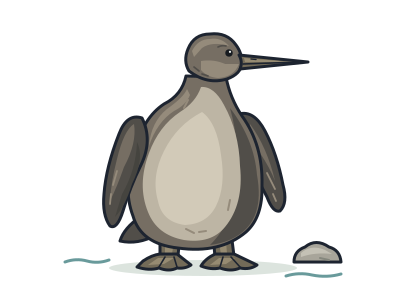
- WaimanuOne of the oldest penguins: an upright diving bird that still had wing bones like a flier.
- Albatrosses and petrelsOcean wanderers with tube-shaped nostrils that let them smell food across the sea.
- Pelicans, herons and ibisesBig-billed wading and fishing birds, from the shoebill to spoonbills.
- Gannets, cormorants and frigatebirdsFish-hunting seabirds that dive, swim or snatch their food.