A species
Tulip tree
Liriodendron tulipifera
A forest giant with tulip-shaped flowers and leaves like cat faces
You and the tulip tree meet in the Eukaryotes branch, shown at about 1.8 billion years ago (on 28 July, in a calendar from life's shared ancestor to today).
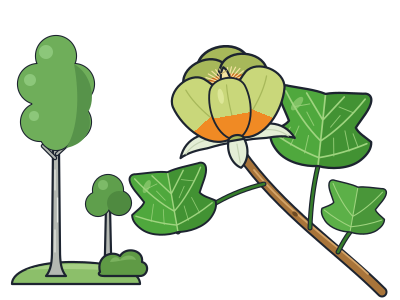
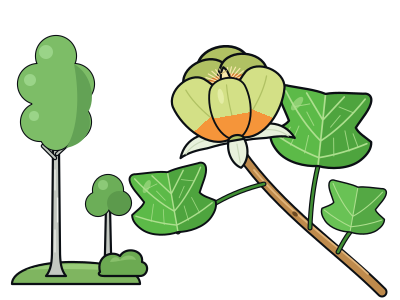
Picture a forest giant with flowers shaped like tulips and leaves shaped like cat faces. The tulip tree grows in eastern North America, and in old forests it can stand more than 50 metres tall. Each leaf has four points and a flat top, as if someone snipped it off with scissors. The two upper points look like a cat's ears. In autumn the leaves turn a clear, bright yellow.
In late spring, cup-shaped flowers about 5 to 7.5 cm across open among the leaves, often high up in the tree. Their six yellowish-green petals have bright orange patches at the base. Bees, beetles, flies and even hummingbirds visit for the nectar and pollen.
Despite its name, it is not a close relative of tulips, and it is not a poplar either. It belongs to the magnolia family, so the southern magnolia is a close relative. Nutmeg is on the same larger branch, just outside the magnolia family. Avocado, cinnamon and bay laurel are slightly more distant cousins. Black pepper is further away again, but all of them are magnoliids.
Fossils show that tulip trees once grew right across the cool north, including Europe. As the climate cooled, they died out in Europe, partly because mountain ranges blocked their way south. Only two kinds survive today: this one and the Chinese tulip tree.
Winged seeds
Its seeds grow in a brown, cone-like cluster. Each seed has a papery wing and is about 4 cm long. The wind can carry them several times as far as the tree is tall.
A mix of traits
Its sepals and petals come in threes, like a lily's. But it has two seed leaves and net-veined leaves, like most other flowering plants.
Music from wood
Its timber is sold overseas as 'American tulipwood'. It is used to build organs because it can be cut very smoothly and precisely.
Next to it on the tree
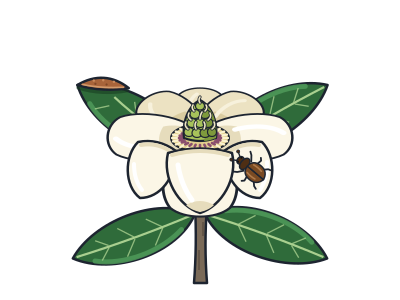
- Southern magnoliaIts huge flowers evolved for beetles, since bees were still rare when the lineage began.
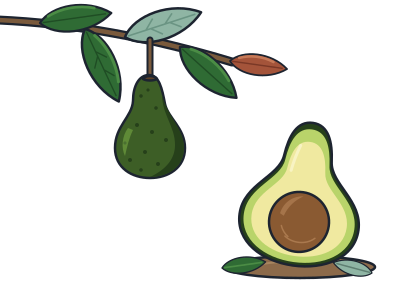
- AvocadoA giant seed that may have been spread by extinct giant ground sloths.
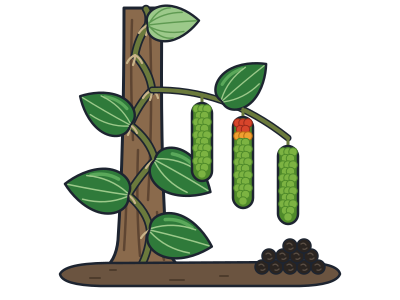
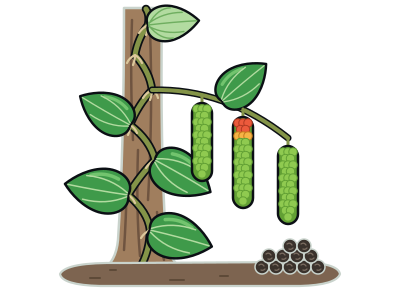
- Black pepperThe world's most traded spice: the dried berries of a tropical climbing vine.
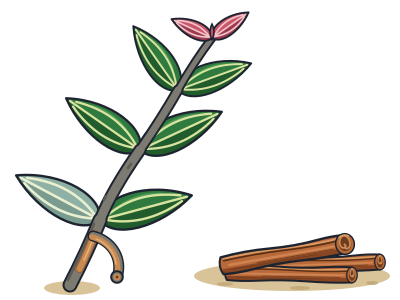
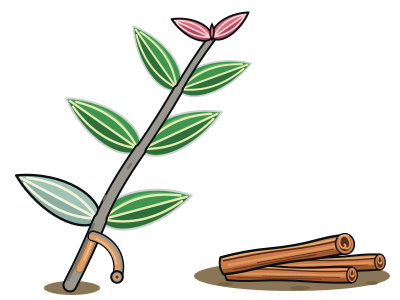
- CinnamonCinnamon sticks are curled strips of inner bark from a laurel-family tree.
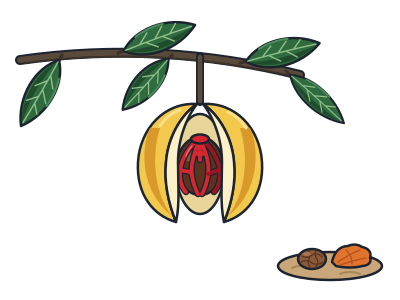
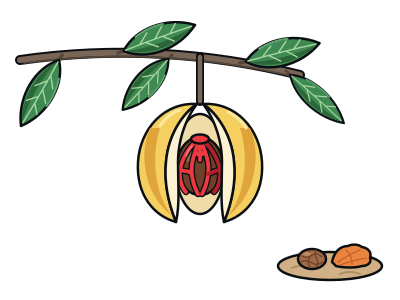
- NutmegOne fruit gives two spices, nutmeg and mace, once worth more than gold.
- Bay laurelIts leaves flavour stews, and ancient Greeks wove them into winners' crowns.