A species
Avocado
Persea americana
A fruit with a seed so big that it may have suited giant Ice Age animals.
You and the avocado meet in the Eukaryotes branch, shown at about 1.8 billion years ago (on 28 July, in a calendar from life's shared ancestor to today).
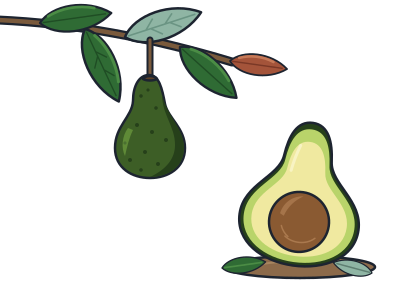
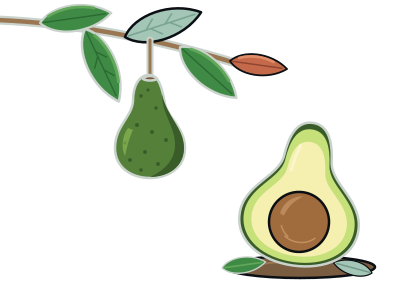
The avocado has a puzzle inside it. Its seed is about the size of a golf ball or a small hen's egg. Some scientists say that is too big for most of the wild fruit-eaters still living in its home forests to swallow whole. They think the seed made more sense in the Ice Age, when giant animals roamed the Americas.
The idea goes like this. Huge beasts such as giant ground sloths, mammoths, Ice Age horses and elephant relatives called gomphotheres gulped avocados down whole. They walked a long way and then dropped the seed in their dung, far from the parent tree. Without them, the idea says, many seeds would just drop beneath the tree. Not everyone agrees, because some living animals still eat avocados and can spread large seeds.
The avocado also belongs to a famous spice family. It is one of about 2,850 species in the laurel family, which includes cinnamon, the bay laurel whose leaves are used in cooking, and the camphor tree. That family sits on a big branch of flowering plants that also holds magnolias and black pepper.
Avocados are native to warm forests from Mexico to Peru. The tree grows about 9 to 20 metres tall, as tall as a building with three to six storeys.
One famous tree
The Hass avocado grew from a single mother tree in California and was patented in 1935. Today Hass makes up about 80% of the avocados grown around the world.
Flowers that switch
Each tiny avocado flower opens twice: first as female, then as male. Some kinds of tree do this at opposite times of day, so planting both kinds helps pollination.
Not for every pet
Avocado leaves, and some other parts of the plant, contain a natural poison called persin. It can upset the stomach, and it can even kill horses and birds. That is why avocado should never be fed to pet birds.
Next to it on the tree
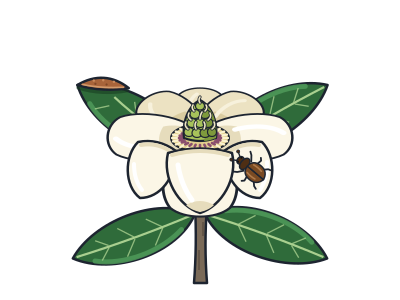
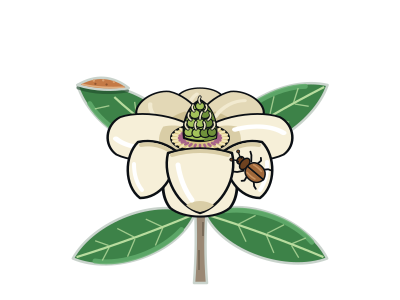
- Southern magnoliaIts huge flowers evolved for beetles, since bees were still rare when the lineage began.
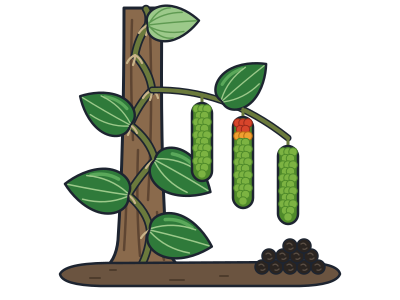
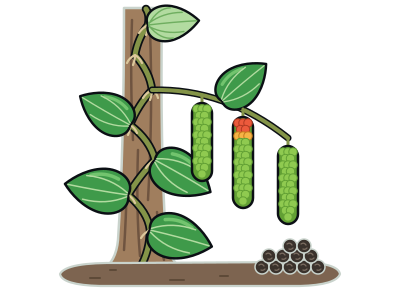
- Black pepperThe world's most traded spice: the dried berries of a tropical climbing vine.
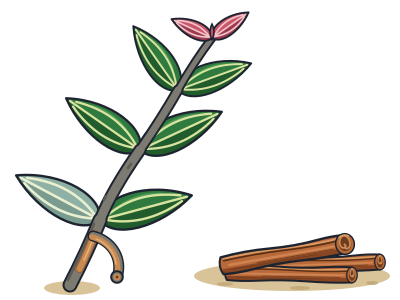
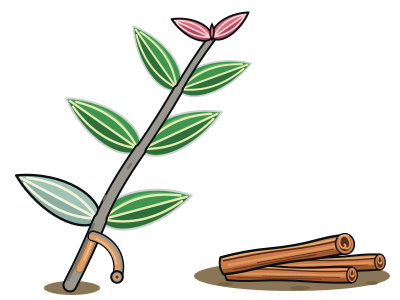
- CinnamonCinnamon sticks are curled strips of inner bark from a laurel-family tree.
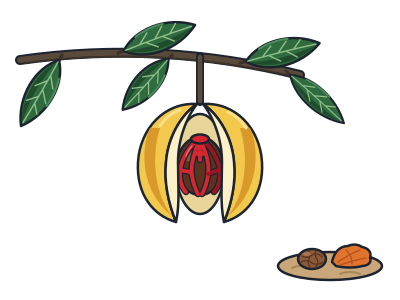
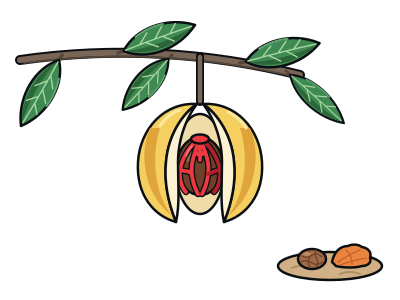
- NutmegOne fruit gives two spices, nutmeg and mace, once worth more than gold.
- Bay laurelIts leaves flavour stews, and ancient Greeks wove them into winners' crowns.
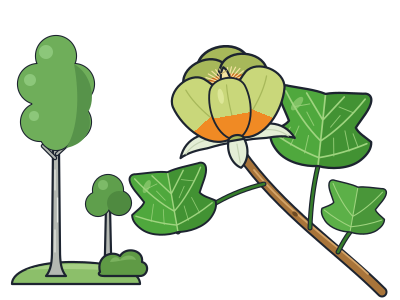
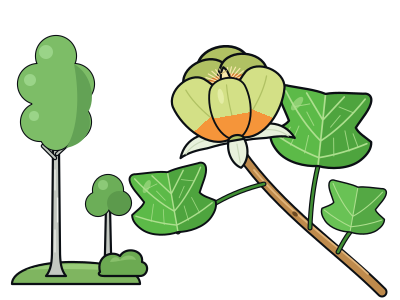
- Tulip treeA tall forest tree with tulip-shaped flowers and leaves like cat faces.