A species
Southern magnolia
Magnolia grandiflora
A dinner-plate flower from a lineage that is thought to have flowered for beetles before bees were common
You and the southern magnolia meet in the Eukaryotes branch, shown at about 1.8 billion years ago (on 28 July, in a calendar from life's shared ancestor to today).
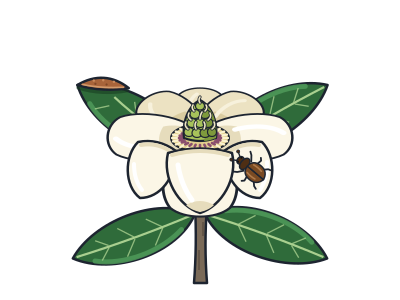
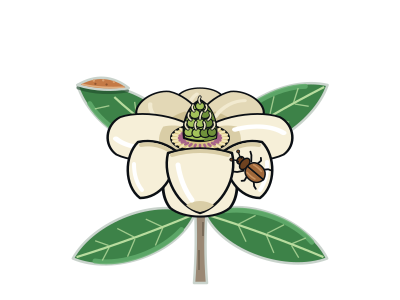
This tree's flowers can be as wide as a dinner plate. Scientists think flowers like these first took shape for beetles, not bees. The magnolia family is very old. Fossils that clearly belong to it are about 95 million years old, from the age of the dinosaurs. The lineage goes back to a time when bees were still rare or new. Even the female parts in the middle of the flower are very tough, probably so they could survive beetles chewing on them.
Some of its relatives might surprise you: avocado, cinnamon and black pepper. They all belong to the same big branch of flowering plants, but none of them is a magnolia. Avocado and cinnamon belong to the laurel group, which is the sister group of the magnolia group.
Today, bees may do much of the work. One study in Louisiana found that honeybees and a native bee visited the flowers often. Beetles came only now and then, though they did carry pollen. Each flower lasts only two to four days. On the first day it forms a cup and is ready only to receive pollen. On the second day it opens into a saucer and releases its own pollen. This helps pollen move between different trees.
The tree itself can grow about 27 metres tall. Its stiff leaves are glossy dark green on top and covered in rusty fuzz underneath.
A state symbol twice over
The southern magnolia is the state tree of Mississippi and the state flower of Louisiana.
Named after a botanist
The name magnolia honours a French botanist called Pierre Magnol. Another botanist, Charles Plumier, first used it in 1703, and it was later adopted for the whole magnolia group.
Lemon-scented giants
The waxy flowers smell like lemon. Now and then one reaches about 45 cm across, nearly twice as wide as a basketball.
Next to it on the tree
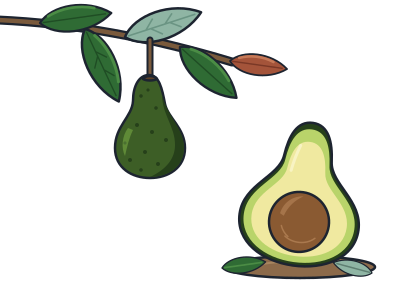
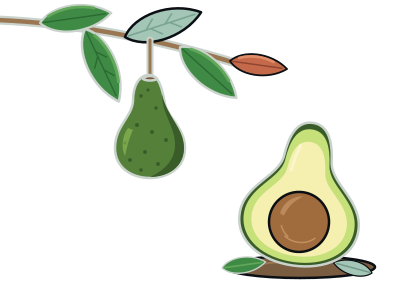
- AvocadoA giant seed that may have been spread by extinct giant ground sloths.
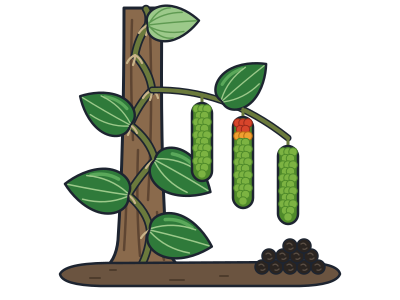
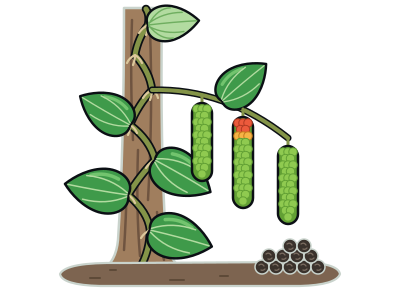
- Black pepperThe world's most traded spice: the dried berries of a tropical climbing vine.
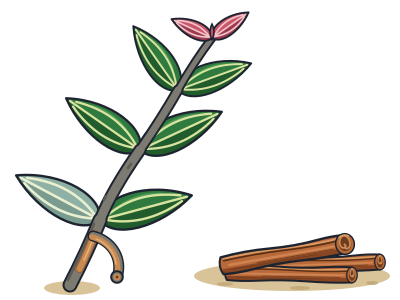
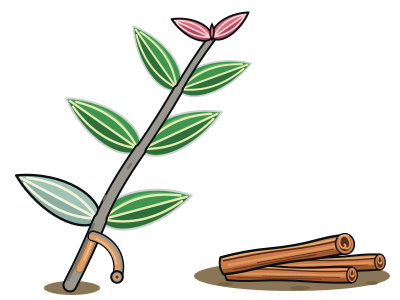
- CinnamonCinnamon sticks are curled strips of inner bark from a laurel-family tree.
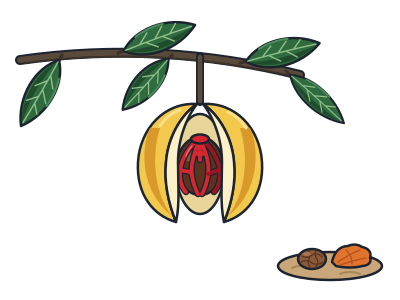
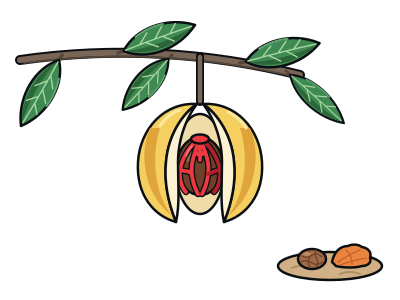
- NutmegOne fruit gives two spices, nutmeg and mace, once worth more than gold.
- Bay laurelIts leaves flavour stews, and ancient Greeks wove them into winners' crowns.
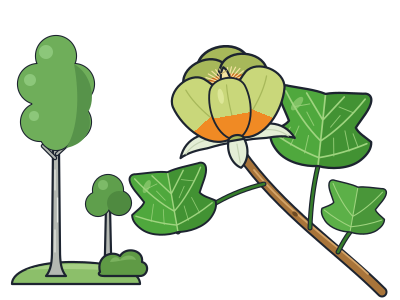
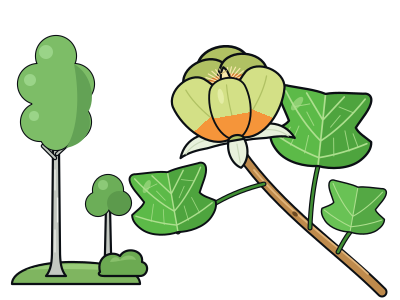
- Tulip treeA tall forest tree with tulip-shaped flowers and leaves like cat faces.