A species
Bay laurel
Laurus nobilis
The leaf in your stew once crowned champions in ancient Greece.
You and the bay laurel meet in the Eukaryotes branch, shown at about 1.8 billion years ago (on 28 July, in a calendar from life's shared ancestor to today).
Drop a bay leaf into a stew and you are cooking with the same leaf the ancient Greeks wove into winners' crowns. At the Pythian Games, held every four years at Delphi in honour of the god Apollo, champions got a wreath of bay laurel. These games had music contests as well as sports, such as singing hymns to Apollo while playing a lyre-like instrument.
The surprise is bay's family. It gives its name to the laurel family, which also includes avocado and cinnamon. Plants in this family have tiny oil-filled cells in their leaves, wood and fruit. That is why so many of them smell and taste so strong. Most of the family lives in warm and tropical places. Bay is a leftover from laurel forests that once covered much of the Mediterranean, back when the climate there was wetter.
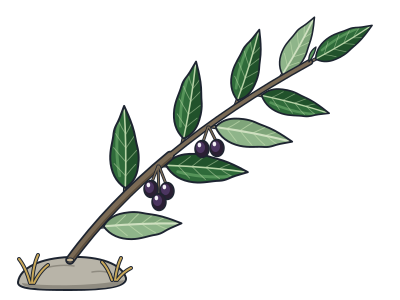
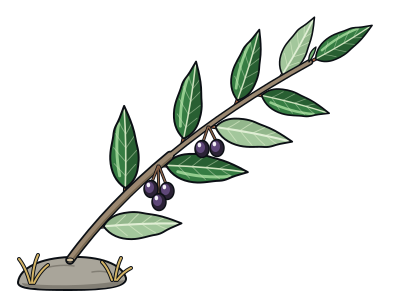
Bay is an evergreen shrub or small tree, often shaped like a thick cone. Its stiff, glossy, dark green leaves smell strongly when crushed. They are not poisonous. Cooks take them out of food because they stay tough and can have sharp edges. Be careful, though: cherry laurel looks a bit like bay but is a very different plant and may be poisonous.
Boy trees and girl trees
Male and female flowers grow on separate bay trees, so only female trees make the small, shiny black berries. Each berry holds a single seed.
Not the Olympics
Winners at the ancient Olympic Games were crowned with wild-olive leaves, not laurel. There were no gold, silver or bronze medals.
Poets' leaves
Laurel wreaths were also given to poets. That is where the title 'poet laureate' comes from.
Next to it on the tree
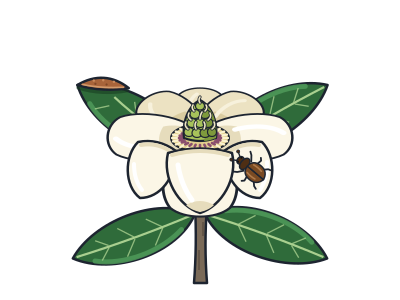
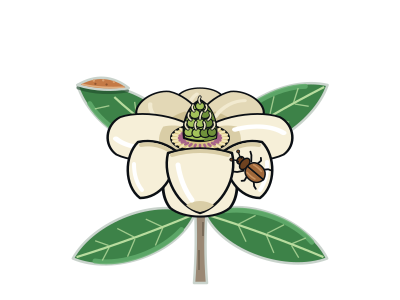
- Southern magnoliaIts huge flowers evolved for beetles, since bees were still rare when the lineage began.
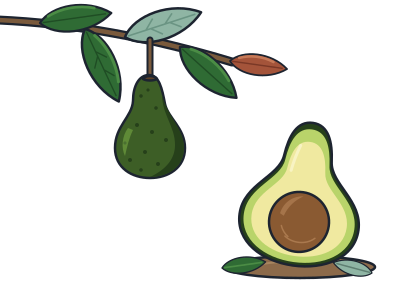
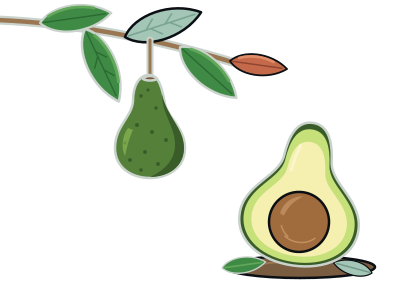
- AvocadoA giant seed that may have been spread by extinct giant ground sloths.
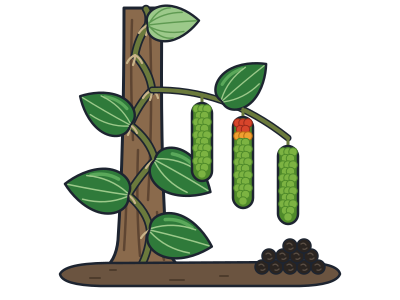
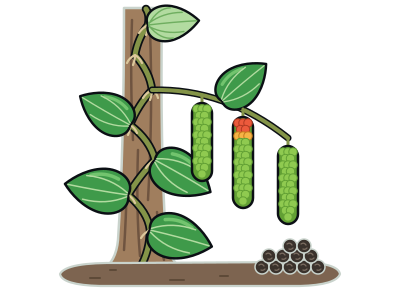
- Black pepperThe world's most traded spice: the dried berries of a tropical climbing vine.
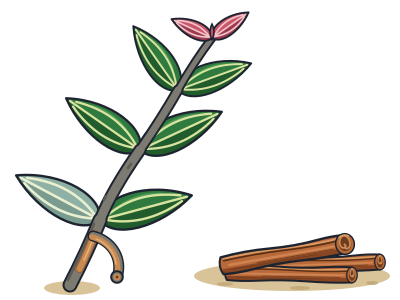
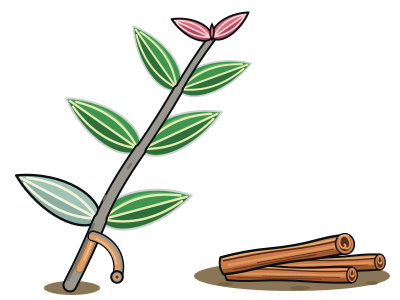
- CinnamonCinnamon sticks are curled strips of inner bark from a laurel-family tree.
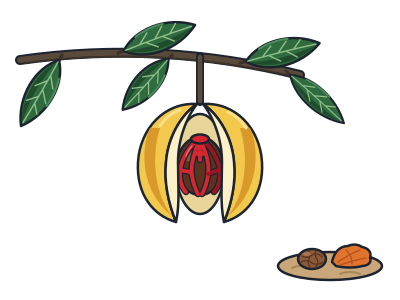
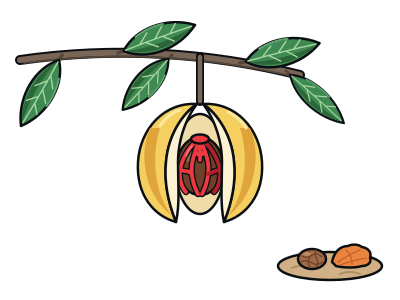
- NutmegOne fruit gives two spices, nutmeg and mace, once worth more than gold.
- Tulip treeA tall forest tree with tulip-shaped flowers and leaves like cat faces.