A species
Nutmeg
Myristica fragrans
One fruit, two spices, and at times worth more than gold
You and the nutmeg meet in the Eukaryotes branch, shown at about 1.8 billion years ago (on 28 July, in a calendar from life's shared ancestor to today).
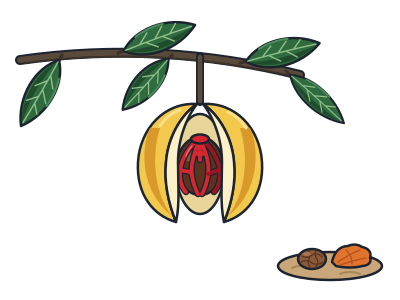
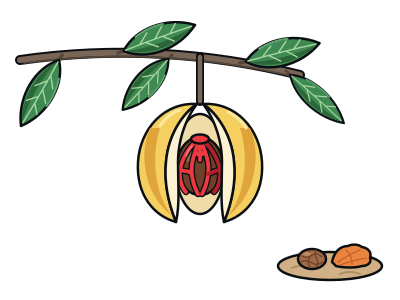
Open one nutmeg fruit and you find two spices. The shiny dark brown seed inside is nutmeg. Wrapped around it is a bright red, lace-like net that becomes mace. In Europe, nutmeg was at times said to be worth more than its weight in gold.
The fruit looks a bit like a small yellow pear, about 5 to 9 centimetres long. When it is ripe, it splits open on the tree to show the scarlet lace and the seed. To make mace, the red net is peeled off, pressed flat and dried for about 10 to 14 days.
Until the mid-1800s, the tiny Banda Islands in eastern Indonesia were the world's only source of nutmeg and mace. In 1667 a peace treaty let each side keep what it held. The Dutch kept the small nutmeg island of Run, and England kept New Amsterdam. Today that place is Manhattan, in New York.
Despite its name, nutmeg is not a true nut. It is the seed of a fleshy fruit. Its family belongs to the same group as the magnolias, an old branch of flowering plants. Most trees in the nutmeg family wrap their seeds in a coloured covering, usually red.
On a nation's flag
Grenada's flag, adopted in 1974, shows a nutmeg fruit split open, because the spice matters so much to the island.
Boy trees and girl trees
Most nutmeg trees are either male or female, and male trees never grow fruit. Their tiny creamy-yellow flowers have no petals at all.
An ancient taste
Traces on old bits of pottery from the Banda island of Pulau Ai show that people were using nutmeg there about 3,500 years ago. That is older than ancient Rome.
Next to it on the tree
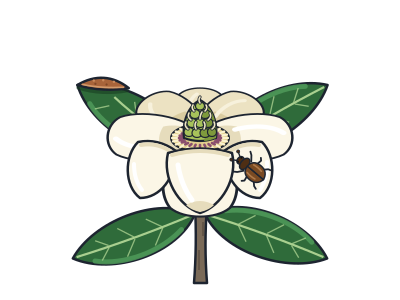
- Southern magnoliaIts huge flowers evolved for beetles, since bees were still rare when the lineage began.
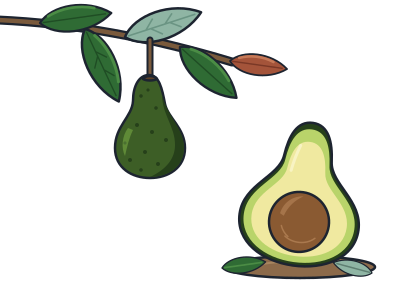
- AvocadoA giant seed that may have been spread by extinct giant ground sloths.
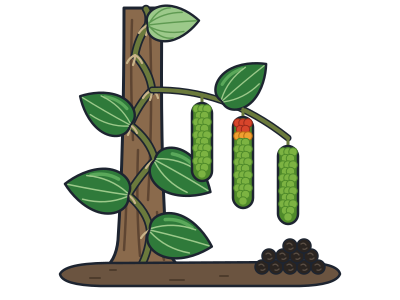
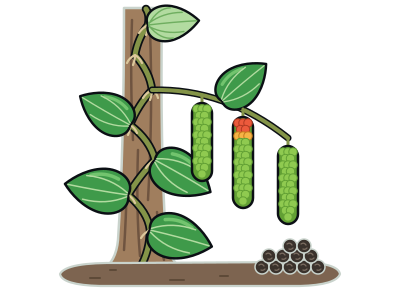
- Black pepperThe world's most traded spice: the dried berries of a tropical climbing vine.
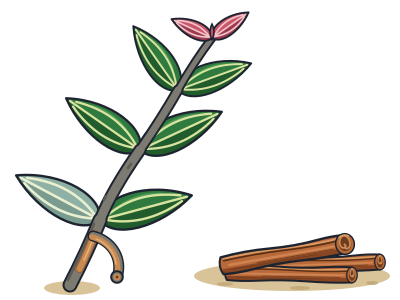
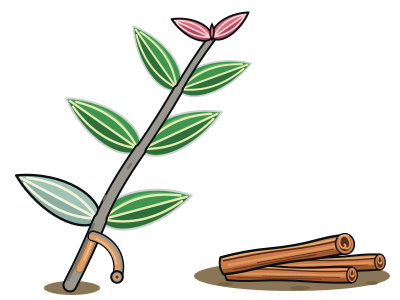
- CinnamonCinnamon sticks are curled strips of inner bark from a laurel-family tree.
- Bay laurelIts leaves flavour stews, and ancient Greeks wove them into winners' crowns.
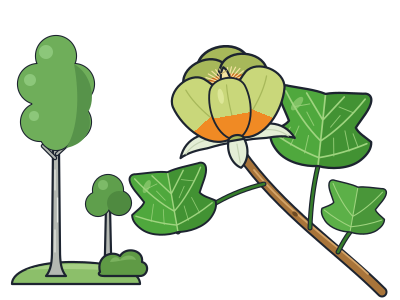
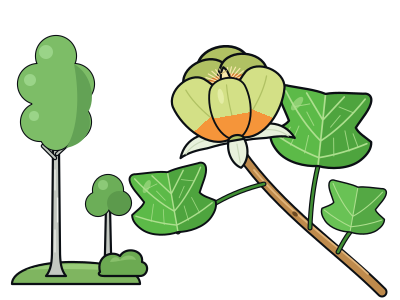
- Tulip treeA tall forest tree with tulip-shaped flowers and leaves like cat faces.