A group of living things
Plasmodial slime moulds
Myxogastria
One giant, brainless cell that creeps over logs, then bursts into spore-filled tufts.
This branch is shown at about 700 million years ago; its age is a rough estimate.
You and plasmodial slime moulds meet in the Amoebas, fungi and animals branch, shown at about 1.5 billion years ago (on 23 August, in a calendar from life's shared ancestor to today).
Picture one single cell that can grow big enough to cover a small table. Plasmodial slime moulds spend part of their lives as giant cells that creep over rotting logs, then turn into colourful tufts packed with spores. They look a bit like fungi, and fungus experts have long studied them. But they are not fungi at all. They belong with the amoebas, a group that is the sister group to the branch holding both animals and fungi.
Each one starts as a tiny spore. It hatches into a microscopic cell that eats bacteria. Usually, two matching cells join, and then the nucleus keeps dividing without the cell splitting. The result is a plasmodium: one slimy cell with up to millions of nuclei and no walls inside. It can spread up to about a square metre. Slime moulds don't rot wood themselves. They eat the bacteria and fungi that do.
The many-headed slime mould is an egg-yolk-yellow sheet that breaks up into branching tubes, like veins. It has no brain, yet in one experiment it found the shortest path through a maze to link two pieces of food.
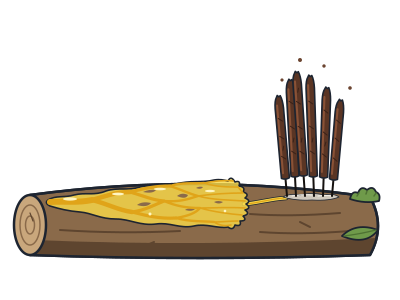
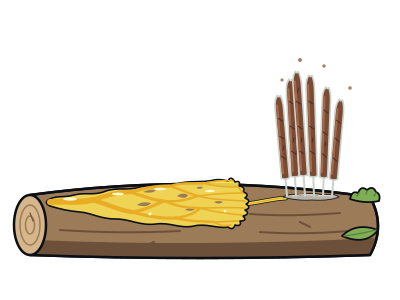
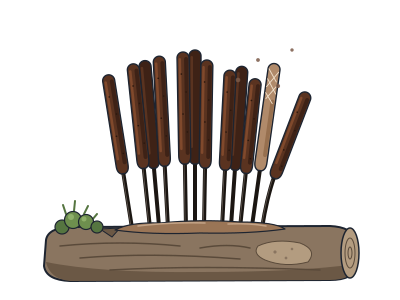
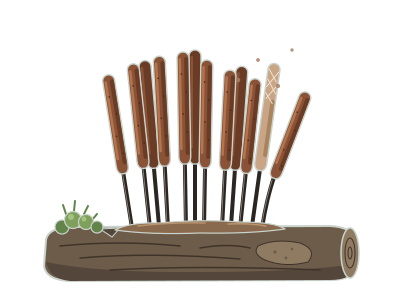
Later, the plasmodium turns into fruiting bodies. The chocolate tube slime makes clusters of dark brown tubes on thin, shiny black stalks, each about as tall as a fingernail is long. Wind and small animals such as beetles and mites carry the spores away.
Swimmers and crawlers
When it is wet, the young single cells can swim using whip-like tails. There are usually two, and one is often much shorter. When it is drier, they crawl along like amoebas instead.
A 20-kilogram giant
One of the largest slime mould fruiting bodies belongs to a species that, in extreme cases, can cover about a square metre and weigh up to about 20 kg. That is about as heavy as a big bag of dog food.
Mistaken for a fungus
The first slime mould to get a scientific description was wolf's milk, back in 1654. At the time, people thought it was a fast-growing fungus.
Inside plasmodial slime moulds
- Many-headed slime mouldA brainless yellow blob that can solve mazes and map efficient train networks.
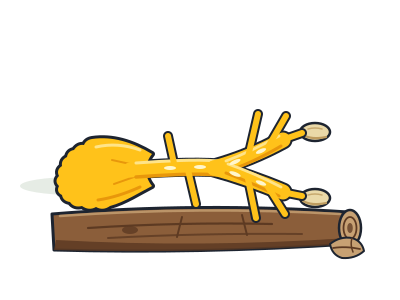
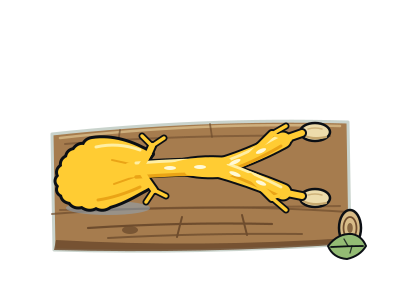
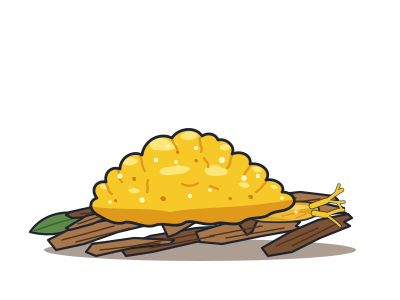
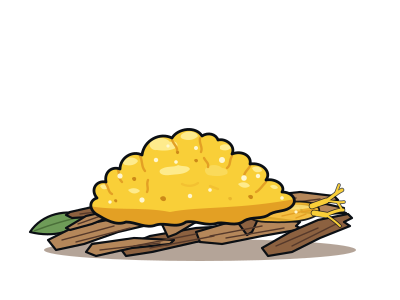
- Scrambled egg slime mouldA bright yellow blob that appears overnight on garden bark mulch, looking like spilled egg.
- Wolf's milkPink pea-sized balls on rotting wood that squirt pink paste when pressed.
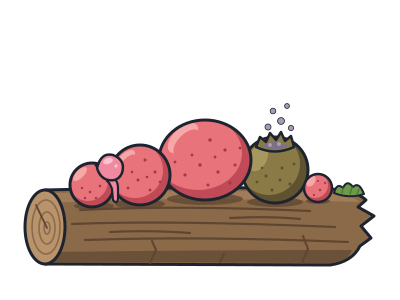
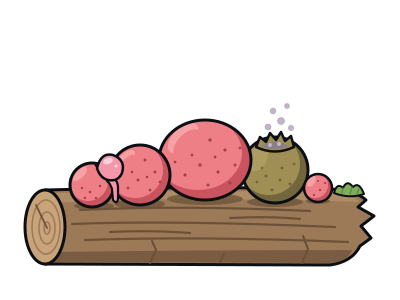
- Chocolate tube slimeClusters of brown, hair-thin stalks like tiny chocolate brushes on dead logs.
Next to it on the tree
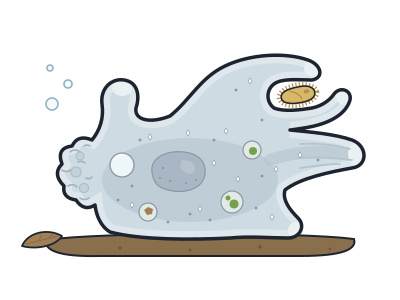
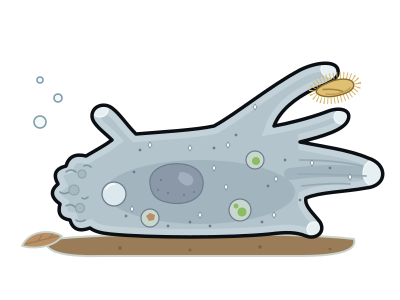
- Giant amoebaThe classic amoeba: it crawls by flowing into finger-like arms and engulfs its prey.
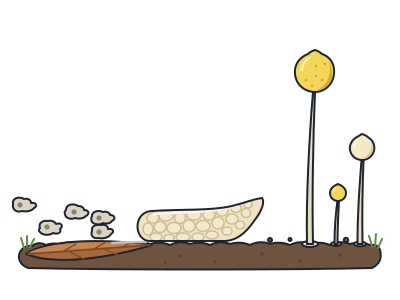
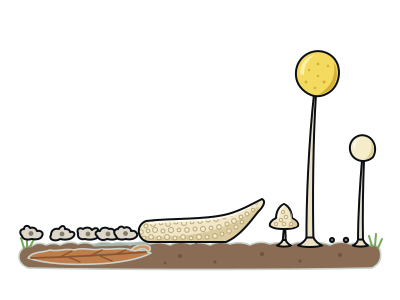
- Social amoebaWhen food runs out, thousands of single cells join into a slug, then a stalk that some die to build.
- Ancient vase-shaped amoebasTiny fossil vases about 750 million years old, probably homes built by shelled amoebas.


- AcanthamoebaA spiky soil amoeba in which scientists discovered giant viruses bigger than some bacteria.
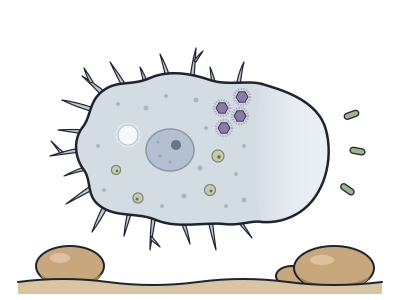
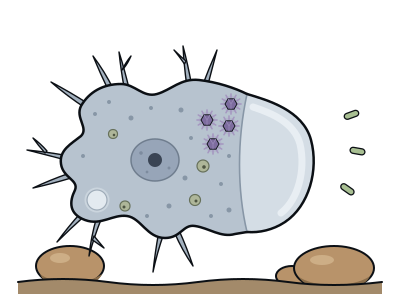
- Dysentery amoebaA gut amoeba spread by dirty water, and a major cause of dysentery worldwide.


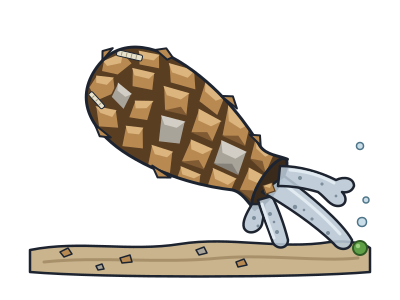
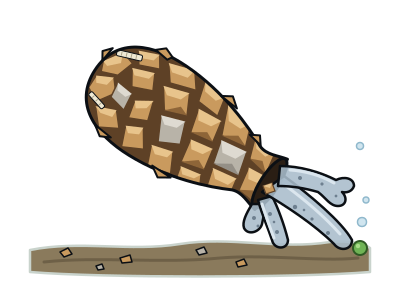
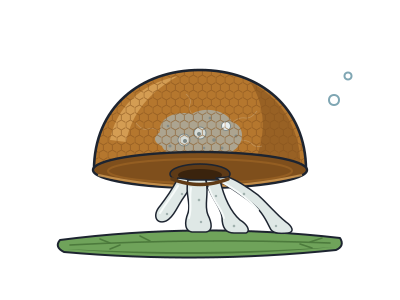
- Shelled pond amoebaAn amoeba living inside a brown dome shell, with a hole underneath for its feet.
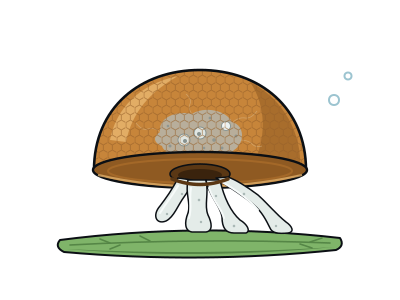
- Sand-shell amoebaBuilds a flask-shaped shell by gluing together grains of sand it swallows.