A species
Sand-shell amoeba
Difflugia oblonga
A single cell that builds itself a tiny house out of sand.
You and the sand-shell amoeba meet in the Amoebas, fungi and animals branch, shown at about 1.5 billion years ago (on 23 August, in a calendar from life's shared ancestor to today).
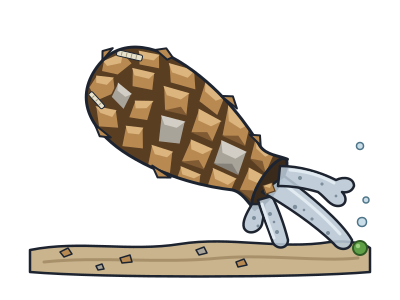
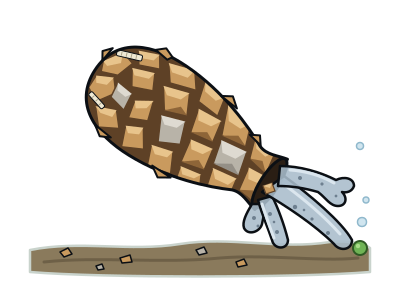
This tiny amoeba builds its own house. It is just one cell, yet it lives inside a hard, flask-shaped shell made of sand. It swallows grains of sand and stores them inside its body. Later it glues them together with a cement it makes itself. The finished shell looks rough and knobbly, like a pebble-dash wall shrunk down to the size of a speck.
It is related to the giant amoeba and the slime moulds. Many people think of amoebas as soft blobs with no shell, but this one carries its home wherever it goes. Its relative, the shelled pond amoeba, builds in a different way. It makes its whole shell from its own material and does not collect grains.
When the cell splits in two, its stored sand grains pass to the new daughter cell, which uses them to build a shell of its own. The amoeba also seems to choose where each grain goes. Heavier, blocky grains end up near the opening, which keeps the shell balanced, and flatter, lighter grains go towards the back.
To move and feed, it pushes blunt, finger-like 'false feet' out through the round opening. It eats mainly algae and fungi.
Clues to climates of the past
Shelled amoebae react to things like acidity and temperature, and their shells last long after they die. Scientists use shells in recent mud to check water quality, and old shells buried deep in lake mud to work out what past climates were like.
Some carry their own gardens
Some of its close relatives keep tiny green algae alive inside their cell. That lets them get food in two ways: by eating, and from sunlight.
Winter at the bottom
Some species in its group float in open water, then sink to the bottom and stay still through the winter.
Next to it on the tree
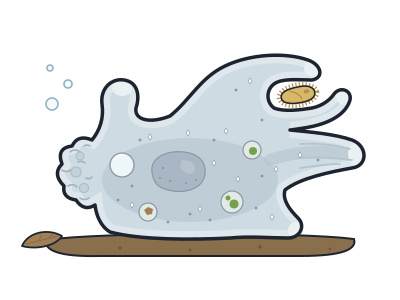
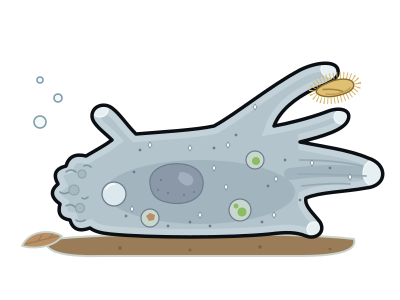
- Giant amoebaThe classic amoeba: it crawls by flowing into finger-like arms and engulfs its prey.
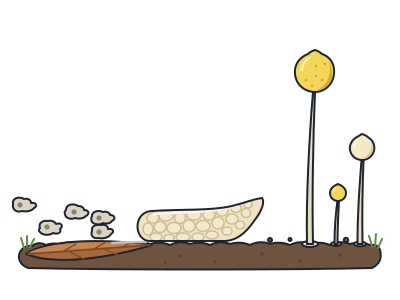
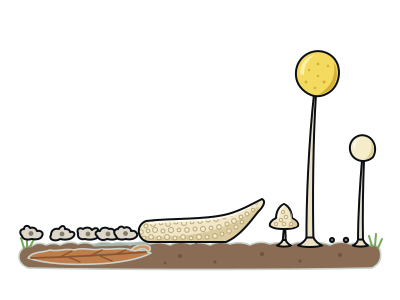
- Social amoebaWhen food runs out, thousands of single cells join into a slug, then a stalk that some die to build.
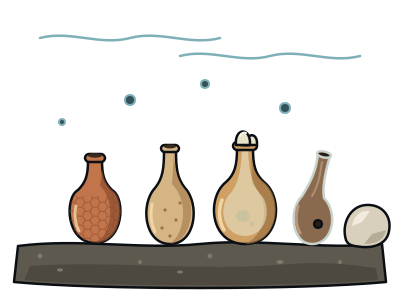
- Ancient vase-shaped amoebasTiny fossil vases about 750 million years old, probably homes built by shelled amoebas.

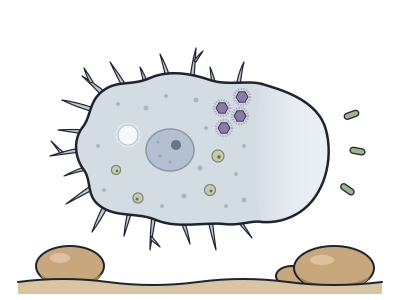
- AcanthamoebaA spiky soil amoeba in which scientists discovered giant viruses bigger than some bacteria.
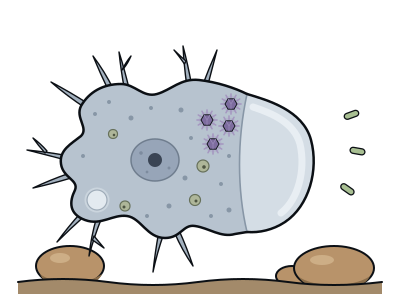
- Dysentery amoebaA gut amoeba spread by dirty water, and a major cause of dysentery worldwide.


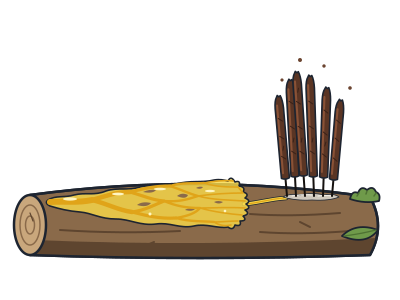
- Plasmodial slime mouldsGiant single cells that creep over logs, then turn into colourful spore-filled tufts.
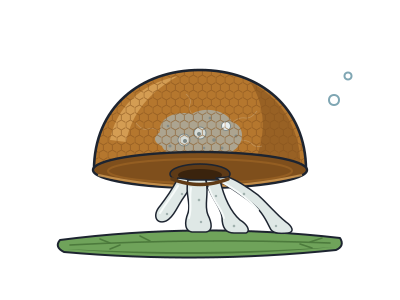
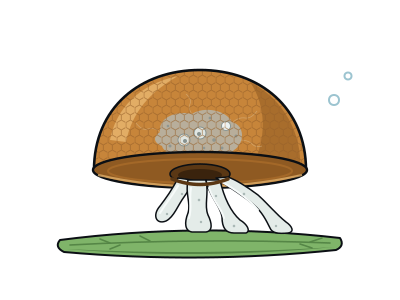
- Shelled pond amoebaAn amoeba living inside a brown dome shell, with a hole underneath for its feet.