A species
Giant amoeba
Amoeba proteus
The classic shape-shifter that crawls by flowing and swallows its dinner whole.
You and the giant amoeba meet in the Amoebas, fungi and animals branch, shown at about 1.5 billion years ago (on 23 August, in a calendar from life's shared ancestor to today).
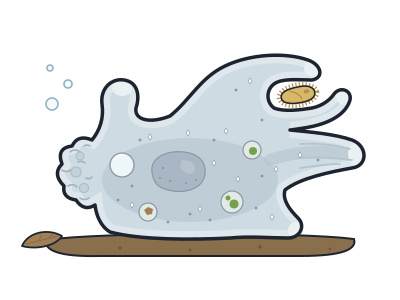
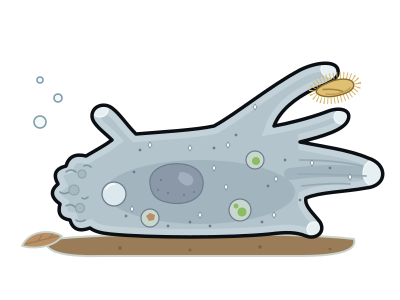
The giant amoeba is the amoeba most people picture: one see-through cell with no fixed shape. To move, it flows forward into rounded, finger-like arms called pseudopods. They bulge out and melt back as the jelly inside streams along. It has no mouth. Instead, it reaches two or more arms around its prey to make a cup, then closes the cup. This traps the meal inside a tiny bubble, where it is slowly broken down.
On the menu are other single-celled creatures, algae, tiny animals called rotifers and even smaller amoebas. On the tree of life it sits in the same big group as the slime moulds, such as the many-headed slime mould. Surprisingly, 'amoeba' is not one natural group at all. Cells that crawl like this have turned up in many separate branches of life.
A big one is about the size of a full stop, so you can only just see it as a speck without a microscope. It lives on mud and rotting plants at the bottom of clean ponds and wetlands. It makes more of itself simply by splitting in two.
A built-in water pump
Fresh water keeps leaking into the cell. A special bubble slowly fills with the extra water and then suddenly squirts it out, so the amoeba does not burst.
Named after a sea god
A German naturalist first described it in 1755 as the 'little Proteus', after a shape-changing Greek sea god. The word 'amoeba' comes from a Greek word meaning 'change'.
Germs that became partners
In one lab strain, bacteria that arrived as an infection turned into partners the amoebas came to depend on. The amoebas mostly stopped making an important enzyme themselves and relied on the bacteria instead.
Next to it on the tree
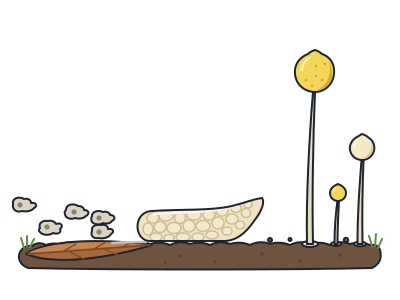
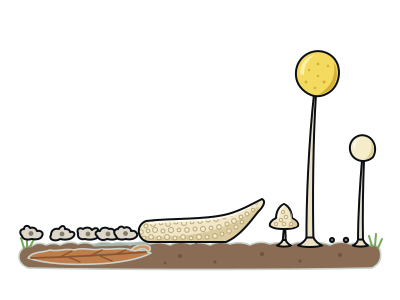
- Social amoebaWhen food runs out, thousands of single cells join into a slug, then a stalk that some die to build.
- Ancient vase-shaped amoebasTiny fossil vases about 750 million years old, probably homes built by shelled amoebas.


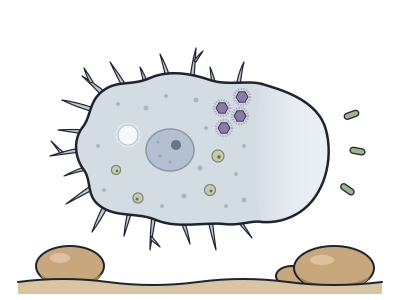
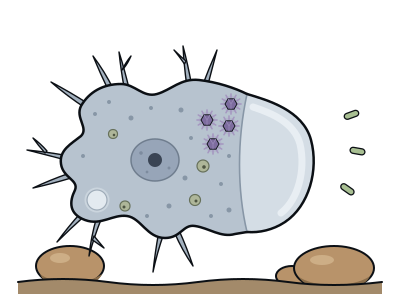
- AcanthamoebaA spiky soil amoeba in which scientists discovered giant viruses bigger than some bacteria.
- Dysentery amoebaA gut amoeba spread by dirty water, and a major cause of dysentery worldwide.


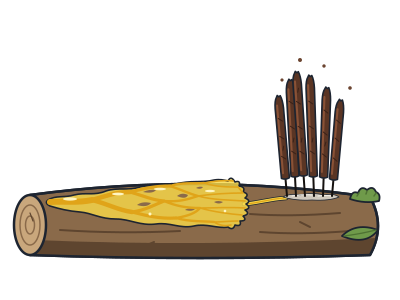
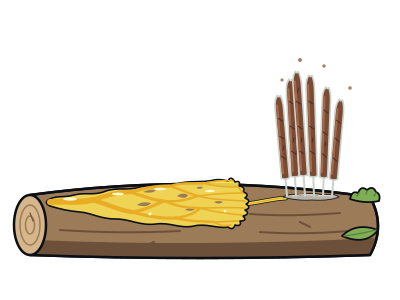
- Plasmodial slime mouldsGiant single cells that creep over logs, then turn into colourful spore-filled tufts.
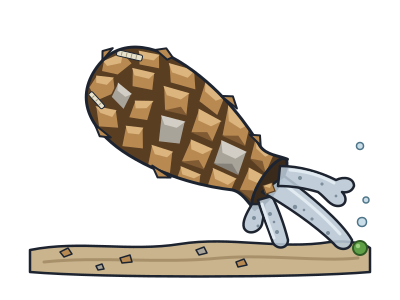
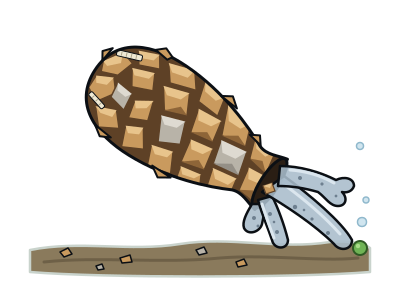
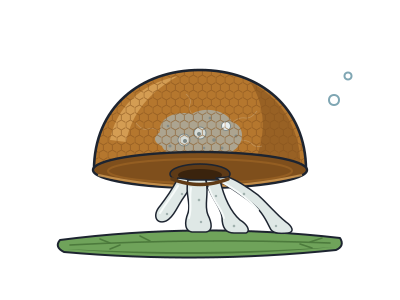
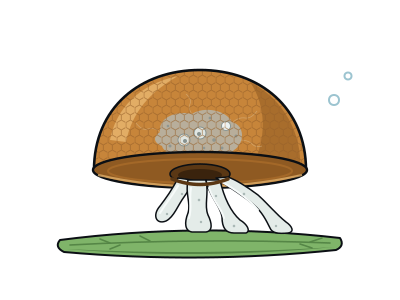
- Shelled pond amoebaAn amoeba living inside a brown dome shell, with a hole underneath for its feet.
- Sand-shell amoebaBuilds a flask-shaped shell by gluing together grains of sand it swallows.