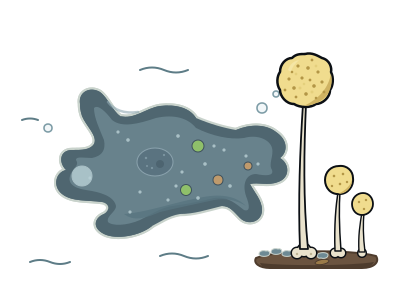
A group of living things
Amoebas and slime moulds
Amoebozoa
Shape-shifting blobs, from pond amoebas to slime moulds that team up
This branch is shown at about 1.2 billion years ago; its age is a rough estimate.
You and amoebas and slime moulds meet in the Amoebas, fungi and animals branch, shown at about 1.5 billion years ago (on 23 August, in a calendar from life's shared ancestor to today).
Picture a tiny blob that never keeps the same shape. Most members of this group crawl by pushing out blunt, finger-like bulges called false feet, then flowing into them. The group holds about 2,400 known kinds of shape-shifters, from classic pond amoebas to slime moulds that band together. Surprisingly, DNA shows they are the sister group of fungi and animals. That makes these amoebas closer relatives of yours than any plant.
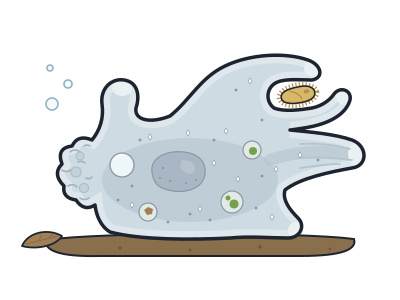
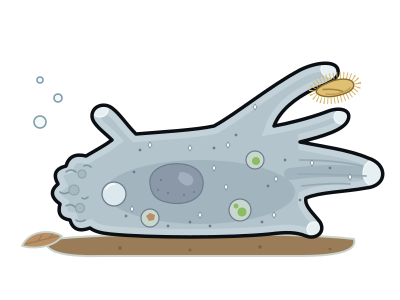
The giant pond amoeba is a single see-through cell. At its biggest it is about the size of a grain of sand. It wraps prey such as algae and smaller amoebas in little food bubbles and digests them there. To make more of itself, it simply splits in two.
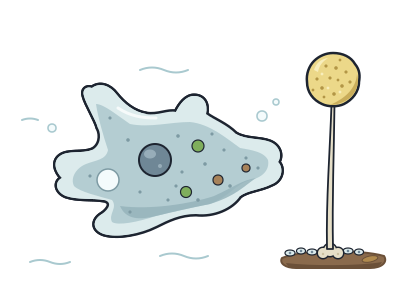
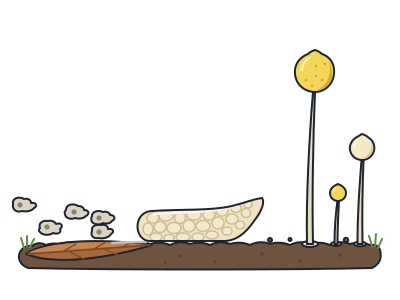
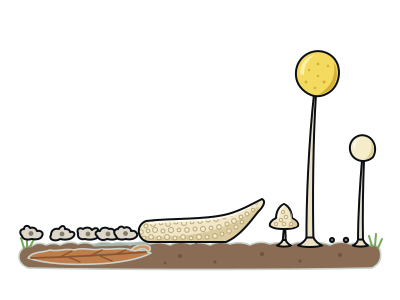
Social amoebas live alone until their food runs out. Then they release a chemical signal, and up to about 100,000 cells gather into a tiny slug that crawls towards light and warmth. The slug turns into a stalk about the size of a pinhead, with a ball of spores on top. About one in five cells dies to build the stalk, which lifts the others up.
Members of this group live in ponds, the sea, soil, moss and rotting logs. A few, such as the dysentery amoeba, live inside people and can make them ill.
A railway planner with no brain
In a 2010 experiment, oat flakes were laid out like Tokyo and the towns around it. The many-headed slime mould grew a network about as efficient and as tough as the real railway system.
Tiny farmers
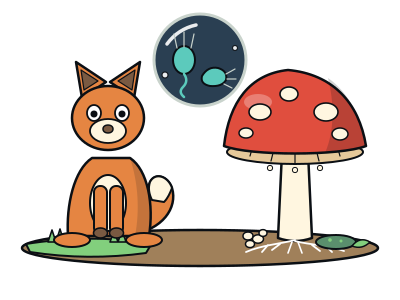
About a third of wild social amoeba strains carry bacteria with them in their spore ball. Wherever they land, they bring their own food supply.
Maze solver
Put the many-headed slime mould in a maze with food at two points, and it pulls back from every path except the shortest route between the food.
Inside amoebas and slime moulds
- Giant amoebaThe classic amoeba: it crawls by flowing into finger-like arms and engulfs its prey.
- Social amoebaWhen food runs out, thousands of single cells join into a slug, then a stalk that some die to build.
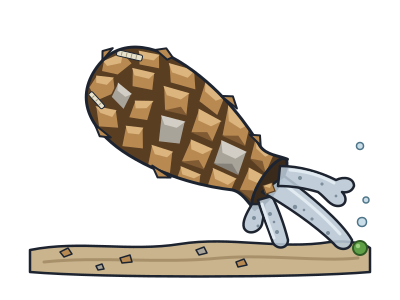
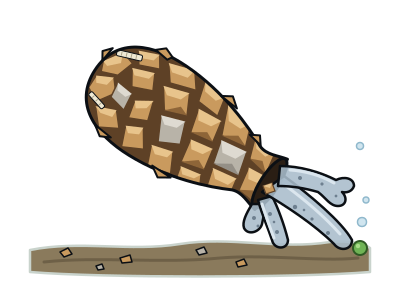
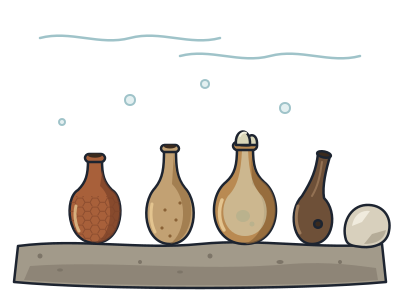
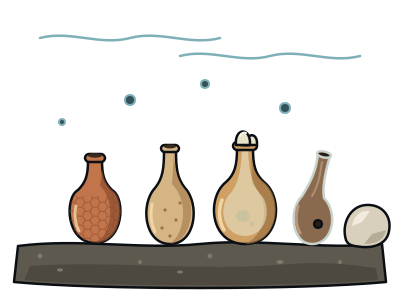
- Ancient vase-shaped amoebasTiny fossil vases about 750 million years old, probably homes built by shelled amoebas.
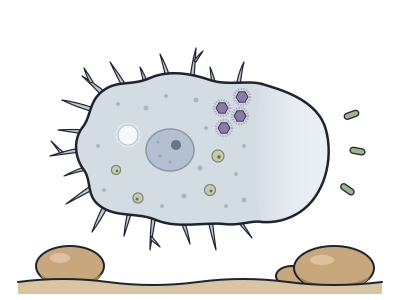
- AcanthamoebaA spiky soil amoeba in which scientists discovered giant viruses bigger than some bacteria.
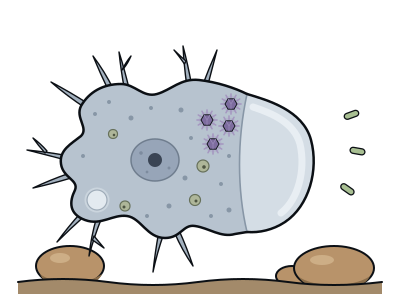
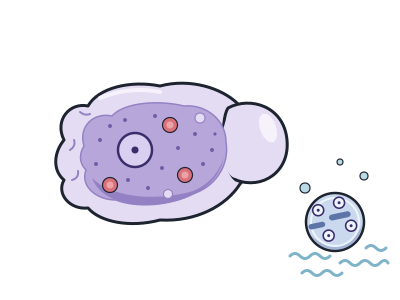
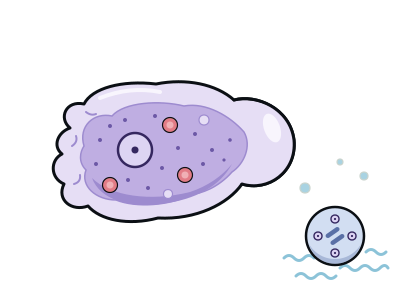
- Dysentery amoebaA gut amoeba spread by dirty water, and a major cause of dysentery worldwide.
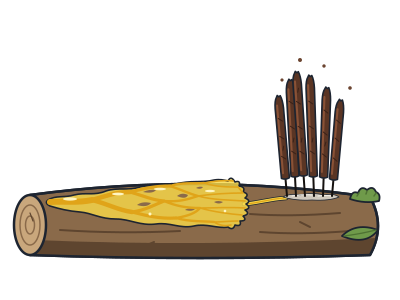
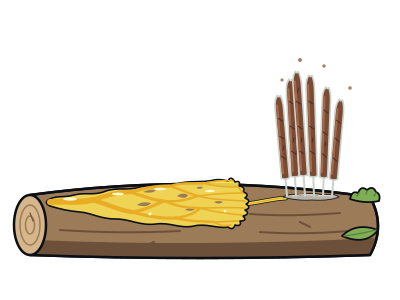
- Plasmodial slime mouldsGiant single cells that creep over logs, then turn into colourful spore-filled tufts.
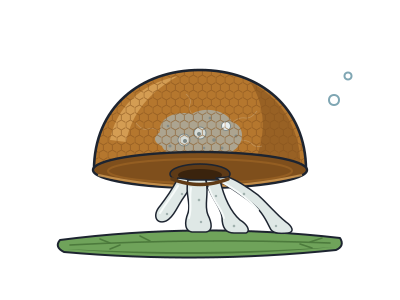
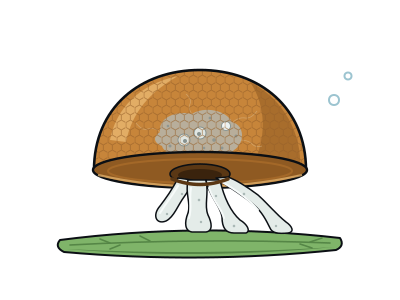
- Shelled pond amoebaAn amoeba living inside a brown dome shell, with a hole underneath for its feet.
- Sand-shell amoebaBuilds a flask-shaped shell by gluing together grains of sand it swallows.