An extinct species
Prototaxites †
Prototaxites
Trunk-like giants with a mysterious place in life's family tree
Lived about 420–370 million years ago.
You and the prototaxites meet in the Eukaryotes branch, shown at about 1.8 billion years ago (on 28 July, in a calendar from life's shared ancestor to today).
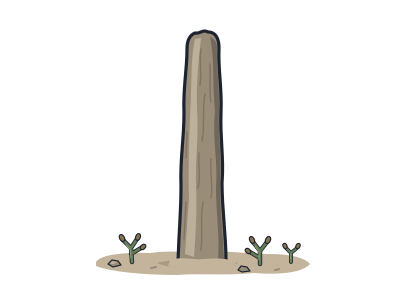
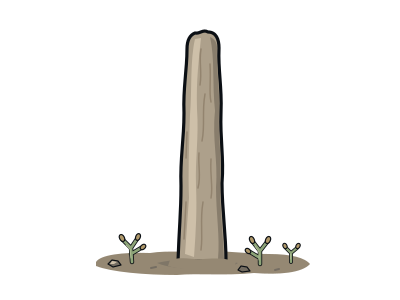
The tallest trunk-like bodies reached about 8 metres, roughly the height of a three-storey house. They towered over early land plants, yet their identity remained a puzzle: what kind of living thing had built these giants?
They lived about 420 to 370 million years ago and were among Earth's first giant land organisms, appearing before the first trees. Evidence from the rocks around their fossils supported life on land rather than growth underwater as seaweed. In Scotland, ancient hot springs helped preserve examples in remarkable detail.
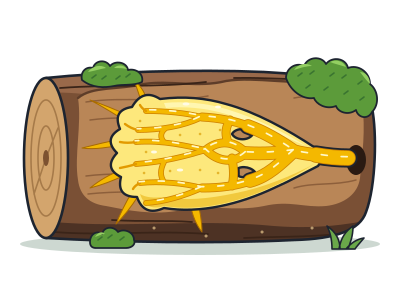
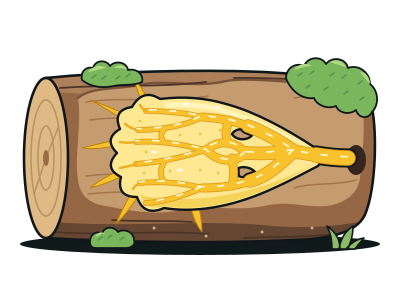
Inside, those Scottish fossils revealed dense networks of microscopic tubes. These preserved structures offered clues to their identity, rather than a complete picture of their living appearance. Their wider family was complex-celled life, which also included plants, animals, fungi and kelp. But no closest living relative was securely established: a trunk-like outline alone could not settle their place in the family tree.
An Australian connection
Fossils were recorded on several continents, including in present-day Australia.
Rings, but not a clock
Some fossil trunks showed irregular growth rings; others did not. The rings alone did not reveal an individual's age.
Tiny tunnel-makers
Some trunks preserved tunnels that researchers attributed to small land animals with jointed legs.
Next to it on the tree
- Plants and red algaeOne ancestor swallowed a cyanobacterium and kept it as a solar panel; its descendants are green plants and red algae.
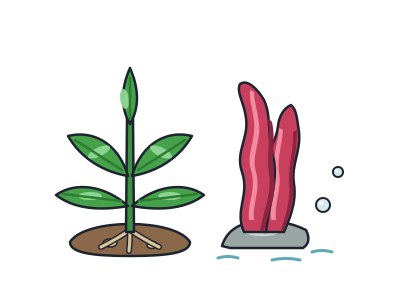
- Kelp, diatoms and kinA huge, little-known branch: giant seaweeds and glass-shelled plankton that make much of our oxygen.
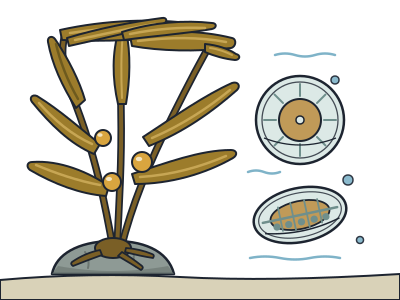
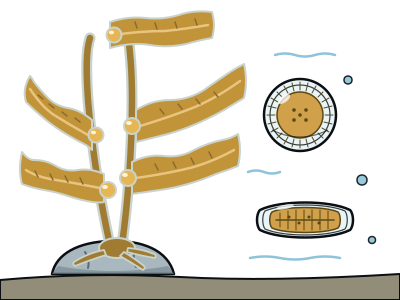
- Amoebas, fungi and animalsSurprise: you are closer to a slime mould and a mushroom than to any plant.
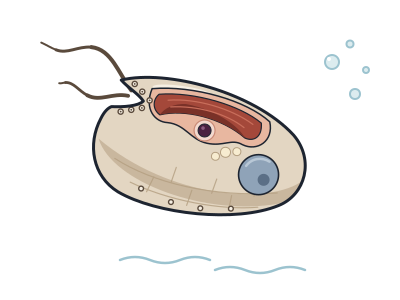
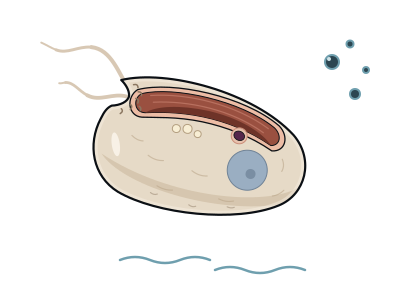
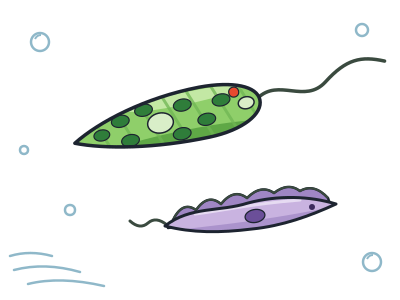
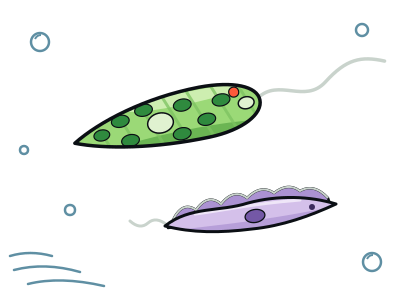
- Euglenids, trypanosomes and kinWhip-tailed cells ranging from pond-green swimmers to the parasite behind sleeping sickness.
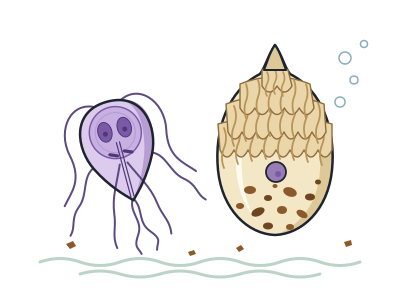
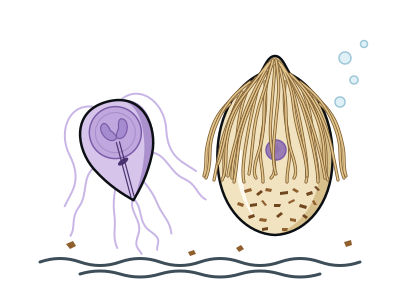
- Giardia and gut-dwelling flagellatesOxygen-shy microbes that live in guts and have shrunk their mitochondria almost to nothing.
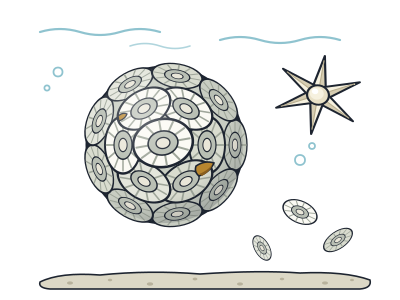
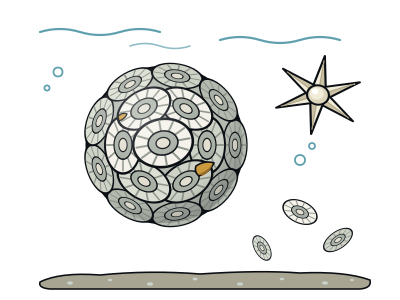
- Coccolithophores and kinTiny ocean algae armoured in chalk plates; their remains built the White Cliffs of Dover.
- CryptophytesAlgae that swallowed a red alga and still carry the tiny leftover of its nucleus inside.