A group of species
Cryptophytes
Cryptophyta
Tiny algae that still carry the leftover nucleus of a red alga they swallowed
You and cryptophytes meet in the Eukaryotes branch, shown at about 1.8 billion years ago (on 28 July, in a calendar from life's shared ancestor to today).
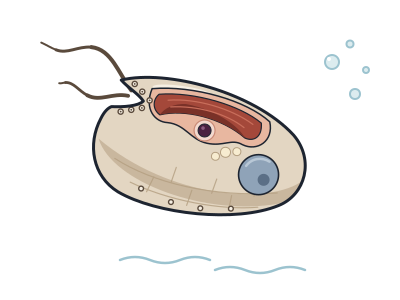
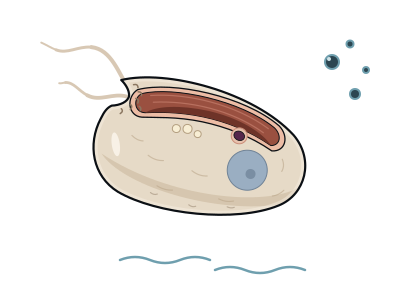
Long ago, the ancestor of the coloured cryptophytes swallowed a red alga. It did not digest it. Instead, the cell kept it as a living partner that could make food from sunlight. Hundreds of millions of years later, cryptophytes still carry a tiny, shrunken leftover of that red alga's nucleus. This leftover is called the nucleomorph. It sits tucked between the layers wrapped around the cell's chloroplast.
The nucleomorph is remarkable. In one well-studied cryptophyte, Guillardia, its DNA is only about 550 thousand letters long, split into three tiny chromosomes. Most of its genes just keep the nucleomorph itself running. It seems to survive mainly because it still makes a few dozen proteins that the chloroplast needs. Most algae that swallowed another alga lost their partner's nucleus completely. Only cryptophytes and one other group of algae keep a shrunken leftover like this.
Cryptophytes are single cells shaped like a flattened bean. They are usually about 10 to 50 micrometres long, so you could line up roughly 20 to 100 of them across a millimetre. Two slightly unequal whip-like tails come out at the edge of a pocket at the front. Many are reddish-brown or blue-green. As well as chlorophyll, they carry red or blue pigments that came from the red alga.
They live in lakes, ponds, seas and estuaries all over the world. Not all of them use sunlight, though. One group has no chloroplast at all and gets its food in other ways.
Spring-loaded escape
Cryptophytes have tiny coiled ribbons held under tension. If the cell is touched or startled, they fire like springs and jolt it away in a zig-zag path.
A chain of stolen parts
A tiny red-tide creature called Mesodinium eats cryptophytes and keeps their chloroplasts working. Then other plankton eat Mesodinium and take those same chloroplasts for themselves.
Record-breaking packing
The nucleomorph of Guillardia is one of the most tightly packed genomes known. It has about one gene every 800 DNA letters, and 44 of its genes overlap.
Next to it on the tree
- Plants and red algaeOne ancestor swallowed a cyanobacterium and kept it as a solar panel; its descendants are green plants and red algae.
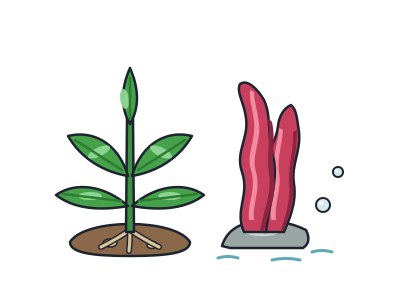
- Kelp, diatoms and kinA huge, little-known branch: giant seaweeds and glass-shelled plankton that make much of our oxygen.
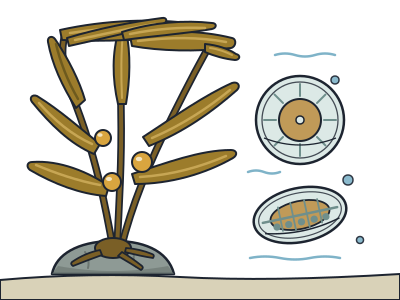
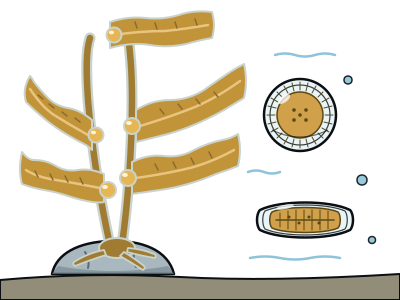
- Amoebas, fungi and animalsSurprise: you are closer to a slime mould and a mushroom than to any plant.
- PrototaxitesTrunks up to 8 metres tall towered over the first land plants, and no one is sure what they were.
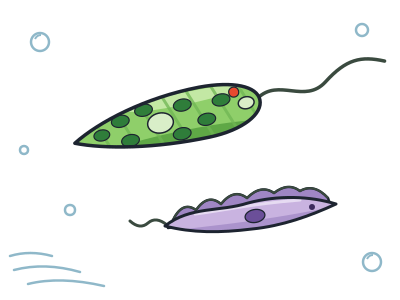
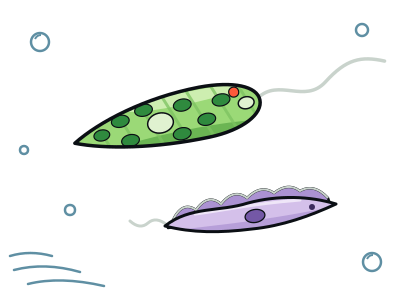
- Euglenids, trypanosomes and kinWhip-tailed cells ranging from pond-green swimmers to the parasite behind sleeping sickness.
- Giardia and gut-dwelling flagellatesOxygen-shy microbes that live in guts and have shrunk their mitochondria almost to nothing.
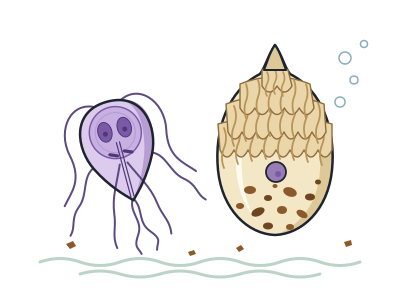
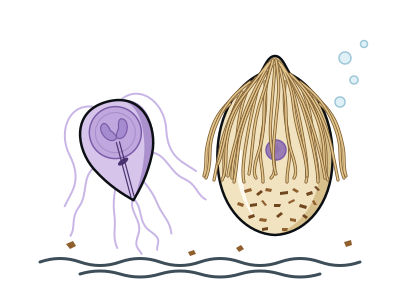
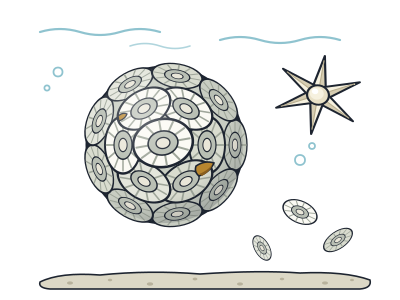
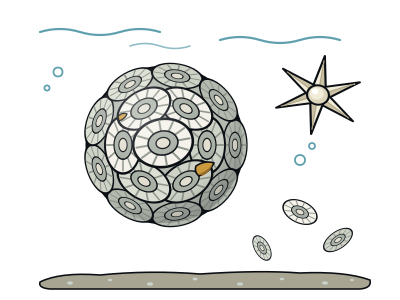
- Coccolithophores and kinTiny ocean algae armoured in chalk plates; their remains built the White Cliffs of Dover.