A group of living things
Coccolithophores and kin
Haptophyta
Tiny ocean algae in chalk armour, whose remains built white cliffs
This branch is shown at about 800 million years ago; its age is a rough estimate.
You and coccolithophores and kin meet in the Eukaryotes branch, shown at about 1.8 billion years ago (on 28 July, in a calendar from life's shared ancestor to today).
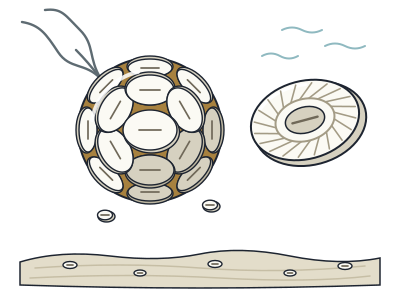
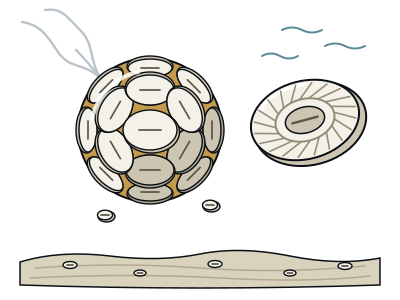
The White Cliffs of Dover were built by living things. They are made mostly of tiny chalk plates from single-celled ocean algae called coccolithophores. Between roughly 100 and 66 million years ago, in the time of the dinosaurs, countless plates sank to the floor of a sea and built up into thick layers of chalk.
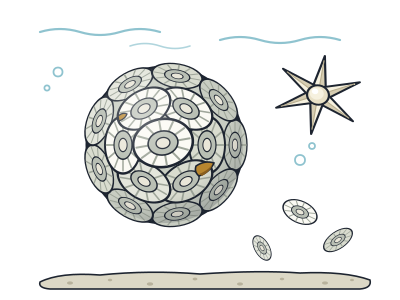
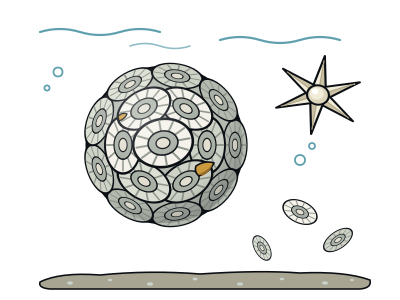
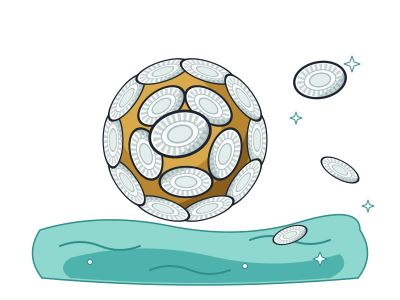
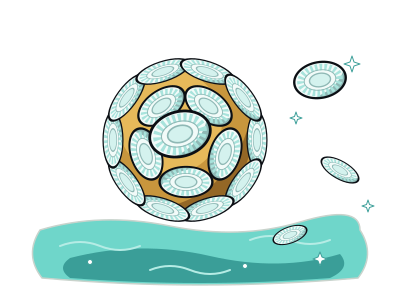
Coccolithophores make up most of this group's roughly 760 known species. Most of them wrap themselves in a ball of overlapping chalk plates, a bit like a tiny armoured football. They are far too small to see. About 10 to 20 of the most common kind, side by side, would only match the width of a human hair.
They are algae and use sunlight to make food, but they are not close relatives of land plants. The parts of the cell that catch sunlight probably came from a red alga that an ancestor swallowed. Not every member wears chalk. The sea-foam alga often lives in colonies held in balls of jelly instead.
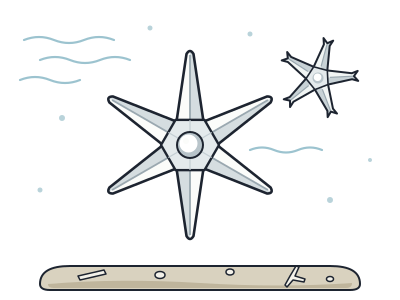
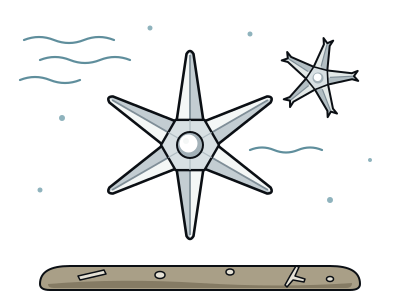
Today, a single kind of coccolithophore can bloom over more than 10,000 square kilometres and turn the sea milky turquoise. You can see it from space. One star-shaped relative, Discoaster, is long gone. It is known only from fossils and lived from about 59 million to about 1.9 million years ago.
A third 'touch thread'
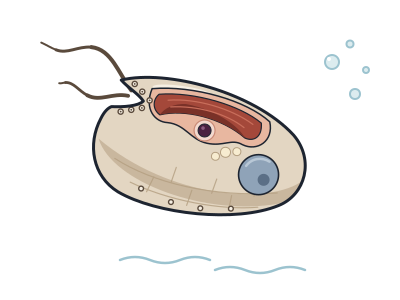
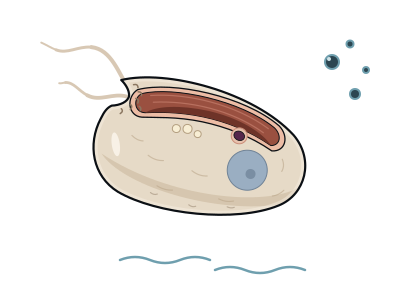
Many of these algae, at least at some stage of life, have two whip-like tails for swimming plus a thinner third thread that can coil. Its name means 'touch thread' in Greek, and it is built differently from the tails.
Survivors of disaster
More than 90% of coccolithophore species died out in the same mass extinction that killed the non-bird dinosaurs, 66 million years ago.
Ancient thermometers
The most common living coccolithophore makes long-lasting, fat-like chemicals that build up in seabed mud. Scientists study them to work out how warm the sea surface was long ago.
Inside coccolithophores and kin
- Ehux coccolithophoreIts blooms turn whole seas milky turquoise in pictures taken from space.
- Star-shaped DiscoasterMicroscopic chalk stars that filled ancient seas and vanished as the Ice Age began.
- Sea-foam algaIts jelly-like colonies whip up the thick foam that piles onto North Sea beaches.
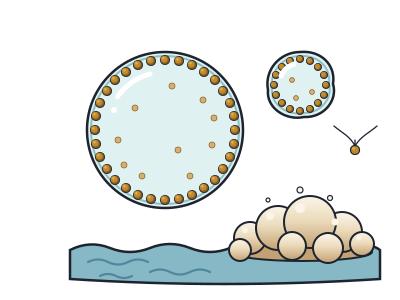
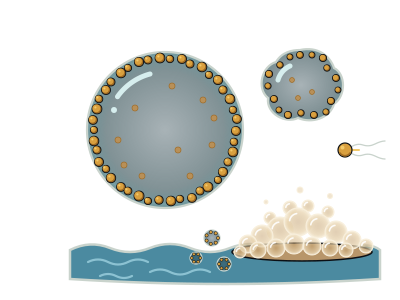
- Pentagon coccolithophoreWears five-sided chalk plates and holds a nitrogen-fixing partner that became part of the cell.
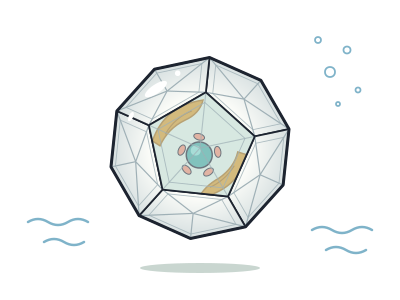
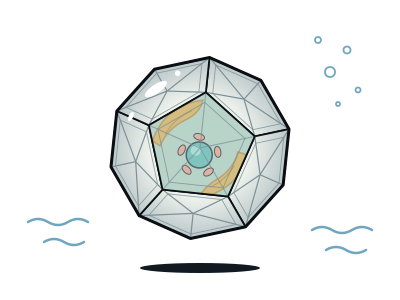
- Chalk-age coccolithThe most common chalk plate of the dinosaur seas, built into cliffs and limestone.
Next to it on the tree
- Plants and red algaeOne ancestor swallowed a cyanobacterium and kept it as a solar panel; its descendants are green plants and red algae.
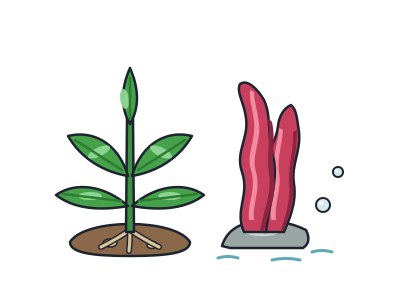
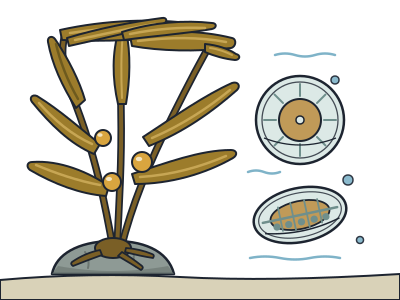
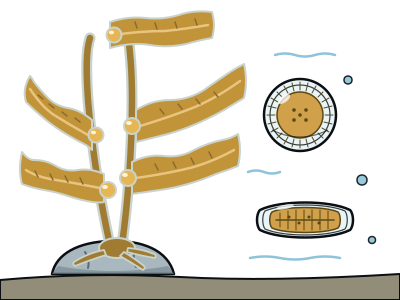
- Kelp, diatoms and kinA huge, little-known branch: giant seaweeds and glass-shelled plankton that make much of our oxygen.
- Amoebas, fungi and animalsSurprise: you are closer to a slime mould and a mushroom than to any plant.
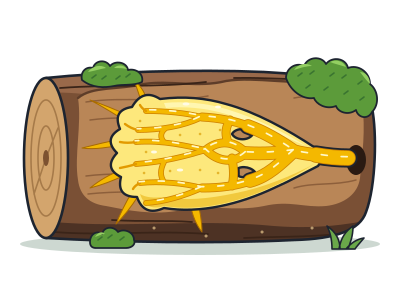
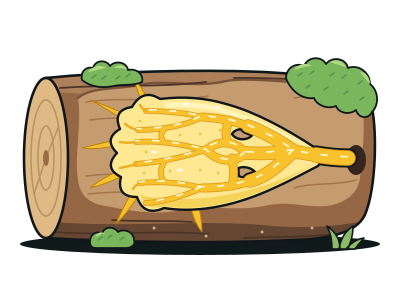
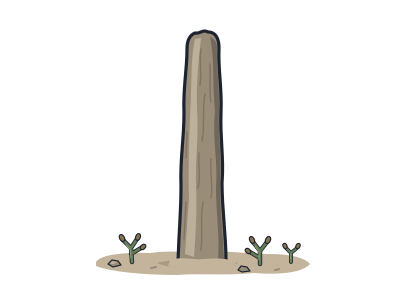
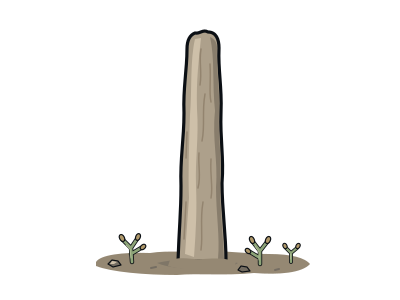
- PrototaxitesTrunks up to 8 metres tall towered over the first land plants, and no one is sure what they were.
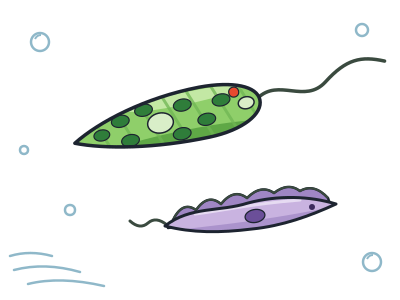
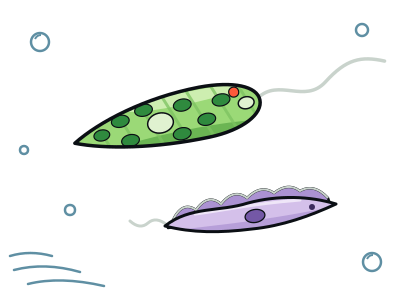
- Euglenids, trypanosomes and kinWhip-tailed cells ranging from pond-green swimmers to the parasite behind sleeping sickness.
- Giardia and gut-dwelling flagellatesOxygen-shy microbes that live in guts and have shrunk their mitochondria almost to nothing.
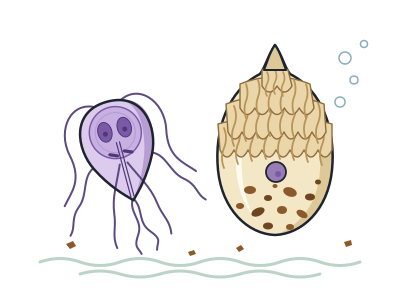
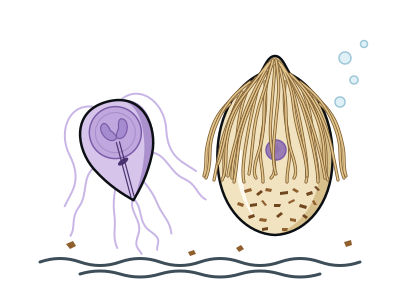
- CryptophytesAlgae that swallowed a red alga and still carry the tiny leftover of its nucleus inside.