A species
Ehux coccolithophore
Emiliania huxleyi
A speck of living chalk whose blooms paint the sea turquoise, bright enough to see from space.
You and the ehux coccolithophore meet in the Eukaryotes branch, shown at about 1.8 billion years ago (on 28 July, in a calendar from life's shared ancestor to today).
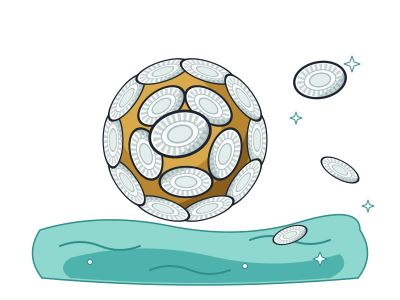
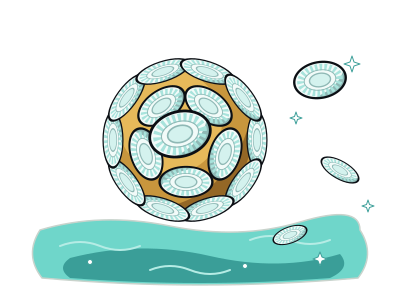
Seen from space, parts of the ocean sometimes turn a milky turquoise, with swirls and eddies picked out in pale blue-green. Ehux, a single-celled alga far too small to see, is the main cause of this colour. When trillions of cells gather in a bloom, the water fills with their tiny chalky plates. The plates are clear, but they scatter sunlight so well that the sea seems to glow. A single bloom can cover more than 10,000 square kilometres.
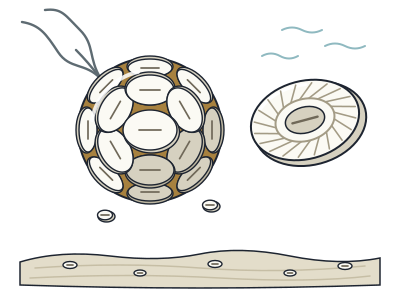
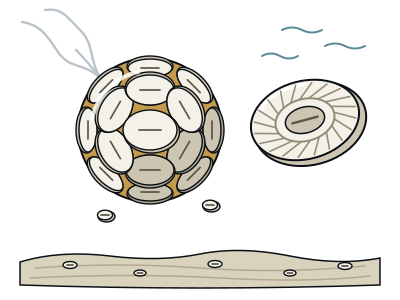
Each cell is a tiny ball wrapped in overlapping plates shaped like hubcaps. A whole cell is about one twentieth of the width of a human hair. Each plate is only about three thousandths of a millimetre across. Cells also shed loose plates into the water, which adds to the milky glow.
Ehux is not an animal or a shellfish. Like a plant, it makes its own food from sunlight, using golden-brown chloroplasts. It belongs to the coccolithophores, a group of algae that wear chalk plates. Its close kin include the sea-foam alga, which makes no chalk at all. The group is ancient. Its oldest fossils are about 220 million years old, from the time of the early dinosaurs. Ehux itself is a newcomer, though. It appeared only about 270,000 years ago.
Named after two scientists
Its long-used name honours two scientists: the biologist Thomas Huxley and the oceanographer Cesare Emiliani.
A thermometer for the past
It is one of a few algae that make fatty chemicals called alkenones, which last for a very long time in seabed mud. Scientists use them to work out how warm the sea surface was long ago.
A second, swimming life
Its life cycle has a second form with no chalk plates. That smaller form is covered in soft scales and swims using two whip-like tails.
Next to it on the tree
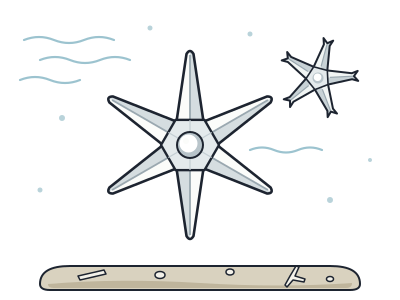
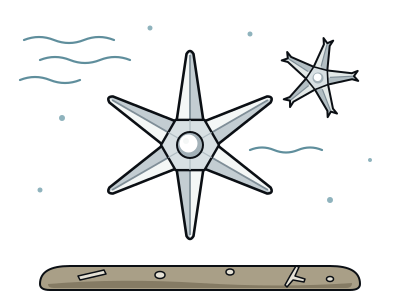
- Star-shaped DiscoasterMicroscopic chalk stars that filled ancient seas and vanished as the Ice Age began.
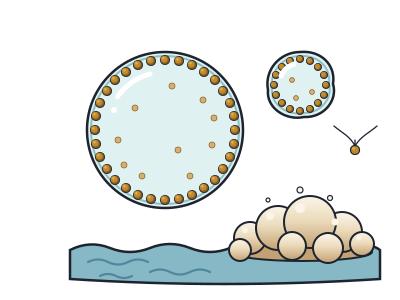
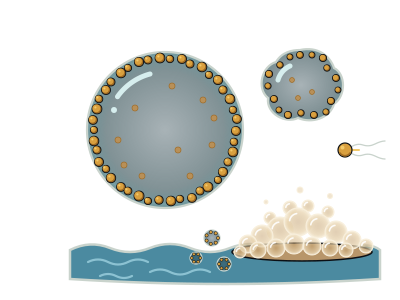
- Sea-foam algaIts jelly-like colonies whip up the thick foam that piles onto North Sea beaches.
- Pentagon coccolithophoreWears five-sided chalk plates and holds a nitrogen-fixing partner that became part of the cell.
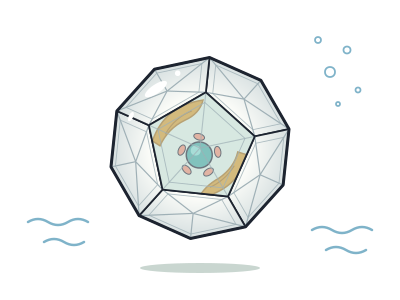
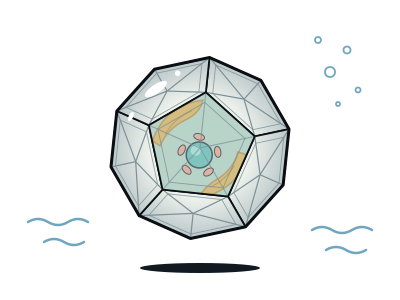
- Chalk-age coccolithThe most common chalk plate of the dinosaur seas, built into cliffs and limestone.