A species
Pentagon coccolithophore
Braarudosphaera bigelowii
A chalk-armoured sea alga with a captured nitrogen factory inside.
You and the pentagon coccolithophore meet in the Eukaryotes branch, shown at about 1.8 billion years ago (on 28 July, in a calendar from life's shared ancestor to today).
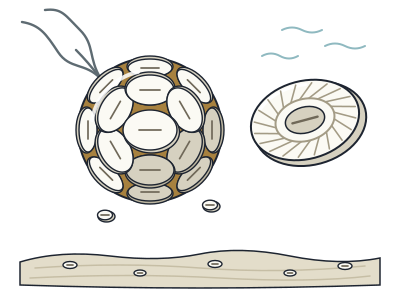
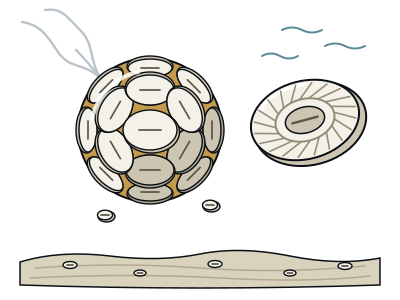
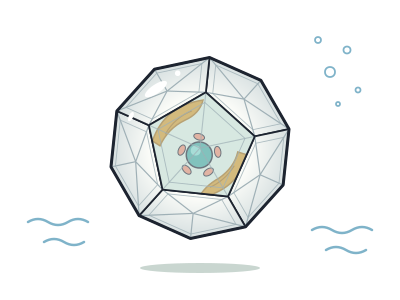
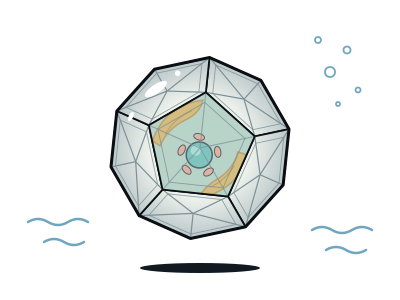
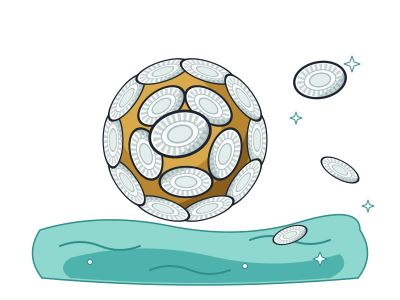
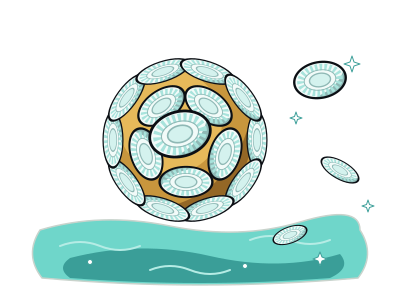
This tiny sea alga wears a suit of chalk. Twelve five-sided plates fit together edge to edge, making a ball with 12 flat faces. Each plate is built from five wedge-shaped pieces, and each piece behaves like a single crystal of calcite.
Inside there is something even stranger. Its partner began as a bacterium that can take nitrogen from the air. The partner has lost the ability to make its own food from sunlight, so the alga feeds it carbon, and in return it supplies nitrogen. In 2024, scientists reported that this partner has become a working part of the cell, called the nitroplast. It divides in step with the alga, gets passed on to both new cells, and takes in proteins made from the alga's own DNA.
Researchers describe this as only the fourth known case of a swallowed bacterium turning into a part of a cell. The same kind of event gave rise to mitochondria, which are found in your own cells, and to the chloroplasts of plants and algae. The nitroplast is the first known cell part that fixes nitrogen.
DNA studies place it near the base of the coccolithophores. That makes it an early-branching cousin of better-known chalk-makers such as the Ehux coccolithophore. Today it turns up here and there in coastal seas, often where the water is less salty than usual.
Found long before it was seen
Its nitrogen-fixing partner was first detected in 1998, only from its genes in DNA taken from seawater. It took about 25 more years before scientists recognised it as a true working part of the alga's cell.
Ocean fertiliser
The partner has been called the most widespread nitrogen-fixing organism in the oceans. It probably makes an important contribution to fertilising the sea.
A hope for farms
One day the discovery could help scientists give crop plants their own way to fix nitrogen. Making factory fertiliser causes about 1.4% of the world's carbon emissions, so this could help cut them.
Next to it on the tree
- Ehux coccolithophoreIts blooms turn whole seas milky turquoise in pictures taken from space.
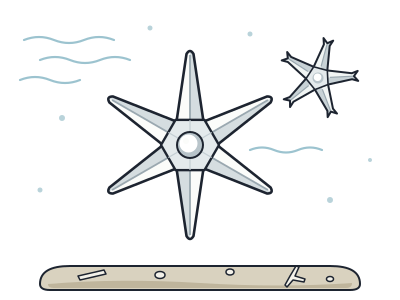
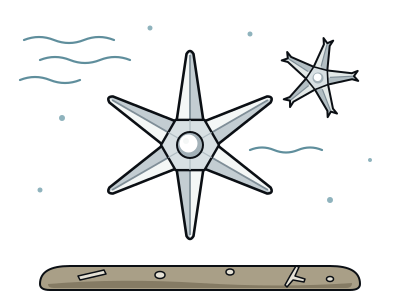
- Star-shaped DiscoasterMicroscopic chalk stars that filled ancient seas and vanished as the Ice Age began.
- Sea-foam algaIts jelly-like colonies whip up the thick foam that piles onto North Sea beaches.
- Chalk-age coccolithThe most common chalk plate of the dinosaur seas, built into cliffs and limestone.