A species
Sea-foam alga
Phaeocystis globosa
The tiny alga behind the cappuccino-like foam on North Sea beaches
You and the sea-foam alga meet in the Eukaryotes branch, shown at about 1.8 billion years ago (on 28 July, in a calendar from life's shared ancestor to today).
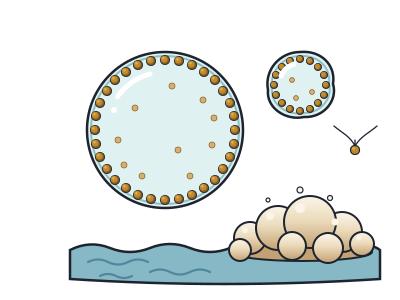
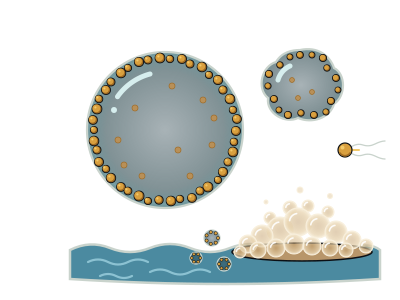
Some springs, heaps of creamy-brown foam pile up on beaches in Belgium and the Netherlands. It looks like the froth on a cappuccino, and it is made by a tiny alga. In April and May, the alga grows into round colonies of hundreds to thousands of cells, held together by slime.
Near the end of a bloom, the algae run out of nutrients. The colonies break up and release proteins and jelly-like substances into the water. Wind and waves whip all this into foam, much like beating egg whites. When the wind blows towards land, the foam piles up on the beach.
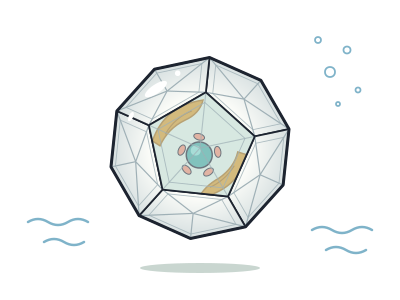
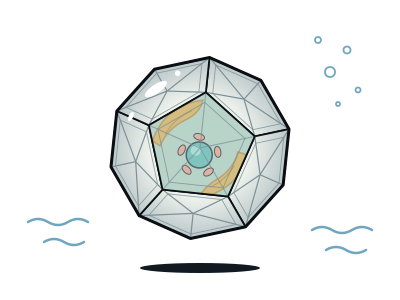
Each colony is a hollow jelly ball, filled mostly with water. A single layer of golden-brown cells sits in a skin much thinner than a human hair. One cell is far too small to see. A colony is usually up to about 3 millimetres wide, though some reach about 3 centimetres, big enough to spot by eye.
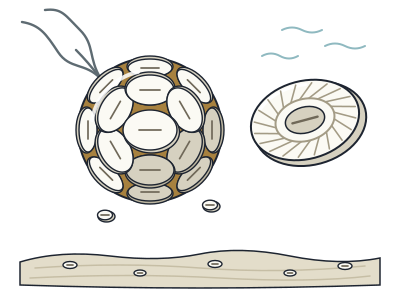
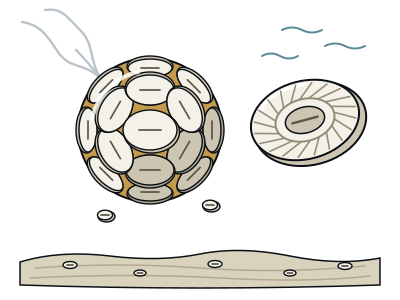
On the tree it sits beside the coccolithophores, such as the Ehux coccolithophore, which wear chalky scales. They belong to the same group of floating, sun-powered sea algae. But this relative makes no chalky plates. It wraps itself in jelly instead.
A skin that never thickens
However big a colony grows, its jelly skin stays the same thickness, about 7 thousandths of a millimetre.
Swimmers and settlers
Free-swimming single cells have two whip-like tails for moving about. Cells that settle into a colony lose them.
A worldwide traveller
The same species also blooms off southeast China, Vietnam and in the Arabian Sea. Its big colonies can clog fishing nets and even block the water intakes that cool power stations.
Next to it on the tree
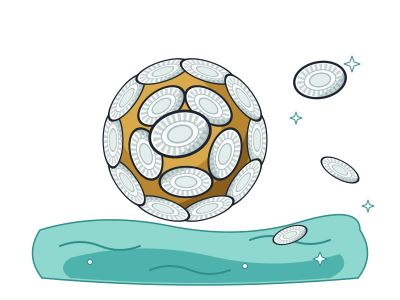
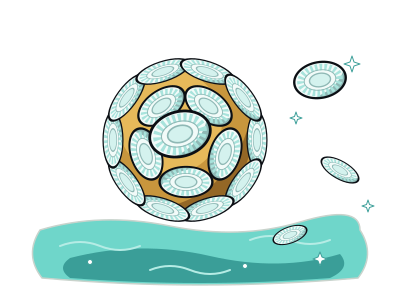
- Ehux coccolithophoreIts blooms turn whole seas milky turquoise in pictures taken from space.
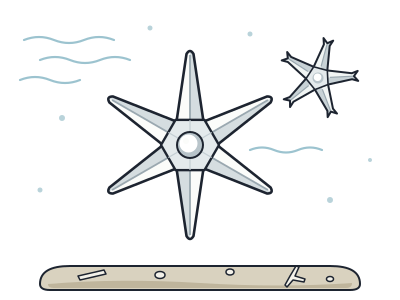
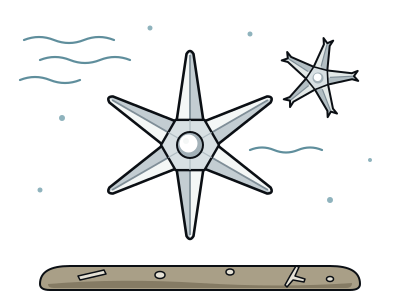
- Star-shaped DiscoasterMicroscopic chalk stars that filled ancient seas and vanished as the Ice Age began.
- Pentagon coccolithophoreWears five-sided chalk plates and holds a nitrogen-fixing partner that became part of the cell.
- Chalk-age coccolithThe most common chalk plate of the dinosaur seas, built into cliffs and limestone.