A species
Mixotricha
Mixotricha paradoxa
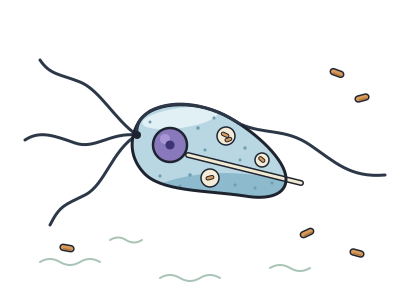
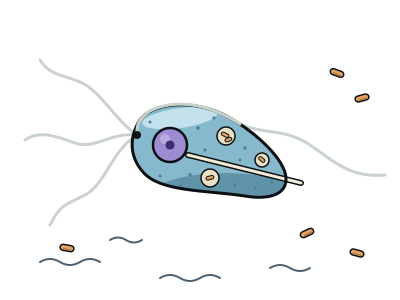
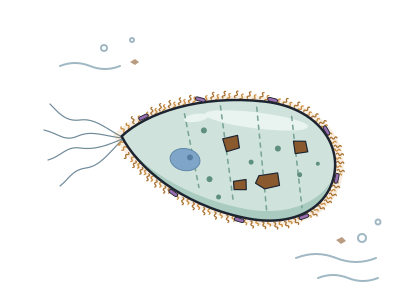
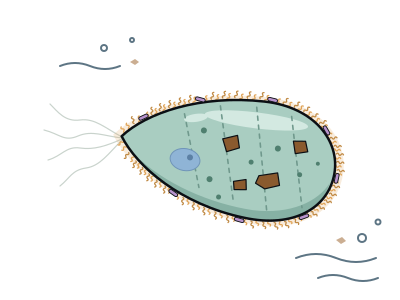
A termite gut cell that gets about by riding on hundreds of thousands of wriggling bacteria.
You and the mixotricha meet in the Eukaryotes branch, shown at about 1.8 billion years ago (on 28 July, in a calendar from life's shared ancestor to today).
This single cell has found an odd way to get around. Its body is covered in about 250,000 tiny corkscrew-shaped bacteria. They wriggle in waves, from front to back, and push the cell along. The cell has four whip-like flagella of its own at the front, but they just steer. One Australian science group compares it to a Viking ship: the bacteria are the rowers.
It lives in only one place, the gut of the Darwin giant termite of northern Australia. That gut is dark and warm and has no oxygen. The cell cannot survive outside it.
It is not a bacterium. Its cell has a nucleus, just like the cells in our bodies. On the tree its relatives include Giardia and other flagellates that live with little or no oxygen. Their ancestors had mitochondria, the tiny power stations found in our cells. Over time these flagellates lost or shrank them. In this cell and its closest relatives, they became hydrogenosomes, which make energy without oxygen.
For a single cell, it is huge. It can reach about half a millimetre, just big enough to see as a speck. It swallows bits of wood and breaks them down. The termite can then use some of what it makes. Wood has very little nitrogen, and the swimming bacteria may supply some to the whole team.
A misleading name
Jean Sutherland, an Australian scientist, named it in 1933. The name means roughly 'paradoxical one with mixed hairs', because it seemed to have both flagella and cilia. In 1964, scientists used an electron microscope to show that the 'cilia' were really bacteria.
An unusual host
Its termite host is the only living species in its family. That family is the sister group to all of the world's other termites, about 3,000 species. The termite even has cockroach-like wings.
Partners with names
In 2025, researchers formally named its three permanent bacterial partners. Two live on the outside of the cell: the swimming corkscrew bacterium and a rod-shaped one. The third lives inside the cell.
Next to it on the tree
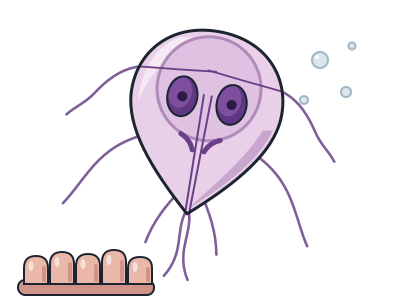
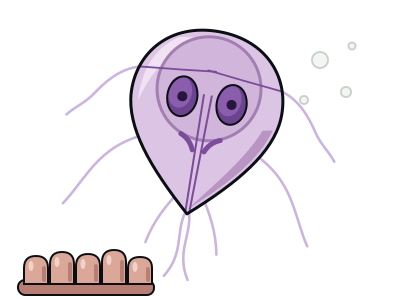
- GiardiaA pear-shaped gut parasite whose two nuclei look like eyes staring up from a microscope.
- Termite gut partnerLives inside termites and helps them digest wood; without it, termites starve on a full stomach.
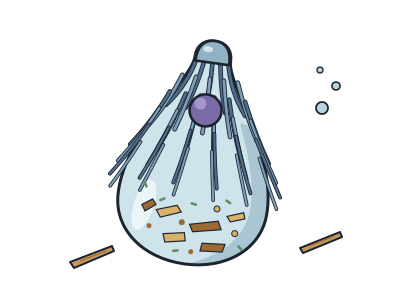
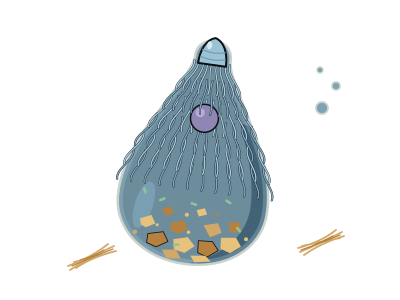
- MonocercomonoidesThe first complex cell found with no mitochondria at all, living in a chinchilla gut.