A species
Scrambled egg slime mould
Fuligo septica
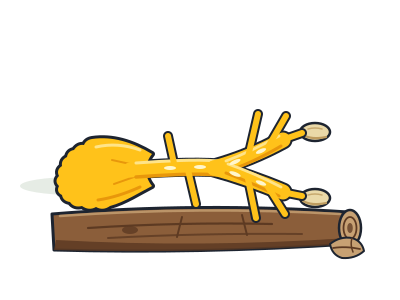
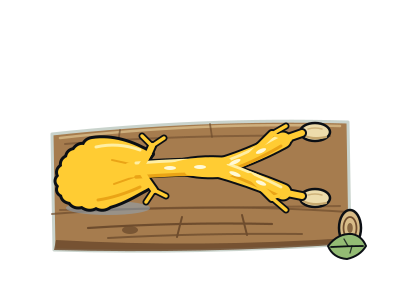
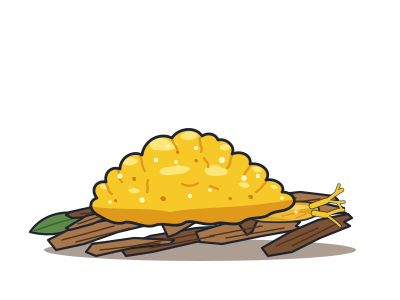
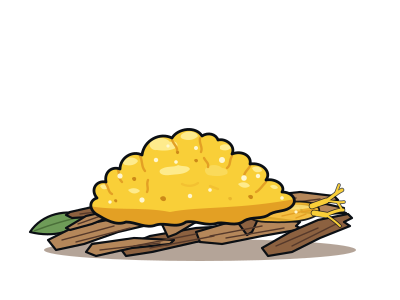
A bright yellow blob that turns up on garden mulch, looking like spilled scrambled eggs.
You and the scrambled egg slime mould meet in the Amoebas, fungi and animals branch, shown at about 1.5 billion years ago (on 23 August, in a calendar from life's shared ancestor to today).
Wake up after warm, wet weather and you might find a bright yellow blob on the garden bark mulch. It looks just like someone spilled scrambled eggs. It did not really appear by magic overnight. A hidden feeding stage has been creeping through the damp mulch, and now it has come out into the open.
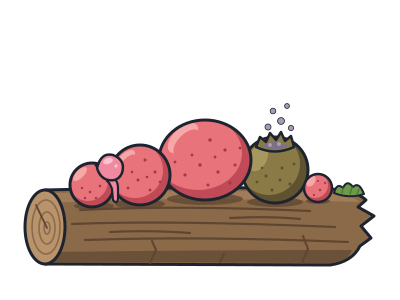
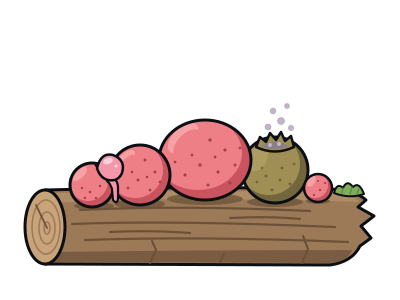
Despite the name, this is not a fungus or a true mould. It is a slime mould, and it is more closely related to amoebas than to mushrooms. It belongs to the same family as the many-headed slime mould shown beside it on the tree.
While it feeds, it is a soft mass of living material with no cell walls. It slowly creeps over surfaces and swallows its food, which is mostly bacteria.
As it matures, the slimy blob hardens into a crusty cushion. Its colour fades from yellow to white and finally to brown-black. Break it open and you will find a powdery mass of millions of dark spores. It is harmless to people and pets and does not cause plant disease, but its spores can trigger allergies in some people.
Giant among slime moulds
It makes one of the largest spore-producing structures of any slime mould. Yet Australian records include tiny ones only about 2 mm across.
Witches and trolls
In Finnish folklore, witches were said to use it to spoil milk. In Scandinavia it was said to be the vomit of troll cats, and in Dutch and Latvian one of its names means 'witches' butter'.
From dust to blob
Its spores sprout into tiny amoeba-like cells or swimming cells. These cells later join together and grow into the big creeping blob. The blob holds many nuclei, the control centres that most cells have just one of.