A species
Chocolate tube slime
Stemonitis fusca
Tiny chocolate brushes on rotting logs, from the amoebas' side of the tree of life
You and the chocolate tube slime meet in the Amoebas, fungi and animals branch, shown at about 1.5 billion years ago (on 23 August, in a calendar from life's shared ancestor to today).
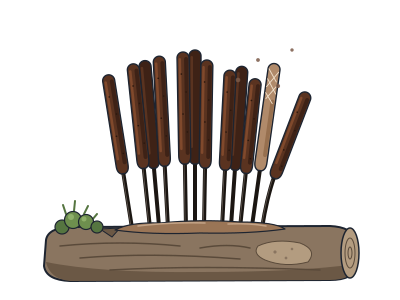
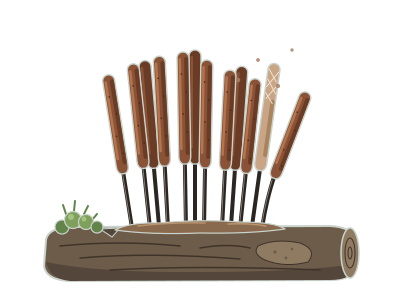
On a damp, rotting log you might spot what looks like a patch of brown fur. Look closer and you see a cluster of tiny chocolate brushes. Dozens of hair-thin brown tubes stand side by side, each on a shiny black stalk. Each one is up to about 2 centimetres tall and only about as thick as a pencil line.
It looks like a fungus, but it is not one. Slime moulds like this one belong with the amoebas, in a group that is separate from both fungi and animals. People once grouped them with moulds because they look and live in similar ways.
The brown tubes are just one short stage of its life. Before that, it is a white, slimy mass hidden in damp places on or under wood and bark. That slime is one giant cell with many nuclei, called a plasmodium. When it is ready, it moves onto a surface and grows soft white columns. These turn purplish and then dark chocolate brown.
Inside each tube, a central rod holds up a fine net of threads packed with spores. As the spores blow away, the tubes fade to a paler brown.
Unchanged for ages
Slime mould fruiting bodies about 100 million years old were found in amber from Myanmar. They look almost the same as today's tubes, and a lizard was trapped in the same sticky resin.
Many nicknames
In English, slime moulds like this one are also called 'tree hair' and 'pipe cleaner slime'.
Two become one
Its spores hatch into tiny amoebas that eat bacteria. Two of these amoebas join together. The joined cell keeps copying its nuclei without splitting apart, and it grows into the giant slimy plasmodium.
Next to it on the tree
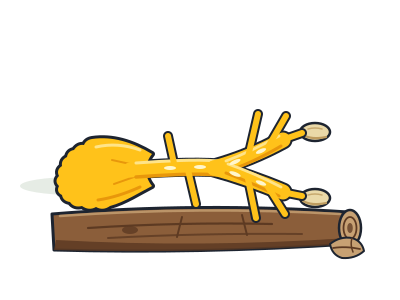
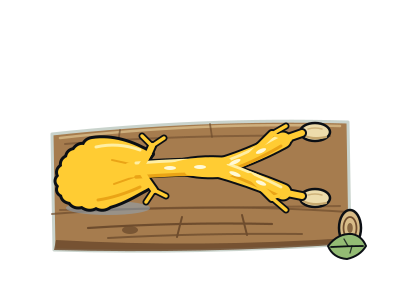
- Many-headed slime mouldA brainless yellow blob that can solve mazes and map efficient train networks.
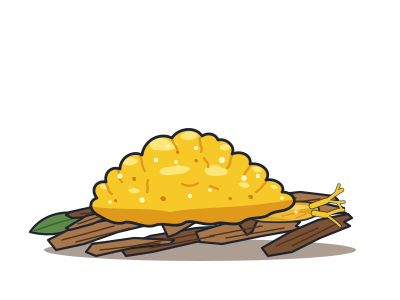
- Scrambled egg slime mouldA bright yellow blob that appears overnight on garden bark mulch, looking like spilled egg.
- Wolf's milkPink pea-sized balls on rotting wood that squirt pink paste when pressed.