A species
Wolf's milk
Lycogala epidendrum
Pea-sized pink balls on rotting logs that squirt pink paste when you press them
You and the wolf's milk meet in the Amoebas, fungi and animals branch, shown at about 1.5 billion years ago (on 23 August, in a calendar from life's shared ancestor to today).
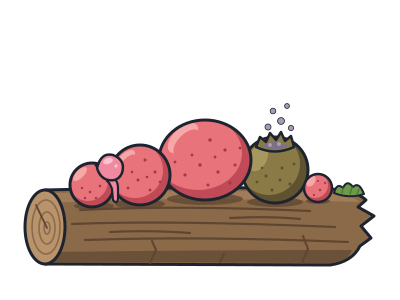
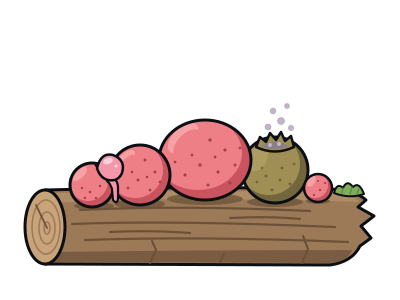
Look closely at an old, soggy log after rain and you might spot little pink balls about the size of a pea. Press a young one and it bursts, oozing thick pink paste a bit like toothpaste. That paste gave it the name wolf's milk. It has nothing to do with wolves or milk.
It looks like a tiny puffball mushroom, but it is not a fungus at all. It is a slime mould, which belongs on the same branch of the tree of life as amoebas. Its relatives include the many-headed slime mould and the scrambled egg slime mould.
Before it makes any balls, it lives as a slimy, coral-red film that creeps through wet wood like an amoeba. It feeds on bacteria, fungal spores and other tiny scraps. People almost never see this stage.
As each ball gets older, the pink paste dries into a powder of tiny spores, and the skin turns brownish, often olive-brown. The spores escape through openings at the top and drift away to start new slime moulds. So popping a ripe ball does not harm it. It just helps the spores spread.
A chemical treasure chest
Chemists have found unusual substances inside wolf's milk, including some that act against germs in lab tests.
One enormous cell
In slime moulds like this one, the creeping feeding stage is one giant cell holding millions of nuclei, the control centres that cells usually have only one of. In some slime moulds it can spread up to about a metre across.
A bigger, rarer cousin
A close relative looks similar but is much bigger, more than 2 cm across, with a thicker, smoother skin. It is also much harder to find.
Next to it on the tree
- Many-headed slime mouldA brainless yellow blob that can solve mazes and map efficient train networks.
- Scrambled egg slime mouldA bright yellow blob that appears overnight on garden bark mulch, looking like spilled egg.
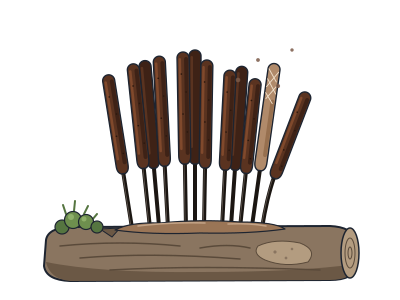
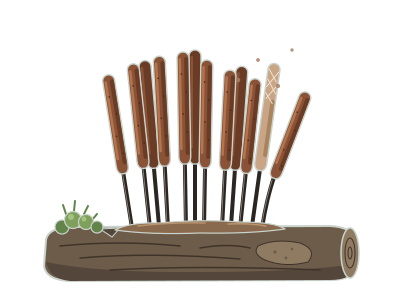
- Chocolate tube slimeClusters of brown, hair-thin stalks like tiny chocolate brushes on dead logs.