A group of living things
Butterflies and moths
Lepidoptera
Scaly wings unite them; butterflies are one branch within the moths.
This branch is shown at about 300 million years ago; its age is a rough estimate.
You and butterflies and moths meet in the Two-sided animals branch, shown at about 580 million years ago (on 11 November, in a calendar from life's shared ancestor to today).
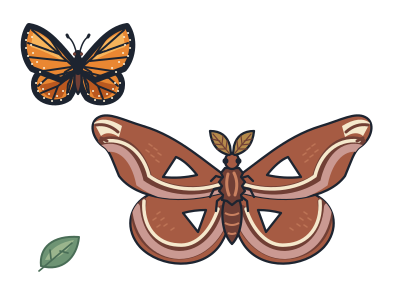
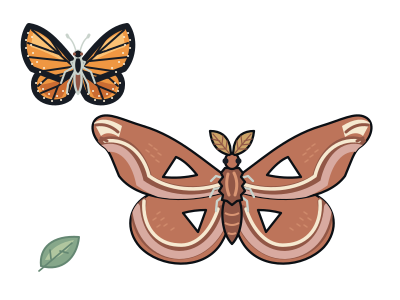
Tiny, overlapping scales help make their wing colours and patterns. But the bigger surprise is their family tree: butterflies are one branch within the moths, not a separate group beside them. The monarch butterfly and the atlas moth both belong to this wider group. Moth species greatly outnumber butterfly species.
Butterflies and moths go through four life stages: egg, caterpillar, pupa and adult. Caterpillars mostly eat plants, using mouthparts made for chewing. Their bodies look very different from the adults they will become. The pupa is the stage between the caterpillar and the adult.
Many adults drink through a long feeding tube that coils beneath the head when it is not being used. Yet some species cannot feed at all as adults. Flower-visiting butterflies can carry pollen between flowers as they drink nectar, helping plants reproduce.
Not just night flyers
Most butterflies fly by day and most moths fly by night, but some moths are active in daylight.
Wings are not guaranteed
Some female moths have reduced wings or no wings at all and cannot fly.
Antennae offer clues
Butterflies usually have antennae with swollen, club-like tips. Some day-flying moths have these too, so this is not a foolproof way to tell them apart.
Inside butterflies and moths
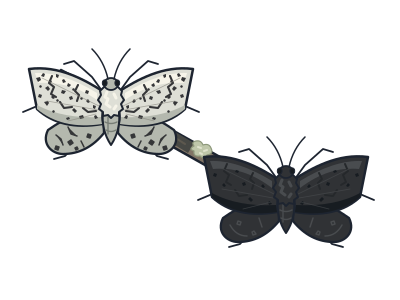
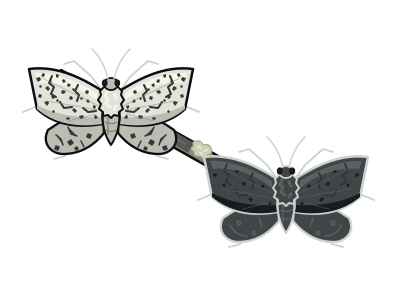
- Peppered mothTurned dark during the soot of the Industrial Revolution, a classic case of evolution.
- ButterfliesDay-flying moths with clubbed antennae, now about 19,000 species.
- Silk moths and hawk mothsBig moths: hovering hawk moths and wild silk moths, some with no mouths as adults.
- Owlet and tiger mothsThe largest group of moths, with tiger moths that click back at bats.
- Small mandibulate mothA tiny moth that still has chewing jaws and eats pollen, like the earliest moths.
- Common clothes mothIts caterpillars eat wool and fur, which is why it chews holes in jumpers.
- Six-spot burnetA red-spotted day-flying moth that makes cyanide to protect itself.
- ArchaeolepisOne of the oldest moth fossils: scaly wings from about 190 million years ago, found in Dorset.
Next to it on the tree
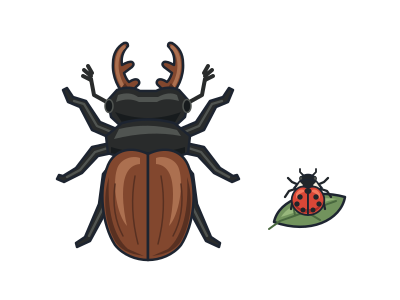
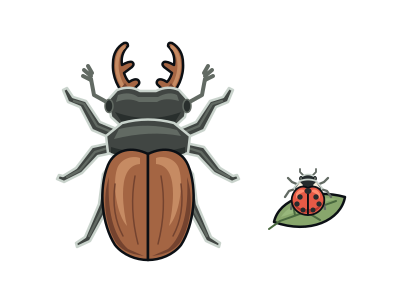
- BeetlesInsects with hard front wings like armour; about one in four animal species is a beetle.
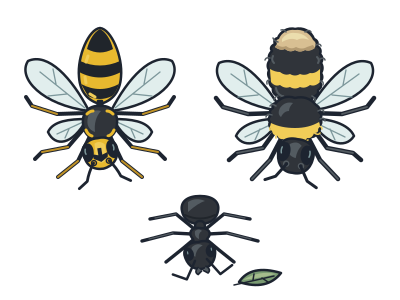
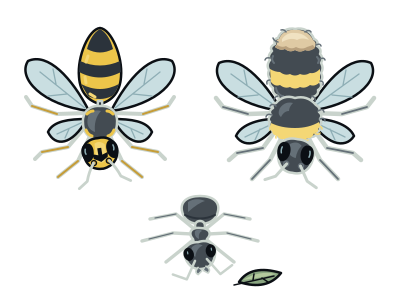
- Bees, wasps and antsAnts and bees are both specialised wasps.
- True fliesInsects with one pair of wings; the back pair became tiny balancers.
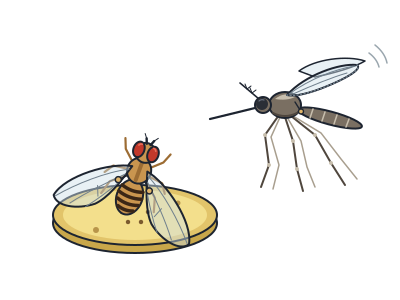
- Cat fleaA wingless insect that can jump over a hundred times its body length.
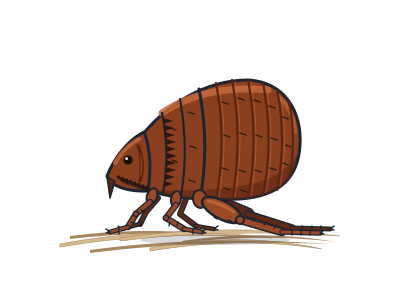
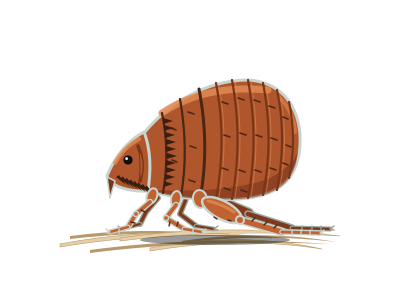
- Lacewings and kinNet-winged insects whose larvae are fierce hunters, from aphid lions to antlions.
- Great red sedgeIts larva builds a portable tube of plant bits glued with silk, a case it carries everywhere.
- Common scorpionflyMales have a curled tail tip like a scorpion's sting, but it is harmless.
- ColeopsisThe oldest known beetle relative, from 295-million-year-old rocks in Germany.