A group of living things
Winged insects
Pterygota
The first animals to take to the air.
This branch is shown at about 405 million years ago; its age is a rough estimate.
You and winged insects meet in the Two-sided animals branch, shown at about 580 million years ago (on 11 November, in a calendar from life's shared ancestor to today).
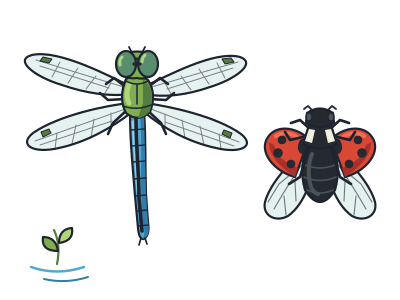
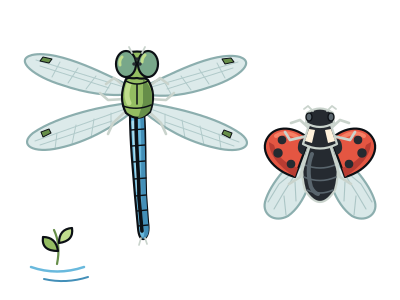
Winged insects were the first animals to fly. Fossils show they were already flying about 100 million years before pterosaurs appeared. Birds and bats came later still. A dragonfly and a beetle may look very different, but both belong to this same great branch of the insect family.
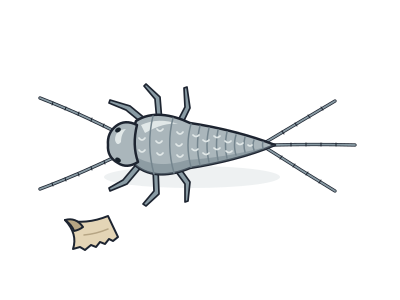
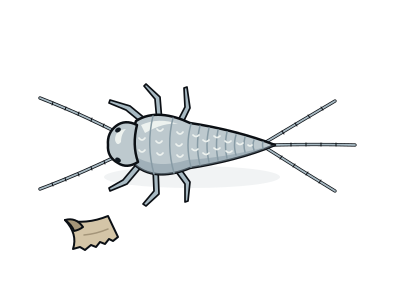
Despite the name, not every member has wings today. Some descendants have lost them, but remain part of the family. Membership is about ancestry, not just what an animal looks like now.
Insects also took to the air differently from birds and bats. Their wings are extra structures alongside their legs; a bird’s or bat’s wings are changed front limbs. Look at a flying dragonfly or beetle and you are seeing a different solution to flight, using different body parts.
Six legs, three sections
An adult insect’s body has three main sections, six legs and one pair of feelers.
Wings that fold
Beetles belong to the branch that can fold its wings back over its body. Dragonflies and mayflies sit outside that branch.
Different ways to grow
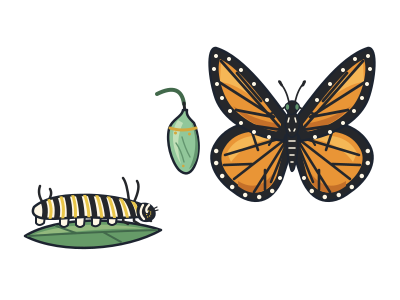
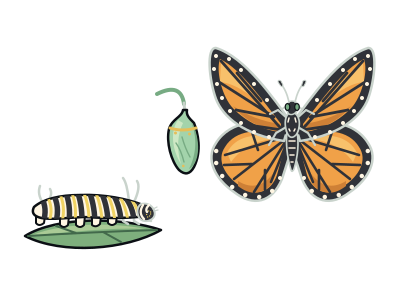
Beetles, butterflies, bees and flies pass through a stage called a pupa before becoming adults. Dragonflies and mayflies do not.
Inside winged insects
- Insects with full metamorphosisInsects whose young are grubs or caterpillars that rebuild themselves inside a pupa.
- MayfliesThe only insects that moult again after getting working wings, and adults live hours to days.
- Dragonflies and damselfliesAncient aerial hunters whose young spend months or years underwater, catching prey with a shooting jaw.
- GriffinfliesDragonfly-like giants of the coal forests, the largest insects that ever lived.
- Beaked giant insectsAncient insects with a sucking beak for plant juices, some with tiny extra wing flaps.
- Grasshoppers, cockroaches and kinInsects that grow up gradually, with no pupa: crickets, stick insects, earwigs and mantises.
- True bugsInsects with a beak for sucking juices, from cicadas and aphids to pond skaters.
- Grain thripsA tiny "thunderfly" with feathery wings that swarms in hot, stormy weather.