A group of living things
Insects with full metamorphosis
Holometabola
One family branch, two very different bodies
This branch is shown at about 345 million years ago; its age is a rough estimate.
You and insects with full metamorphosis meet in the Two-sided animals branch, shown at about 580 million years ago (on 11 November, in a calendar from life's shared ancestor to today).
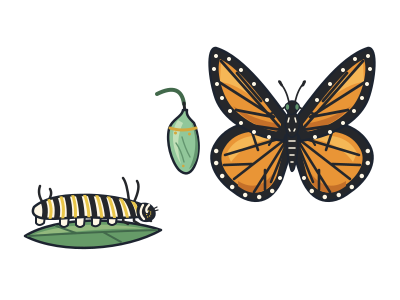
Caterpillars and grubs become pupae, rebuilding their bodies before emerging as adults. This shared life cycle links butterflies and moths with beetles, flies, bees, wasps and ants. Their adult bodies look very different, but they inherited this way of growing from a common ancestor.
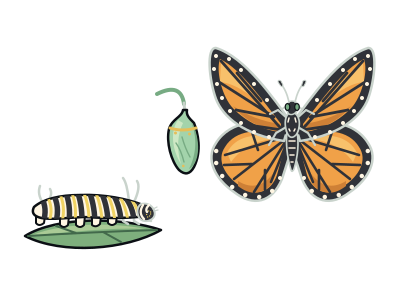
The usual life cycle has four stages: egg, larva, pupa and adult. The larva is the feeding youngster; caterpillars, grubs and maggots are different kinds of larvae. As they grow, they shed their outer skin repeatedly. Adult parts begin developing before the pupal stage. During that stage, they do not feed and use resources stored earlier to rebuild their bodies. They do not simply dissolve into soup: many organs survive and are reshaped.
This is called complete metamorphosis. Unlike these insects, dragonflies, grasshoppers and cockroaches grow up without a pupal stage. The change can give young and adults very different menus. A monarch caterpillar eats milkweed leaves, while the adult butterfly drinks nectar from many kinds of flowers.
Small flies stay small
A small adult fly will not grow into a bigger fly. It has already reached its adult size.
Food delivery
In many ant, bee and wasp colonies, adult nest-mates bring food to the larvae.
Wings need preparation
Newly emerged butterflies expand their wings with body fluid and let them dry before flying.
Inside insects with full metamorphosis
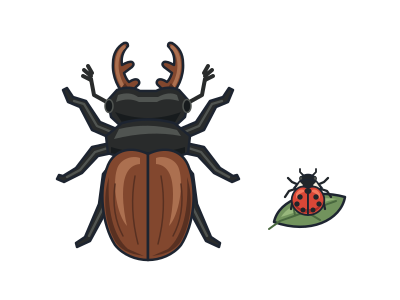
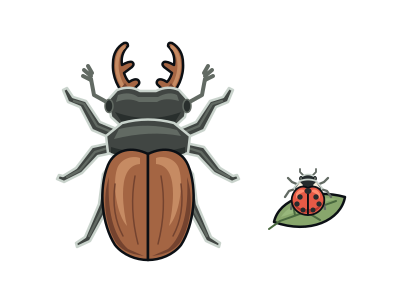
- BeetlesInsects with hard front wings like armour; about one in four animal species is a beetle.
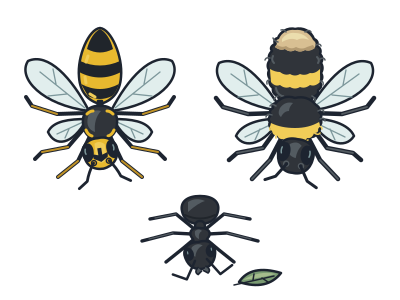
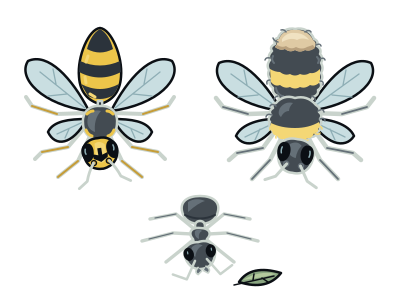
- Bees, wasps and antsAnts and bees are both specialised wasps.
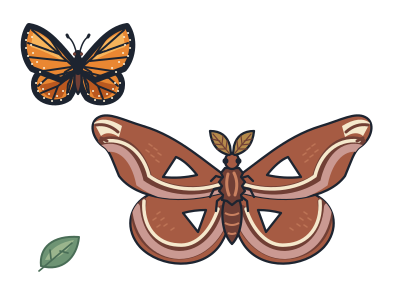
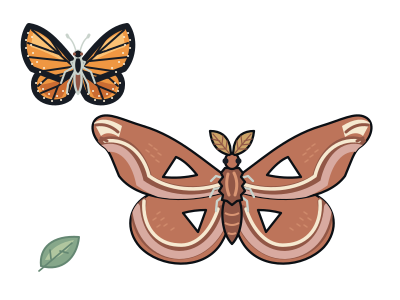
- Butterflies and mothsWings covered in tiny scales; butterflies are just one branch of the moths.
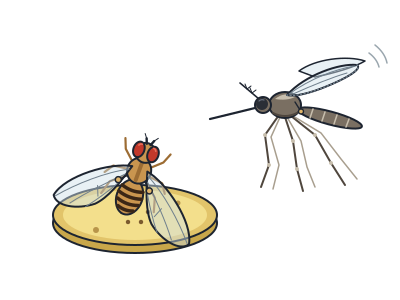
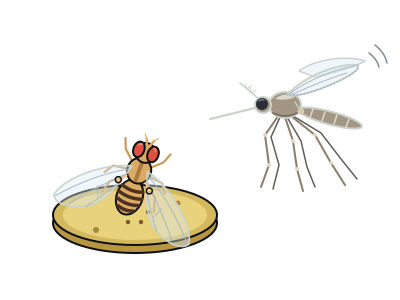
- True fliesInsects with one pair of wings; the back pair became tiny balancers.
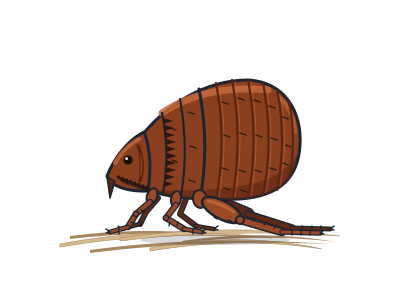
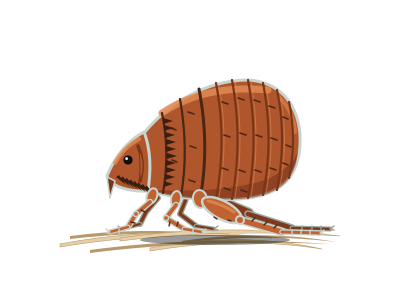
- Cat fleaA wingless insect that can jump over a hundred times its body length.
- Lacewings and kinNet-winged insects whose larvae are fierce hunters, from aphid lions to antlions.
- Great red sedgeIts larva builds a portable tube of plant bits glued with silk, a case it carries everywhere.
- Common scorpionflyMales have a curled tail tip like a scorpion's sting, but it is harmless.
- ColeopsisThe oldest known beetle relative, from 295-million-year-old rocks in Germany.
Next to it on the tree
- MayfliesThe only insects that moult again after getting working wings, and adults live hours to days.
- Dragonflies and damselfliesAncient aerial hunters whose young spend months or years underwater, catching prey with a shooting jaw.
- GriffinfliesDragonfly-like giants of the coal forests, the largest insects that ever lived.
- Beaked giant insectsAncient insects with a sucking beak for plant juices, some with tiny extra wing flaps.
- Grasshoppers, cockroaches and kinInsects that grow up gradually, with no pupa: crickets, stick insects, earwigs and mantises.
- True bugsInsects with a beak for sucking juices, from cicadas and aphids to pond skaters.
- Grain thripsA tiny "thunderfly" with feathery wings that swarms in hot, stormy weather.