A group of living things
Beetles
Coleoptera
Armoured wings, an enormous family
This branch is shown at about 320 million years ago; its age is a rough estimate.
You and beetles meet in the Two-sided animals branch, shown at about 580 million years ago (on 11 November, in a calendar from life's shared ancestor to today).
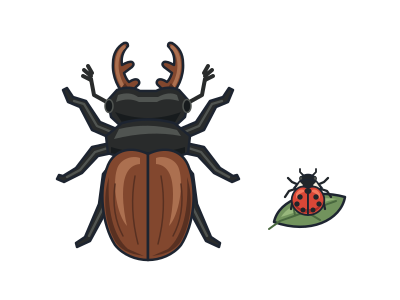
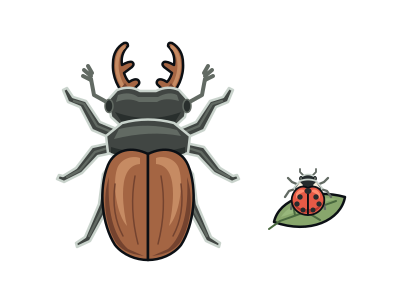
A large stag beetle and a tiny ladybird belong to the same enormous insect group. Most beetles have hard front wings that act like armour, protecting delicate flying wings underneath. These covers are wings themselves, not a separate shell. About one in four animal species known to science is a beetle. That means kinds of animals, not one quarter of all individual animals.
Beetles are relatives of butterflies, moths, bees, wasps and ants. Like those insects, they pass through four life stages: egg, larva, pupa and adult. The larva is the young feeding stage. During the pupa stage, its body changes into the adult form. The stag beetle and ladybird pictured here are adults.
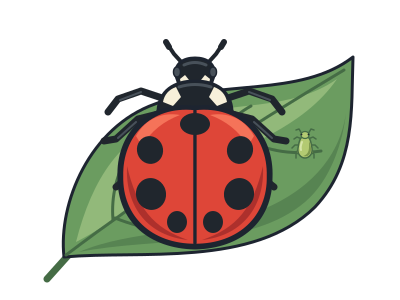
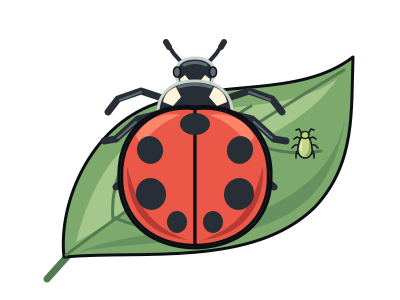
There is no single beetle menu. Across this group, different species eat leaves, fruit, nectar, fungi, other insects or decaying material. Seven-spot ladybirds hunt tiny insects called aphids on plants. Their small, rounded bodies look very different from a large stag beetle, but both belong on this branch.
Jaws, not antlers
A male stag beetle's antler-like jaws help it wrestle other males when competing for mates.
Years beneath your feet
European stag beetle larvae spend several years underground, feeding on decaying wood before becoming adults.
A colourful warning
Ladybirds' bright colours can warn predators that they taste unpleasant. This does not stop every bird from eating them.
Inside beetles
- Seven-spot ladybirdA gardener's friend that can eat thousands of aphids in its life.
- Ground, tiger and diving beetlesFast hunting beetles on land and in water, including the speediest runners for their size.
- Scarabs and stag beetlesHeavy beetles with fan-shaped antennae: dung rollers, chafers, horned giants.
- WeevilsBeetles with long snouts, one of the largest animal groups on Earth.
- Longhorn and leaf beetlesPlant-eating beetles: longhorns that bore into wood and colourful leaf-chewers.
- Fireflies and click beetlesGlowing beetles and their cousins that flip into the air with a loud click.
- Jewel beetlesMetallic beetles that shine like jewellery, used in art for centuries.
- Namib fog-basking beetleStands head-down on dunes at dawn so fog drips down its back into its mouth.
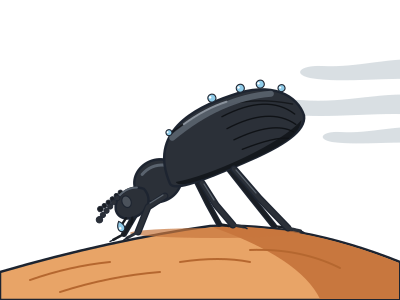
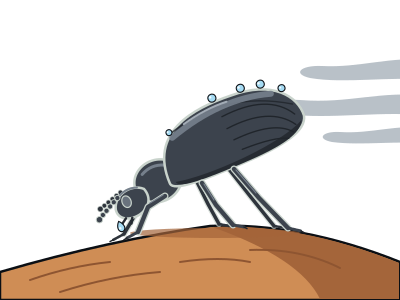
- Mealworm beetleIts larvae, mealworms, are fed to pets and birds and are now approved as human food.
Next to it on the tree
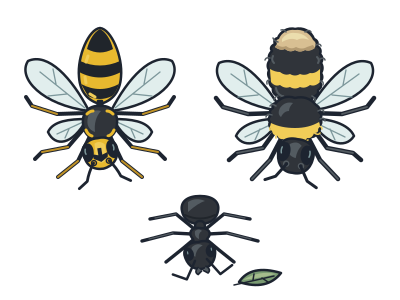
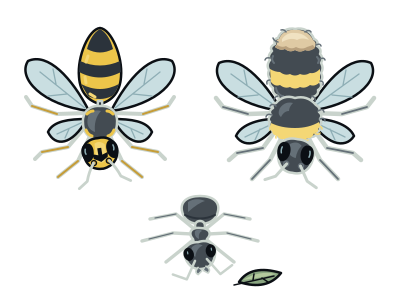
- Bees, wasps and antsAnts and bees are both specialised wasps.
- Butterflies and mothsWings covered in tiny scales; butterflies are just one branch of the moths.
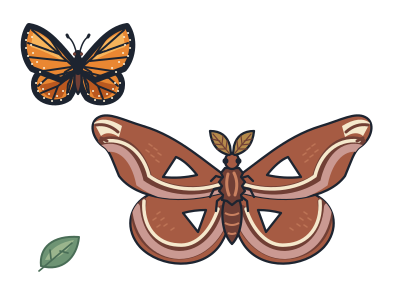
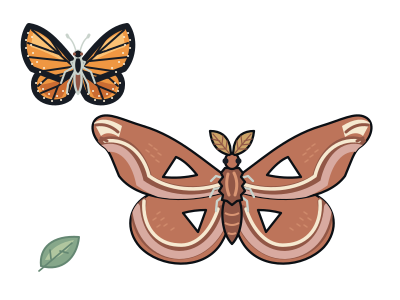
- True fliesInsects with one pair of wings; the back pair became tiny balancers.
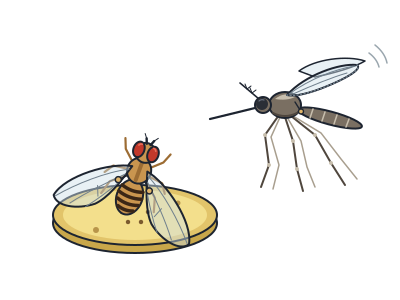
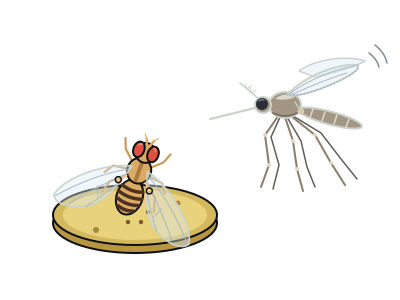
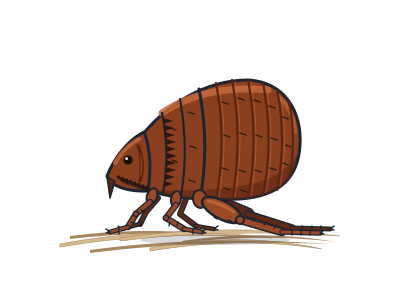
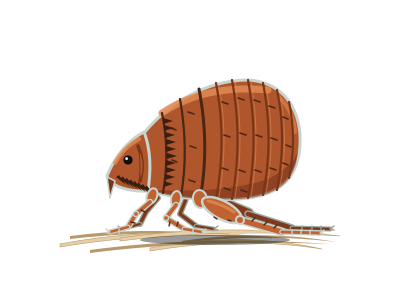
- Cat fleaA wingless insect that can jump over a hundred times its body length.
- Lacewings and kinNet-winged insects whose larvae are fierce hunters, from aphid lions to antlions.
- Great red sedgeIts larva builds a portable tube of plant bits glued with silk, a case it carries everywhere.
- Common scorpionflyMales have a curled tail tip like a scorpion's sting, but it is harmless.
- ColeopsisThe oldest known beetle relative, from 295-million-year-old rocks in Germany.