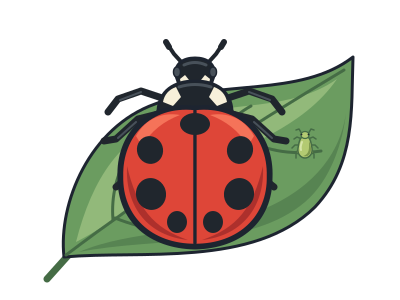
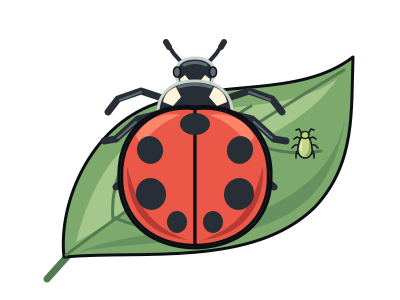
A species
Seven-spot ladybird
Coccinella septempunctata
A tiny beetle with a gardener-sized appetite.
You and the seven-spot ladybird meet in the Two-sided animals branch, shown at about 580 million years ago (on 11 November, in a calendar from life's shared ancestor to today).
The seven-spot ladybird is a gardener’s friend that can eat thousands of aphids during its life. Both adults and their very different-looking young mainly eat these insects. Despite its small, rounded body, it is a beetle, in the same broad insect group as the much larger stag beetle.
Bright yellow eggs are laid in batches beneath leaves, among groups of aphids. This puts the young close to food when they hatch. As they grow, they shed their outer skin. A newly emerged adult has soft, pale wing covers. Its familiar colours develop afterwards.
The red-and-black pattern warns predators that this beetle is unpleasant to eat. That warning does not make it completely safe: birds, spiders and larger beetles can still hunt it. Adults spend winter in sheltered places, either alone or in small groups.
Spots, not birthdays
Seven spots are its usual pattern, not a sign that it is seven years old.
A backup meal
Adults can eat pollen when their usual insect food is scarce.
Far from home
Native to Europe and Asia, it has become widespread in the United States and Canada following introductions.
Next to it on the tree
- Ground, tiger and diving beetlesFast hunting beetles on land and in water, including the speediest runners for their size.
- Scarabs and stag beetlesHeavy beetles with fan-shaped antennae: dung rollers, chafers, horned giants.
- WeevilsBeetles with long snouts, one of the largest animal groups on Earth.
- Longhorn and leaf beetlesPlant-eating beetles: longhorns that bore into wood and colourful leaf-chewers.
- Fireflies and click beetlesGlowing beetles and their cousins that flip into the air with a loud click.
- Jewel beetlesMetallic beetles that shine like jewellery, used in art for centuries.
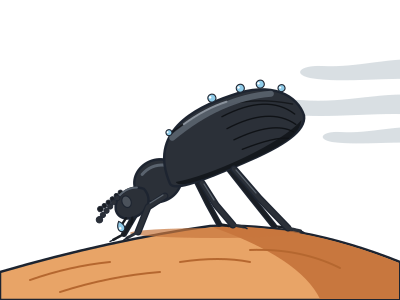
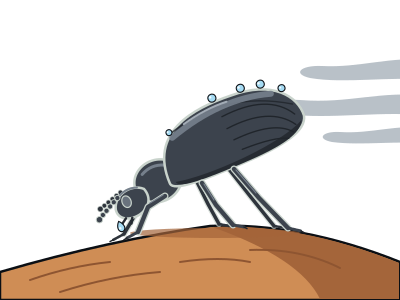
- Namib fog-basking beetleStands head-down on dunes at dawn so fog drips down its back into its mouth.
- Mealworm beetleIts larvae, mealworms, are fed to pets and birds and are now approved as human food.