A species
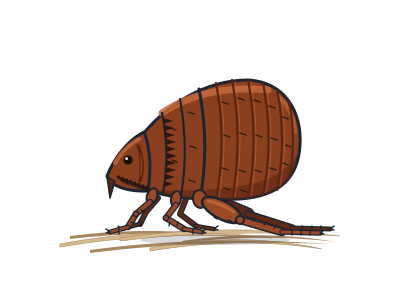
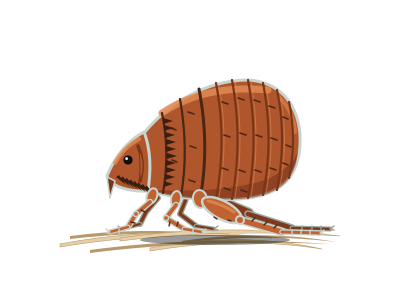
Cat flea
Ctenocephalides felis
A tiny wingless insect with a built-in catapult
You and the cat flea meet in the Two-sided animals branch, shown at about 580 million years ago (on 11 November, in a calendar from life's shared ancestor to today).
The cat flea has no wings at all, yet it is one of nature's great jumpers. Its best leaps can carry it about 100 times its own body length. Muscle power alone could not do this. Instead, the flea's muscles slowly squeeze a springy pad made of a rubbery protein. Then the pad lets go all at once, like a catapult.
Surprisingly, the flea sits among the winged insects on the tree of life, alongside beetles, butterflies, bees and flies. Its distant ancestors had wings, but fleas lost them. Like those relatives, it changes completely as it grows: egg, larva, pupa, then adult. Flea larvae look nothing like their parents. They are whitish, legless, eyeless and worm-like. They live in carpets and pet beds. They eat crumbs and 'flea dirt', which is the dried droppings of adult fleas that fall off the pet.
Adults are only about 1 to 3 mm long, about the size of a sesame seed or smaller. Their bodies are flattened from side to side, so they can slip easily between hairs. Despite the name, cat fleas also bite dogs, people and some wild mammals. They now live all around the world and probably came from Africa.
Feet, not knees
In 2011, scientists filmed fleas with high-speed cameras and showed that they push off with their 'toes', not their 'knees'. That settled a question scientists had argued about for over 40 years.
Waiting for footsteps
A young adult flea can stay inside its dusty silk cocoon until vibrations, like footsteps or a vacuum cleaner, tell it that a host is nearby.
Hidden majority
In a home with fleas, only about 5 in every 100 are biting adults. The rest are eggs, larvae and pupae hiding around the house.
Next to it on the tree
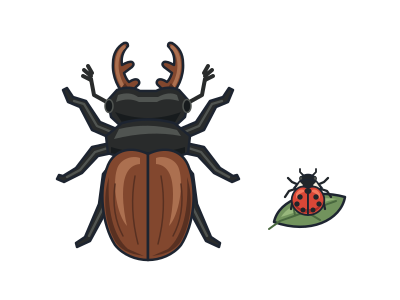
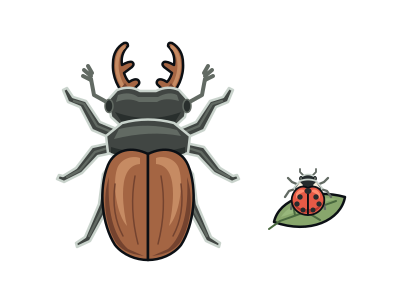
- BeetlesInsects with hard front wings like armour; about one in four animal species is a beetle.
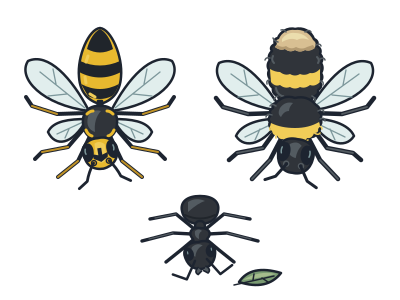
- Bees, wasps and antsAnts and bees are both specialised wasps.
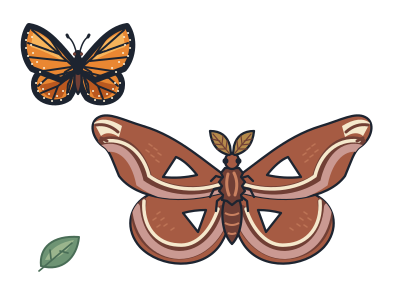
- Butterflies and mothsWings covered in tiny scales; butterflies are just one branch of the moths.
- True fliesInsects with one pair of wings; the back pair became tiny balancers.
- Lacewings and kinNet-winged insects whose larvae are fierce hunters, from aphid lions to antlions.
- Great red sedgeIts larva builds a portable tube of plant bits glued with silk, a case it carries everywhere.
- Common scorpionflyMales have a curled tail tip like a scorpion's sting, but it is harmless.
- ColeopsisThe oldest known beetle relative, from 295-million-year-old rocks in Germany.