A species
Silverfish
Lepisma saccharinum
A wingless relative of flying insects, still nibbling books and wallpaper.
You and the silverfish meet in the Two-sided animals branch, shown at about 580 million years ago (on 11 November, in a calendar from life's shared ancestor to today).
A silverfish nibbling a book belongs to a lineage older than insect flight. Its wider group is the sister group of winged insects: the neighbouring branch on their family tree. Silverfish are living relatives of butterflies and beetles, not their surviving ancestors. Their wingless shape reflects an early insect body plan, not the age of this particular species.
Books and wallpaper can supply a meal. Silverfish eat paper and starchy materials, including glue in book bindings and behind wallpaper. This species occurs worldwide and is closely associated with buildings. It favours dark, damp hiding places, such as cracks in bathrooms, kitchens and basements, emerging after dark to search for food.
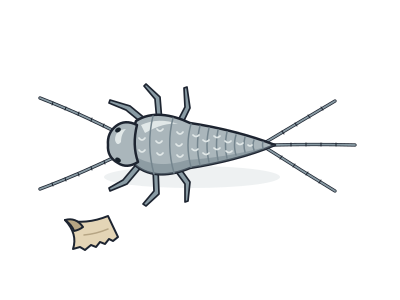
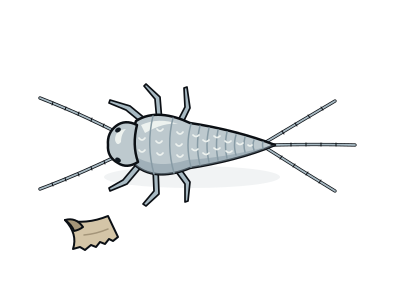
Despite the name, it is an insect, not a fish. Silvery scales and fish-like movements explain the resemblance. It walks on six short legs. The three slender threads at its rear are not extra legs.
Miniature adults
Newly hatched silverfish resemble tiny adults rather than caterpillars or grubs.
Still shedding
Adults can keep shedding their outer covering even after they are old enough to breed.
Replacement threads
Lost antennae and tail threads can regrow.