A species
Peppered moth
Biston betularia
A moth that made evolution visible
You and the peppered moth meet in the Two-sided animals branch, shown at about 580 million years ago (on 11 November, in a calendar from life's shared ancestor to today).
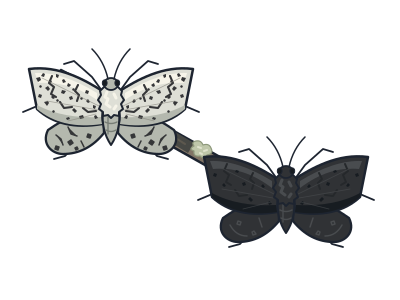
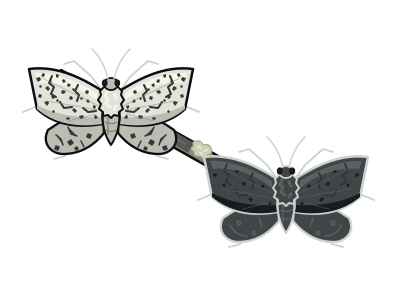
During Britain’s Industrial Revolution, dark peppered moths became more common in polluted areas. This relative of butterflies became a classic example of evolution: inherited differences becoming more or less common over generations.
Coal pollution killed pale growths on trees and coated resting surfaces with soot. Dark moths were harder for birds to spot against these darker backgrounds. They had a better chance of surviving and producing young. This is natural selection: an inherited feature helps some individuals leave more offspring.
Soot did not turn pale moths into black ones. Pale, dark and in-between moths belong to the same species, and their adult colour is inherited. The change happened across generations, not because individual moths chose a new colour. As air became cleaner and the pale growths returned, pale moths became more common again.
Twig lookalikes
The caterpillars resemble twigs and range from green to shades of brown.
A leafy menu
Caterpillars eat leaves from several trees and shrubs, including silver birch, oak, bramble and hawthorn.
Wings spread wide
Adults have a broad, furry body and hold their wings out to the sides.
Next to it on the tree
- ButterfliesDay-flying moths with clubbed antennae, now about 19,000 species.
- Silk moths and hawk mothsBig moths: hovering hawk moths and wild silk moths, some with no mouths as adults.
- Owlet and tiger mothsThe largest group of moths, with tiger moths that click back at bats.
- Small mandibulate mothA tiny moth that still has chewing jaws and eats pollen, like the earliest moths.
- Common clothes mothIts caterpillars eat wool and fur, which is why it chews holes in jumpers.
- Six-spot burnetA red-spotted day-flying moth that makes cyanide to protect itself.
- ArchaeolepisOne of the oldest moth fossils: scaly wings from about 190 million years ago, found in Dorset.