A species
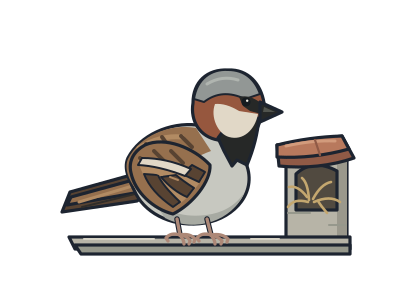
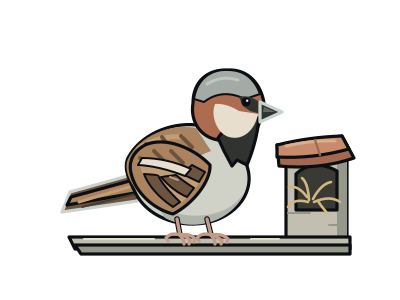
House sparrow
Passer domesticus
A world traveller that makes a home in our buildings
You and the house sparrow meet in the Amniotes branch, shown at about 320 million years ago (on 4 December, in a calendar from life's shared ancestor to today).
House sparrows have followed people around the world, turning gaps in our buildings into nest sites. Native to much of Europe, parts of Asia and North Africa, they now live on every continent except Antarctica. People helped them spread through deliberate releases and accidental journeys, including trips aboard ships. A familiar bird outside your home may not be native to your country.
They belong to the Old World sparrow family, along with Eurasian tree sparrows. Both are part of the much larger perching-bird branch of the tree. House sparrows build nests from dried plants, with softer linings that can include feathers, string and paper. Neighbouring nests sometimes even share walls.
Our settlements also provide food. House sparrows eat mostly grains and seeds, but they take discarded food and insects too. Parents feed insects to their chicks. Roof spaces, streetlights and signs can all become nesting places, though these birds also use nest boxes and sometimes holes in trees.
Not every sparrow wears a bib
Adult males have a black throat patch. Females lack it, and young birds resemble females.
A simple song
Their familiar song is a repeated series of cheep or chirrup notes.
Familiar but declining
House sparrows have declined substantially in Britain and are on the UK Red List of conservation concern.
Next to it on the tree
- Malachite sunbirdAn emerald African nectar-feeder: the Old World's answer to the hummingbird.
- Sociable weaverHundreds share one giant haystack-like nest that can last for a century.
- Zebra finchYoung males learn their song from their father, making it a key species for studying how we learn to talk.
- White wagtailPumps its long tail up and down as it runs after flies in car parks and fields.
- True finchesSeed-crackers with strong conical beaks, including canaries and Hawaii's honeycreepers.
- Buntings, tanagers and cardinalsSeed- and insect-eating songbirds that spread across the Americas: cardinals, sparrows, warblers and tanagers.