A species
Chinese hibiscus
Hibiscus rosa-sinensis
Here today, gone tomorrow: big tropical flowers that last about a day.
You and the chinese hibiscus meet in the Eukaryotes branch, shown at about 1.8 billion years ago (on 28 July, in a calendar from life's shared ancestor to today).
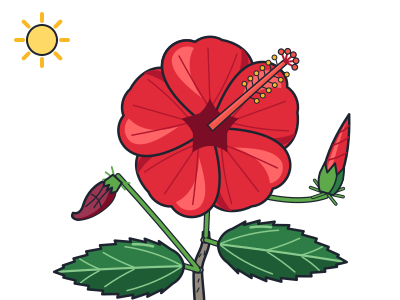
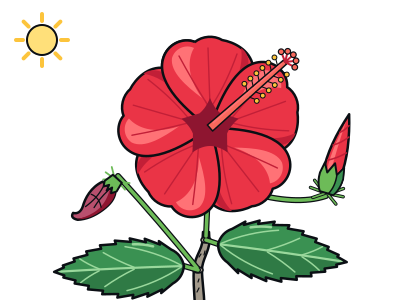
The Chinese hibiscus brightens tropical gardens with big, bold flowers, often about as wide as an adult's hand. Yet each one usually lasts only about a day. A flower opens in the morning, and before dusk its petals start to roll inwards as it closes and wilts. Scientists have linked this timetable to light and to the plant's own built-in daily clock. But a healthy bush keeps opening new buds for months.
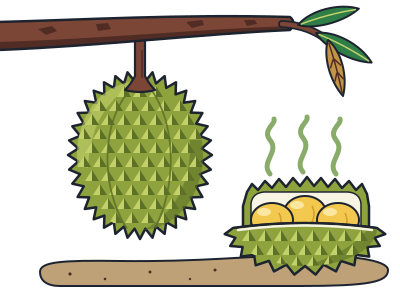
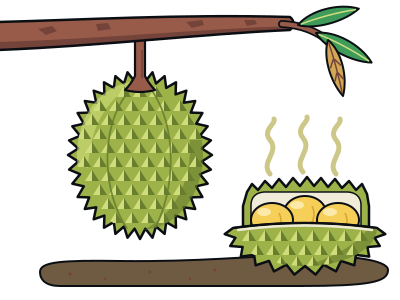
Its surprising relatives in the mallow family include cotton, cacao, baobabs and durians. A hibiscus flower's long central spike shows a typical family feature: pollen-making parts joined into a tube. Several family members have short-lived flowers too. Cotton flowers open for just one day. Baobab flowers work the night shift instead: they open in the late afternoon, are pollinated mainly by bats at night, and fall within a day.
Part of its scientific name means 'rose of China'. However, it is not a rose, and it has never been found growing wild, in China or anywhere else. By comparing DNA and leaf shapes, a team of scientists concluded that it is a hybrid, formed long ago, of two Pacific island hibiscus species. One comes from Vanuatu and the other from Tahiti, more than 4,000 kilometres of ocean apart.
The shoeblack plant
Crushed wilted flowers give a blue-black juice that people once used to blacken shoes and colour hair. That is how it got another of its names: the shoeblack plant.
Malaysia's national flower
In Malaysia it is the bunga raya, or 'celebratory flower'. On 28 July 1960, Prime Minister Tunku Abdul Rahman declared it the national flower of newly independent Malaya, now part of Malaysia, after seven flowers had been proposed. It was chosen partly because it could be seen all over the country, decorating the fences of many homes.
A parent named only in 2022
The Tahitian hibiscus thought to be one of its parents only received its scientific name in 2022. A French botanist recorded it growing wild on cliffs in Tahiti's interior in the 1850s. Today it is extremely rare and may even be extinct in the wild.
Next to it on the tree
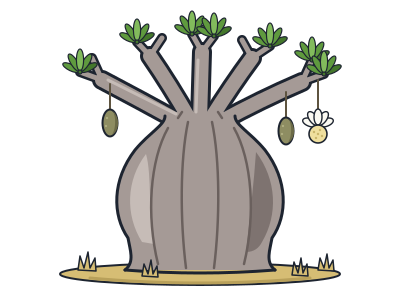
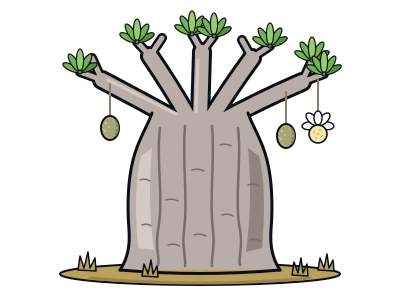
- BaobabA fat-trunked African tree that stores water and can live for over 2,000 years.
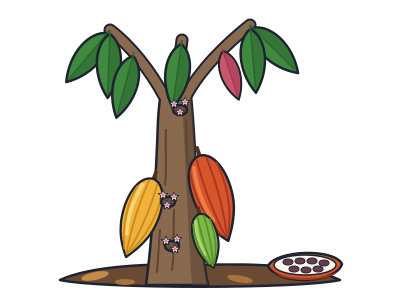
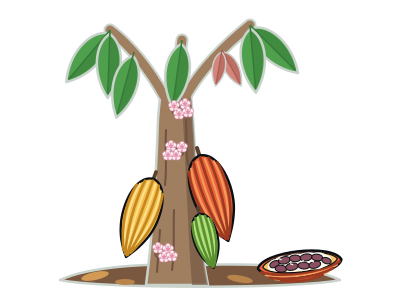
- Cacao treeChocolate comes from seeds in pods that grow straight out of the trunk.
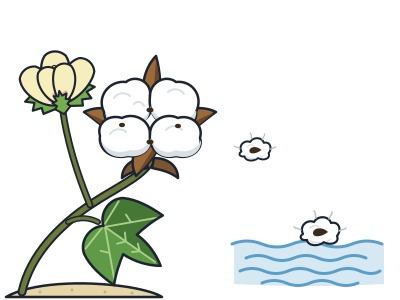
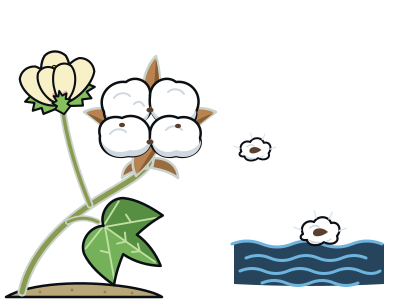
- Upland cottonThe fluffy fibres are seed hairs that help the seeds float and spread.
- DurianA spiky fruit so smelly it is banned on some public transport.