A species
Cacao tree
Theobroma cacao
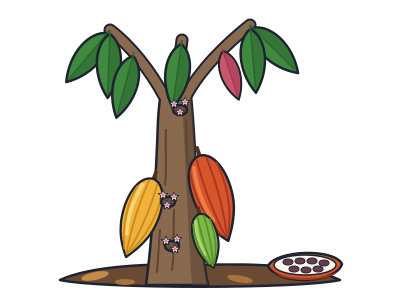
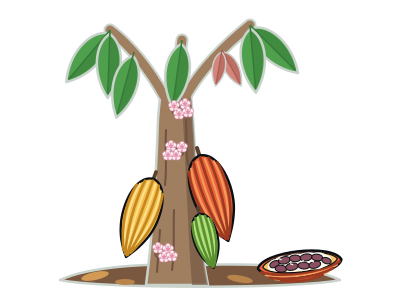
The chocolate tree hangs its pods straight off its trunk.
You and the cacao tree meet in the Eukaryotes branch, shown at about 1.8 billion years ago (on 28 July, in a calendar from life's shared ancestor to today).
Every chocolate bar starts on a tree with an odd habit. Its flowers, and later its fruits, grow straight out of the trunk and thick branches, not from the tips of leafy twigs. The pods are about as long as a school ruler. Depending on the variety, they ripen to yellow, orange or red. Inside, about 20 to 60 seeds sit packed in a sweet, white pulp.
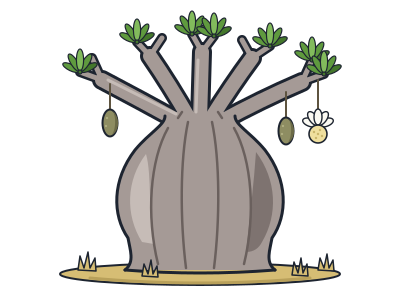
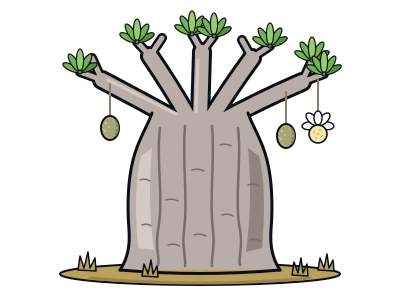
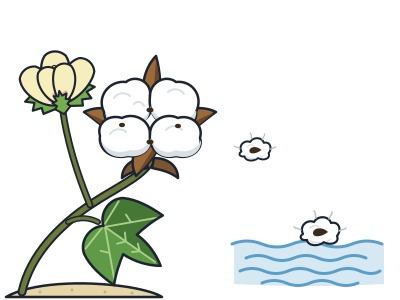
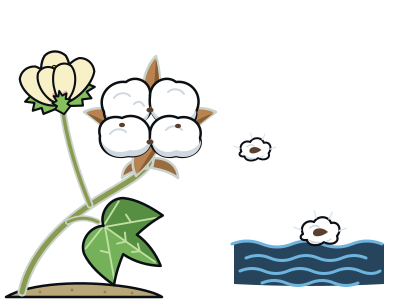
We call those seeds cocoa beans, but they are not true beans. The tree belongs to the mallow family. That makes it a relative of cotton, okra, durian and the giant baobab tree. Your chocolate and your cotton T-shirt come from the same plant family!
In the wild, the tree grows in the shade beneath taller rainforest trees, from south-eastern Mexico to the Amazon. Monkeys and other animals break open the pods to eat the sweet pulp. Then they spit out or poo out the seeds, which helps new trees to grow.
Fresh seeds taste bitter. To make chocolate, people first leave them to ferment in their pulp, which makes them less bitter and starts the chocolate flavour. After that, the seeds are dried, roasted and ground.
Lots of flowers, few pods
A grown tree may make about 6,000 tiny flowers in a year but only about 20 pods. Its main pollinators are tiny flies called midges, only about 1 to 3 mm long.
Oldest signs in the Amazon
The oldest known signs of people using cacao are about 5,300 years old. They were found on ancient pottery in the upper Amazon, in Ecuador.
Money that grew on trees
Peoples of ancient Mexico and Central America, including the Maya, used cacao beans as money. Old records say one bean could buy a tomato or a tamale.