A species
Upland cotton
Gossypium hirsutum
The fluffy seed hairs that became the world's favourite fibre
You and the upland cotton meet in the Eukaryotes branch, shown at about 1.8 billion years ago (on 28 July, in a calendar from life's shared ancestor to today).
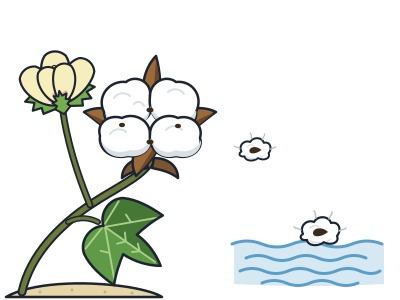
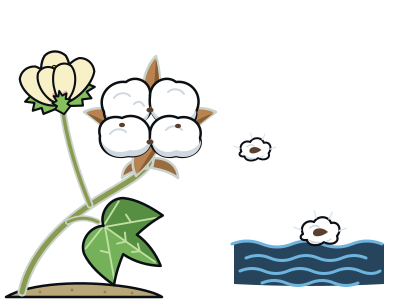
The soft white fluff in a cotton T-shirt started out as hairs on a seed. The fruit, called a boll, dries and splits open to show seeds wrapped in long fibres. Each fibre is a single cell that grows out of the seed's skin. These hairs help the seeds float, which can help them drift away on water. In one seawater test, about 70% of crop cotton seeds with their fibres were still floating after six months. One seed out of 16 from a wild form could even still sprout after six months in salt water.
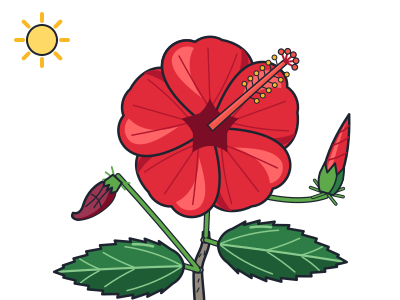
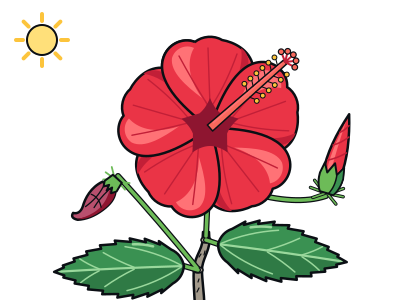
Cotton belongs to the mallow family, together with hibiscus, okra and the cacao tree that gives us chocolate. You can see the likeness in its flowers. Like a hibiscus, each has five petals in a cup and a column of stamens in the middle.
In the wild, upland cotton is a woody shrub or small tree that lives for many years. It grows near the coast in Mexico, Central America, the Caribbean and southern Florida. Farmers grow it from seed each year, and the crop plants reach about waist to shoulder height on an adult. A recent study suggests people first turned it into a crop in the north-west of Mexico's Yucatán Peninsula, perhaps about 5,000 years ago. Today it makes up about 90% of all the cotton grown in the world.
A flower that blushes
Cotton flowers usually open cream-coloured. By the afternoon of the same day they start to turn reddish, and by the next day they are redder still, as red pigments build up while the flower withers.
From tiny to giant
A cotton fibre starts only about a hundredth of a millimetre long. In about 16 days it stretches to about 2.5 to 3 cm, more than a thousand times longer. Cotton fibres are thought to be some of the longest single cells in any flowering plant.
Wilder than the crop
Wild upland cotton in the Yucatán has much smaller bolls and shorter, darker fibres than crop cotton. Two wild plants there differ in their genes about twice as much as two modern crop varieties do.