A species
Bluebell
Hyacinthoides non-scripta
The little bulb that turns British woods blue each spring
You and the bluebell meet in the Eukaryotes branch, shown at about 1.8 billion years ago (on 28 July, in a calendar from life's shared ancestor to today).
Every spring, old woods across Britain fill with a haze of violet-blue. Britain and Ireland may hold as many as half of all the world's bluebells. Nowhere else are they so common. The surprise is the bluebell's family. On the tree of life it sits in the asparagus family, next to garden asparagus, the dragon's blood tree and the spiky Joshua tree of American deserts.
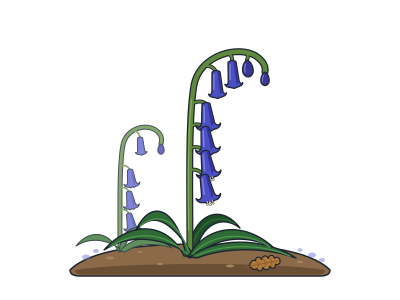
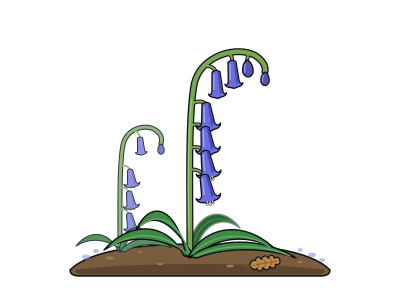
A bluebell grows from a bulb buried about 10 to 12 cm underground. Each plant has a few narrow, strap-like leaves and one flower stem up to about 50 cm tall, roughly knee height on an adult. The top of the stem bends over like a shepherd's crook, so the sweet-smelling bells all hang from one side. The tips of each bell curl backwards.
Bluebells flower in April and May, before the leaves on the trees above fill in and block the sunlight. Bumblebees do most of the pollinating. Bluebells spread very slowly, by seed or by their bulbs copying themselves. That is why thick carpets are often a sign of ancient woodland that has been left alone for a very long time.
In Britain, wild bluebells are protected by law. Even walking on them can harm them for years, because crushed leaves cannot make food for the plant.
Glue from a flower
Long ago, starch from bluebell bulbs was used as glue for binding books. In Elizabethan times it was also used to stiffen the frilly ruffs people wore around their necks.
Blooming earlier
Since 2001, bluebells have started flowering at least 17 days earlier, probably because of climate change.
Spot the imposter
Look at the pollen inside the bell. A native bluebell has creamy-white pollen. A Spanish bluebell has blue or pale green pollen and paler flowers, and its bells grow all the way around an upright stem.
Next to it on the tree
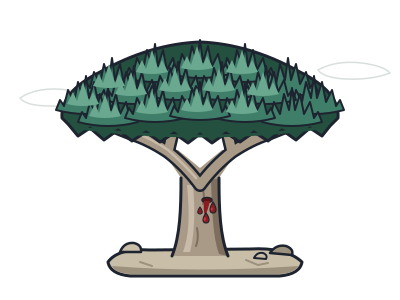
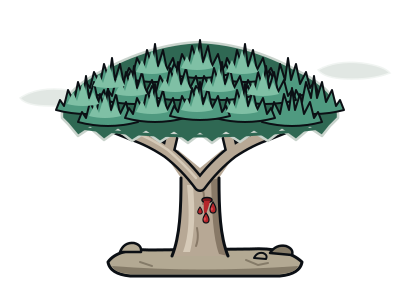
- Dragon's blood treeAn umbrella-shaped tree from Socotra that bleeds red resin.
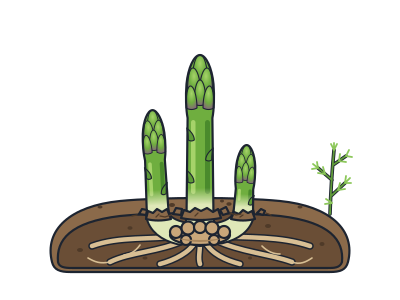
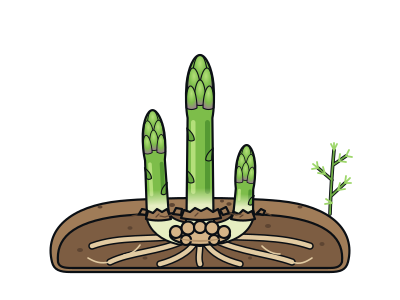
- AsparagusThe spears are young shoots that can grow 15 centimetres in a day.
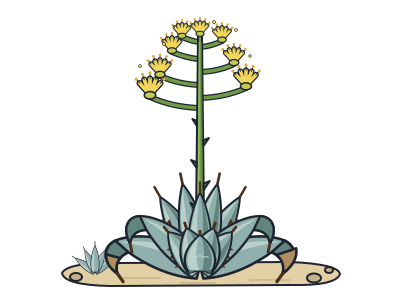
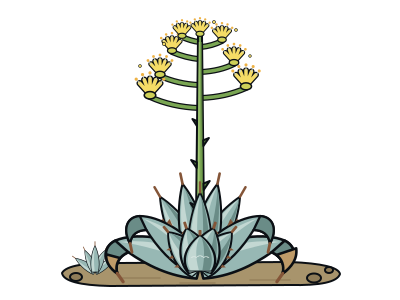
- Century plantGrows for decades, then sends up a flower stalk taller than a house and dies.
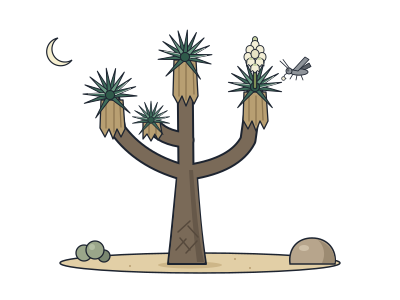
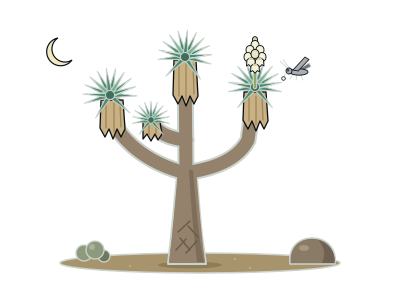
- Joshua treeA spiky desert tree of the Mojave that relies on one kind of moth to make seeds.