A species
Asparagus
Asparagus officinalis
The vegetable that shoots up so fast that farmers pick it almost every day.
You and the asparagus meet in the Eukaryotes branch, shown at about 1.8 billion years ago (on 28 July, in a calendar from life's shared ancestor to today).
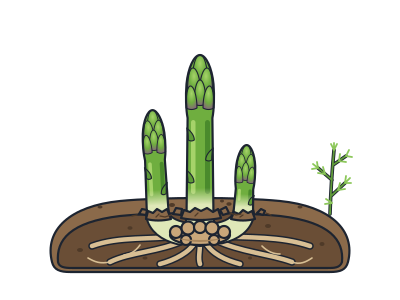
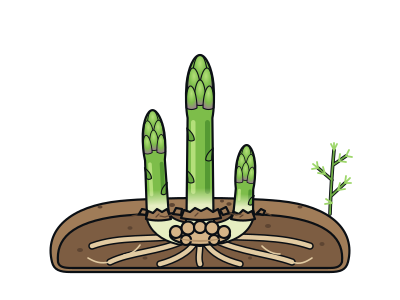
Those spears on your plate are young shoots that push up out of bare soil. In warm spring weather they grow very fast. Some counts say a spear can grow about 15 centimetres in a day, roughly the length of a pencil. Because of this, farmers often have to pick the same field every day, and sometimes twice a day.
The spears grow from an underground 'crown', a short stem joined to a tangle of long roots. One crown can keep sending up spears every spring for well over 10 years.
If nobody cuts a spear, it opens into a soft, feathery bush that can grow about as tall as an adult. It looks like a fern, but it isn't one. Asparagus is a flowering plant that makes flowers and seeds. Even its fine green 'needles' are not true leaves. They are flattened stems. The real leaves have shrunk to the tiny triangles you can see on a spear's tip and sides.
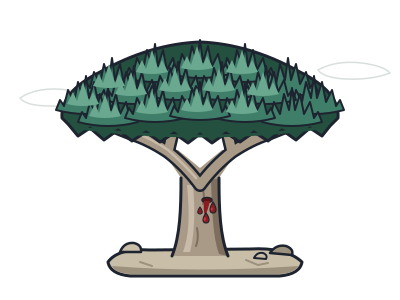
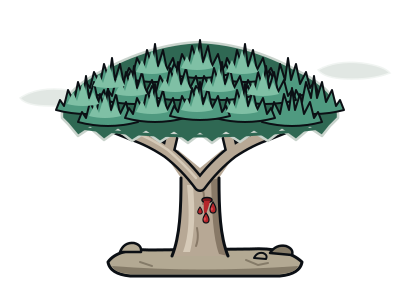
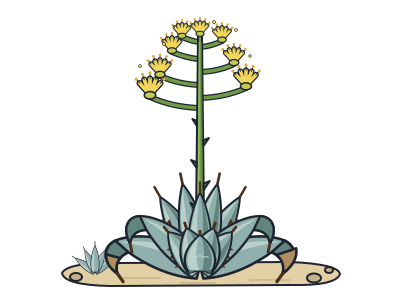
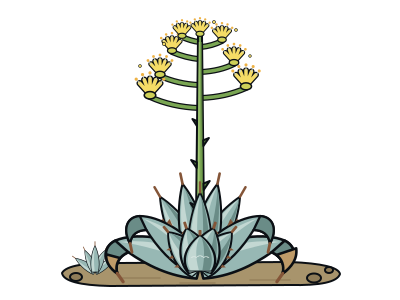
Asparagus may be a soft spring vegetable, but some of its family members are tough plants of dry places. It shares that family with the spiky century plant, with yuccas such as the Joshua tree, and with the dragon's blood tree.
White is not a different kind
White asparagus is ordinary asparagus. Growers keep light off the spears by piling soil over them or covering them with black plastic tunnels.
Boy and girl plants
An asparagus plant is almost always either male or female. Many growers plant all-male varieties because these give bigger harvests and don't scatter unwanted seedlings.
The smelly-wee mystery
After people eat asparagus, their body breaks down a chemical in it and makes smelly sulphur compounds that come out in their wee. Many people can't smell it at all, partly because of their genes.
Next to it on the tree
- Dragon's blood treeAn umbrella-shaped tree from Socotra that bleeds red resin.
- Century plantGrows for decades, then sends up a flower stalk taller than a house and dies.
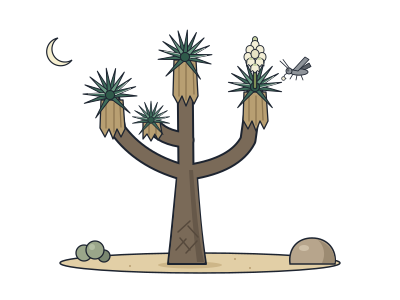
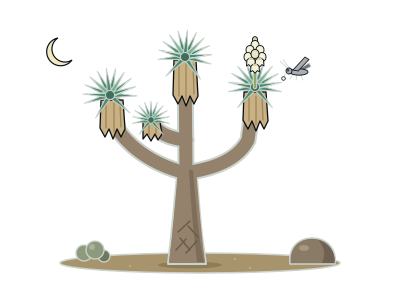
- Joshua treeA spiky desert tree of the Mojave that relies on one kind of moth to make seeds.
- BluebellCarpets British woods in blue each spring; half the world's bluebells grow in the UK.