A species
Dragon's blood tree
Dracaena cinnabari
An upside-down umbrella of a tree that bleeds red resin
You and the dragon's blood tree meet in the Eukaryotes branch, shown at about 1.8 billion years ago (on 28 July, in a calendar from life's shared ancestor to today).
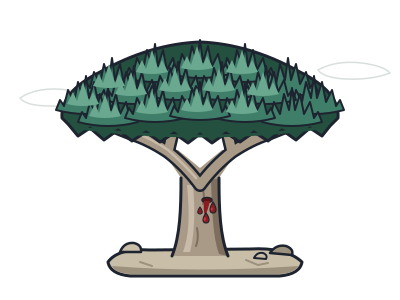
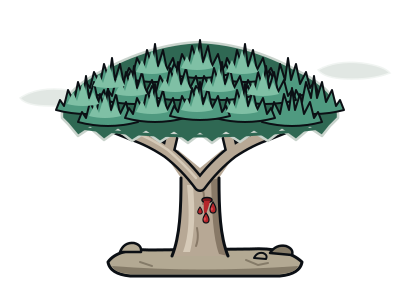
Picture a giant umbrella blown inside out, standing on a dry mountain. That's the dragon's blood tree. It grows wild only on Socotra, a group of islands in the Arabian Sea that belongs to Yemen. Its dark red resin looks like blood, which is how it got its name.
Its family is surprisingly familiar. It belongs to the same big group of plants as onions, orchids and agaves. It is even in the same genus as houseplants such as the corn plant, lucky bamboo and the snake plant. Many of its relatives, like onions and orchids, cannot thicken their stems as they age. But this tree's trunk keeps getting wider. Unlike an oak, it does not lay down clear yearly rings, so you cannot count rings to find its age.
On its dry island, the upturned branches and thick crown help it catch moisture from mist and cloud. The deep shade underneath slows drying and helps seedlings grow, so the trees often stand close together. It grows up to about 9 metres tall, with a crown up to about 12 metres across.
In the days of the ancient Egyptians, Greeks and Romans, traders carried the tree's red sap away from Socotra. People used it for healing and as an artist's colour. Today the tree is listed as Vulnerable. Goats eat the young trees, its habitat is shrinking, and rain and fog seem to be getting less reliable.
Forks on cue
A branch only splits in two when its growing tip stops growing, for example after it flowers or is eaten. Over many years this builds the crown's repeated forking pattern.
Colour-changing berries
Its berries take about five months to ripen. They change from green to black, then orange-red. Each holds one to three seeds, which birds spread.
A Scottish connection
Scottish botanist Isaac Bayley Balfour formally described the tree in 1880. He later ran the Royal Botanic Garden Edinburgh, which has kept close links with Socotra ever since.
Next to it on the tree
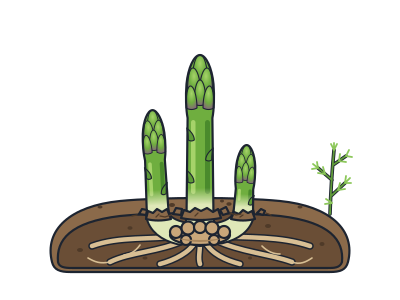
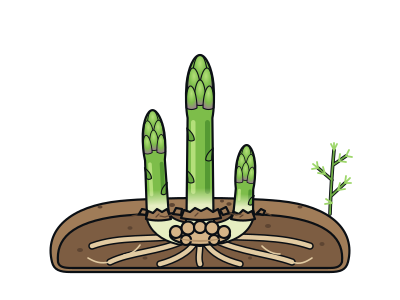
- AsparagusThe spears are young shoots that can grow 15 centimetres in a day.
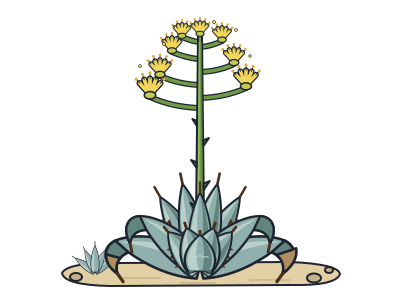
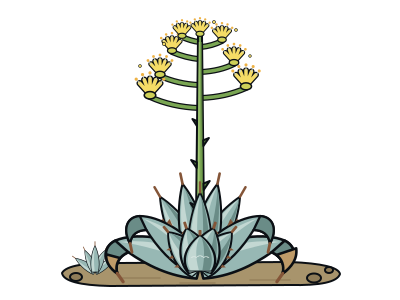
- Century plantGrows for decades, then sends up a flower stalk taller than a house and dies.
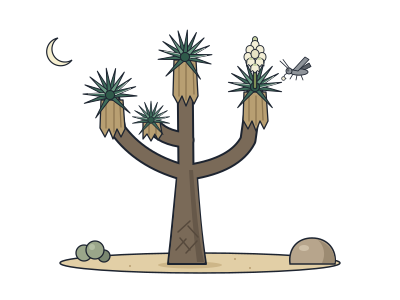
- Joshua treeA spiky desert tree of the Mojave that relies on one kind of moth to make seeds.
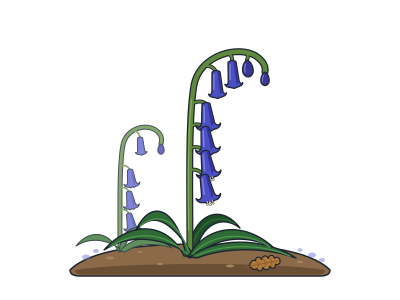
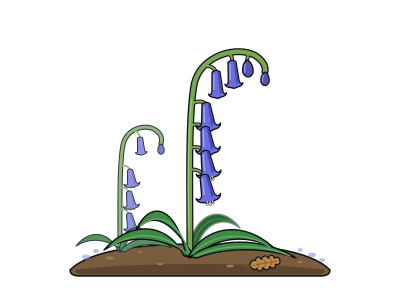
- BluebellCarpets British woods in blue each spring; half the world's bluebells grow in the UK.