A group of living things
Alphaproteobacteria
Alphaproteobacteria
The bacterial family your cells' power stations came from
This branch is shown at about 1.9 billion years ago; its age is a rough estimate.
You and alphaproteobacteria meet in the All life branch, shown at about 4.2 billion years ago (on 1 January, in a calendar from life's shared ancestor to today).
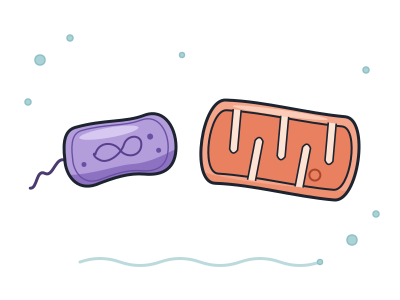
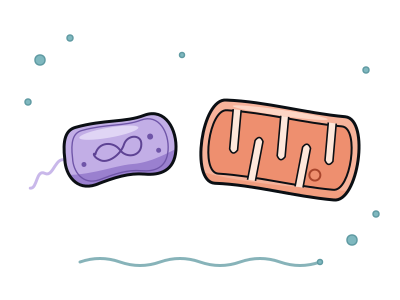
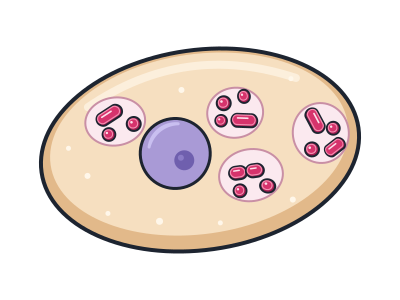
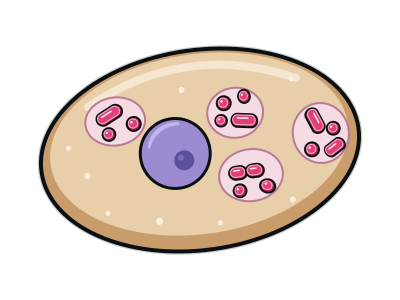
Inside nearly every cell of your body are tiny power stations called mitochondria. They release the energy your cells run on. Surprisingly, they started out as bacteria. Scientists think that long ago, an ancestor of complex cells swallowed a bacterium. It was not digested. It stayed, and it became part of the cell. That captured bacterium was an ancient relative of this group, so these bacteria are family to a part of you.
Mitochondria still show signs of where they came from. Like these bacteria, they are wrapped in two membranes, and they carry their own small loop of DNA. But over time they have lost most of their genes, and they can no longer live on their own outside the cell.
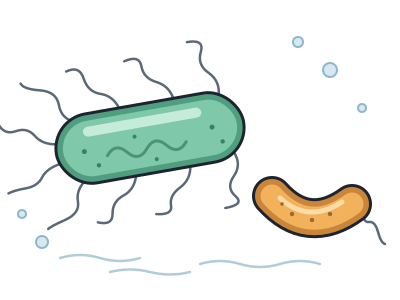
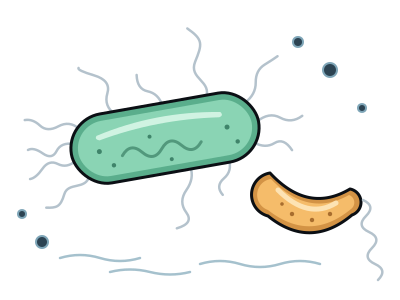
The bacteria in this group today are a very mixed bunch. Some use sunlight for energy. Some eat methane, a gas. Some team up with plants. Others live as parasites inside other living cells. Scientists recognise at least 20 large groups within it. Most are far too small to see without a microscope, but together they live almost everywhere, from soil to the open ocean.
Passed down from mum
You almost always get your mitochondria from your mother, not your father. Because of this, scientists can use mitochondrial DNA to trace family history a very long way back along the mother's line.
Cells can have thousands
Cells hold very different numbers of mitochondria. A single liver cell can hold more than 2,000, but mature red blood cells have none at all.
Mosquito fighters
One member of this group, Wolbachia, is being put into mosquitoes that don't normally carry it. The World Mosquito Program releases these mosquitoes to breed with wild ones. Wolbachia makes it harder for them to spread dengue, Zika and chikungunya.
Inside alphaproteobacteria
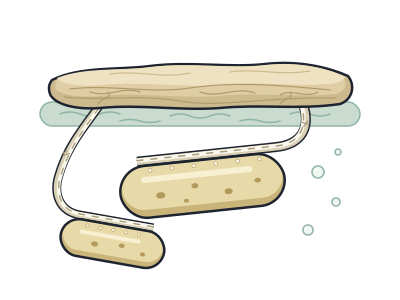
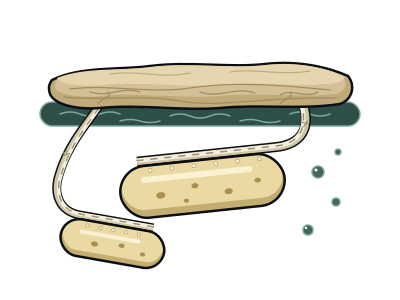
- WolbachiaLives inside the cells of most insect species, controls how they breed, and now helps stop dengue mosquitoes.
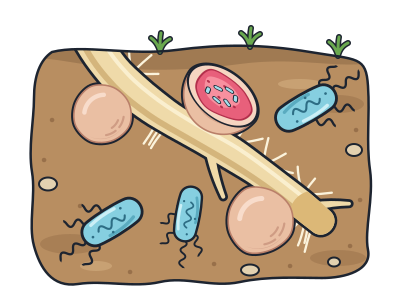
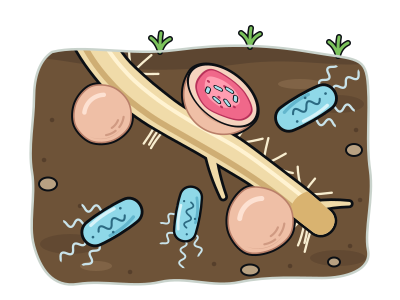
- Root-nodule bacteriumMoves into pea and bean roots and pulls nitrogen from the air, feeding the plant like free fertiliser.
- SAR11Possibly the most abundant living thing on Earth: tiny, thrifty cells filling every ocean.
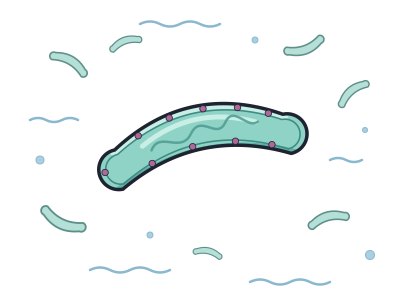
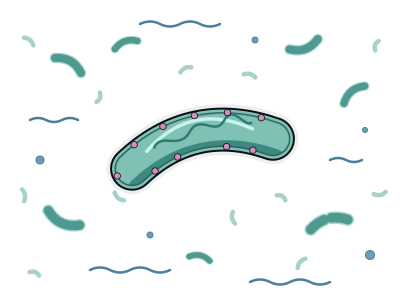
- Magnet bacteriumBuilds a chain of tiny magnets inside its body and uses it like a compass to swim along Earth's field.
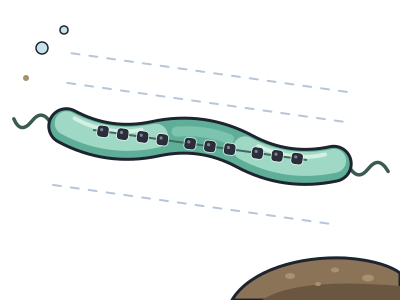
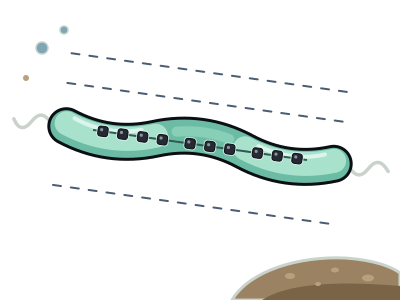
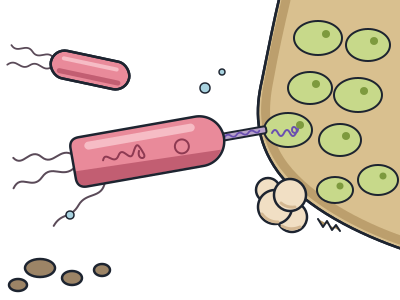
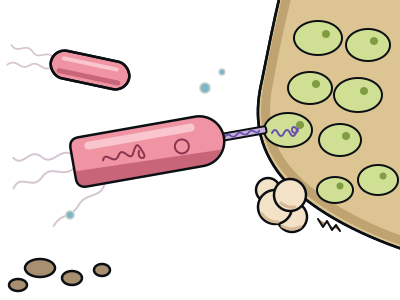
- Crown gall bacteriumNature's genetic engineer: it slips its own genes into plants, a trick scientists borrowed to breed crops.
- Vinegar bacteriumBreathes on wine and cider, turning their alcohol into the sharp acid that makes vinegar.
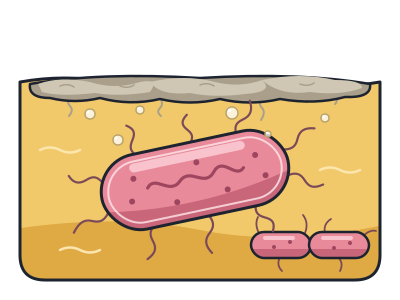
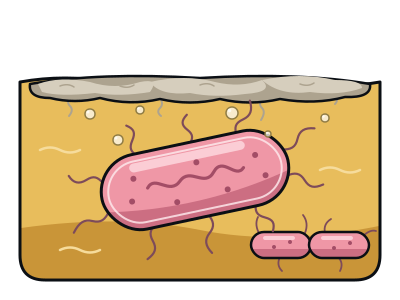
- Kombucha bacteriumSpins pure cellulose threads into the rubbery mat floating on kombucha and the jelly cubes of nata de coco.