A species
Kombucha bacterium
Komagataeibacter xylinus
A tiny bacterium that spins the rubbery mat on kombucha and the jelly in nata de coco.
You and the kombucha bacterium meet in the All life branch, shown at about 4.2 billion years ago (on 1 January, in a calendar from life's shared ancestor to today).
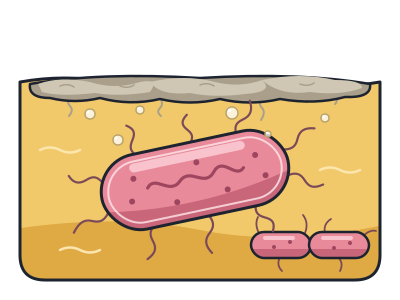
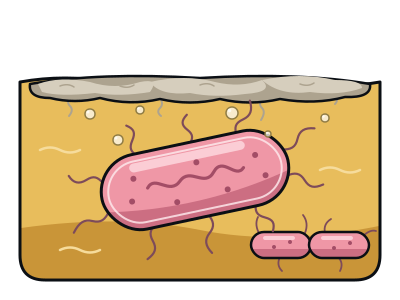
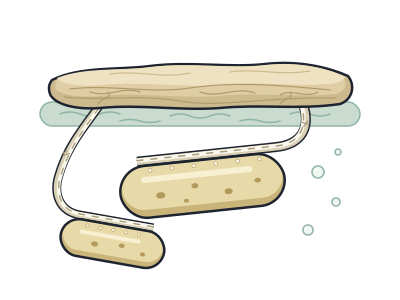
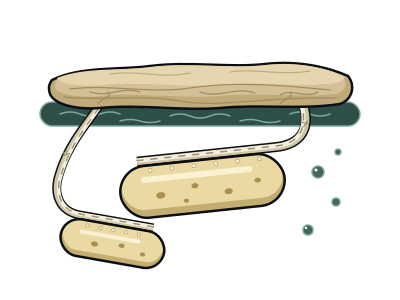
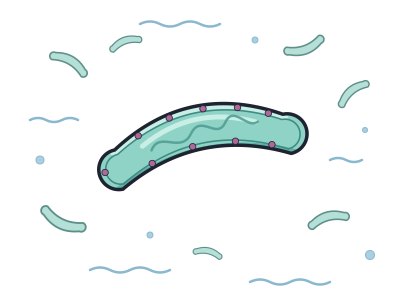
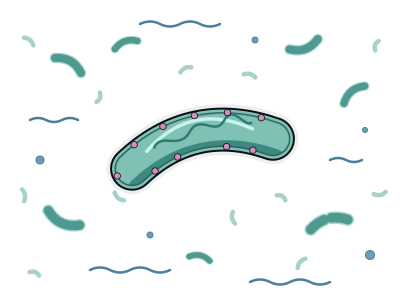
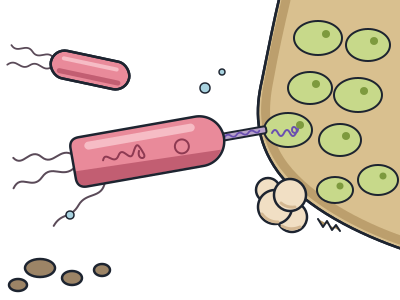
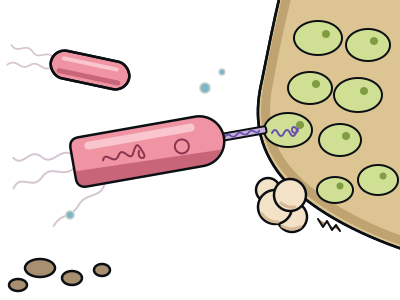
This tiny bacterium is a spinner. Each cell pushes out fine threads of cellulose, the material that makes up much of plant stems and wood. Its threads tangle together with those of billions of other cells to make a rubbery mat. People grow these mats on coconut water, then wash them and cut them into the chewy, see-through jelly cubes of nata de coco. Mats like this also float on top of kombucha.
Its cellulose is chemically the same as a plant's, but purer. It has none of the other woody materials that plants mix in. The fibres are about a hundred times thinner than wood-pulp fibres, and the cellulose can hold many times its own weight in water.
This bacterium needs oxygen, but it cannot swim. It grows at the top of still liquids, and its mat forms right where the liquid meets the air. In the wild it lives on rotting and fermenting fruit.
It belongs to the acetic acid bacteria, the same family as the vinegar bacterium beside it on the tree. Like its relative, it makes the sour acid that gives vinegar its taste.
A slippery first look
In 1886 the British scientist Adrian John Brown described its mat as 'a sort of moist skin, swollen, gelatinous and slippery'. He showed that the slimy 'mother of vinegar' was cellulose made by this bacterium.
A treat with a history
The Filipino chemist Teódula Kalaw África invented nata de coco in 1949 as an alternative to nata de piña. That pineapple jelly has been made in the Philippines since the 1700s, long before scientists had named the microbe.
From jelly to loudspeakers
Its cellulose has been used to make wound dressings and the sound membranes in some Sony loudspeakers. For most big jobs, though, it still costs too much to compete with plant cellulose.
Next to it on the tree
- WolbachiaLives inside the cells of most insect species, controls how they breed, and now helps stop dengue mosquitoes.
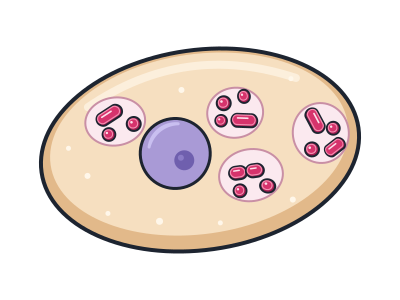
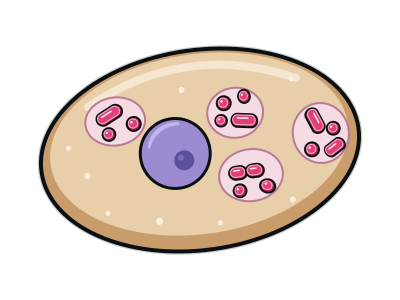
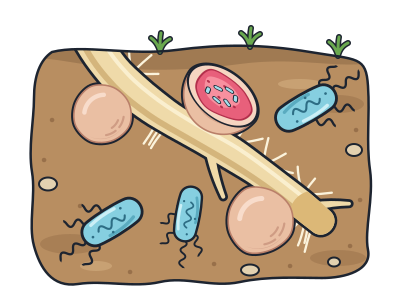
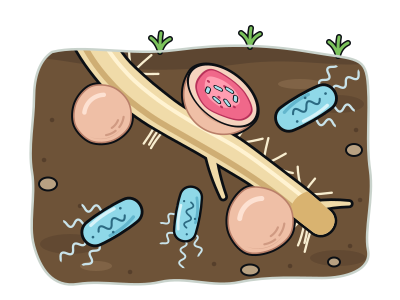
- Root-nodule bacteriumMoves into pea and bean roots and pulls nitrogen from the air, feeding the plant like free fertiliser.
- SAR11Possibly the most abundant living thing on Earth: tiny, thrifty cells filling every ocean.
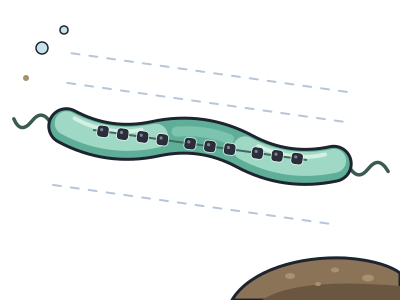
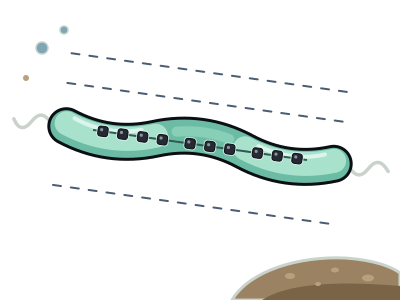
- Magnet bacteriumBuilds a chain of tiny magnets inside its body and uses it like a compass to swim along Earth's field.
- Crown gall bacteriumNature's genetic engineer: it slips its own genes into plants, a trick scientists borrowed to breed crops.
- Vinegar bacteriumBreathes on wine and cider, turning their alcohol into the sharp acid that makes vinegar.