A species
SAR11
Candidatus Pelagibacter ubique
Possibly the most common living thing on Earth, drifting through every ocean
You and the sar11 meet in the All life branch, shown at about 4.2 billion years ago (on 1 January, in a calendar from life's shared ancestor to today).
This tiny cell may be the most common living thing on Earth. It makes up about a quarter of all the microbial cells in the ocean. In summer it can be up to about half of all the cells in the surface water of mild-climate seas. Scientists estimate that there are about twenty billion billion billion of them.
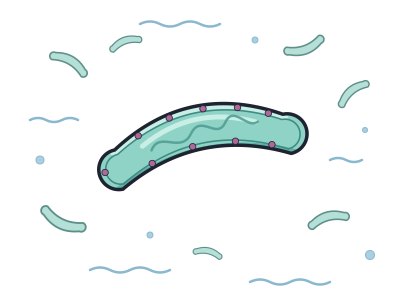
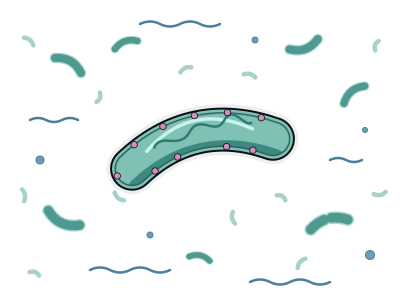
Each cell is a thin rod or crescent. About 1,100 to 2,700 of them would fit end to end across one millimetre. Its genome is one of the smallest known for any cell that lives on its own: about 1.3 million DNA letters and about 1,350 genes. Almost nothing is wasted. It has very few spare copies of genes and hardly any gaps between them.
A genome this small usually belongs to a parasite that borrows from a host. Yet this cell lives free and makes nearly everything it needs. It only has to pick up a few ready-made ingredients from the water, such as certain sulfur compounds. Its ancestors are thought to have lost about half their genes when they moved into the open ocean. In most family trees it sits in the same big group of bacteria as Wolbachia, the magnet bacterium, the root-nodule bacterium and the crown gall bacterium shown beside it.
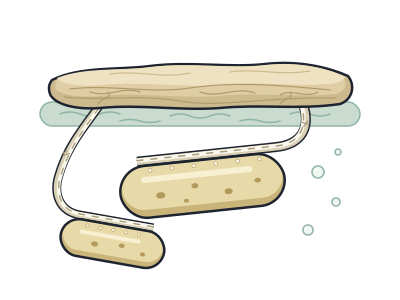
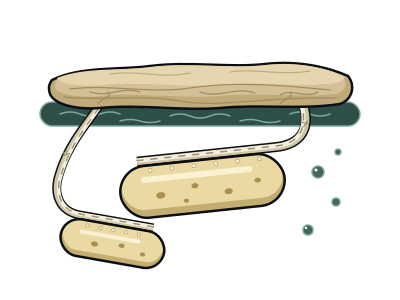
It feeds on tiny bits of dissolved food in seawater, so it plays a big part in how carbon moves around the Earth. A light-powered pump in its cell membrane also lets it collect a little energy from sunlight.
Found by its DNA alone
Scientists first found it in 1990 from bits of its DNA in water from the Sargasso Sea. That is where the name SAR11 comes from: Sargasso Sea clone 11. Nobody managed to grow it in a lab until 2002.
Part of the smell of the sea
It takes up a sulfur chemical made by plankton and turns some of it into a gas called dimethyl sulfide. That gas is part of what gives the seaside its smell.
Not immune to viruses
Some scientists once suggested that viruses could not attack it. Then in 2013 researchers found viruses that infect it. One of them belongs to a group that may be among the most common viruses on Earth.
Next to it on the tree
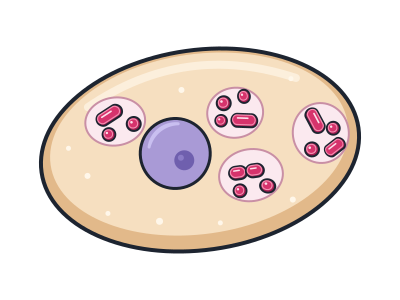
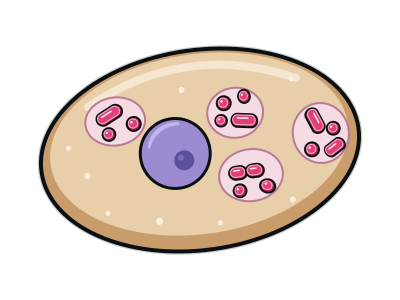
- WolbachiaLives inside the cells of most insect species, controls how they breed, and now helps stop dengue mosquitoes.
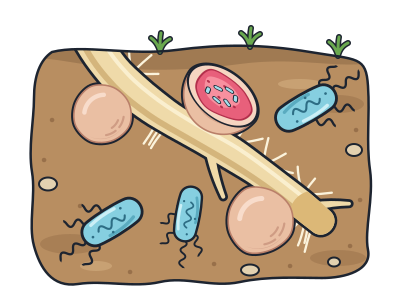
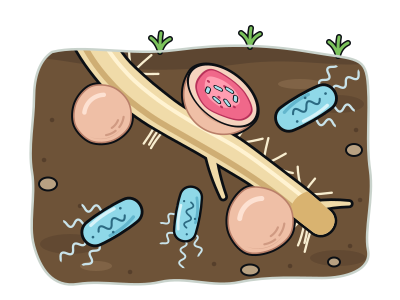
- Root-nodule bacteriumMoves into pea and bean roots and pulls nitrogen from the air, feeding the plant like free fertiliser.
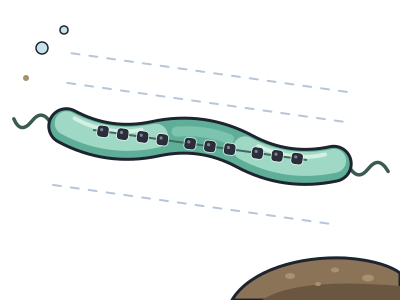
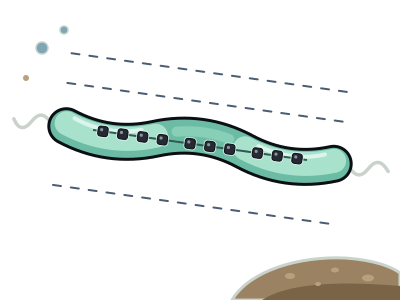
- Magnet bacteriumBuilds a chain of tiny magnets inside its body and uses it like a compass to swim along Earth's field.
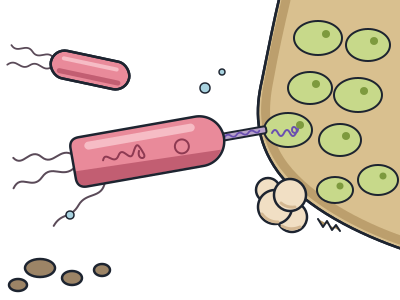
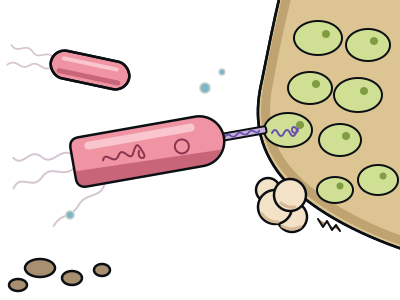
- Crown gall bacteriumNature's genetic engineer: it slips its own genes into plants, a trick scientists borrowed to breed crops.
- Vinegar bacteriumBreathes on wine and cider, turning their alcohol into the sharp acid that makes vinegar.
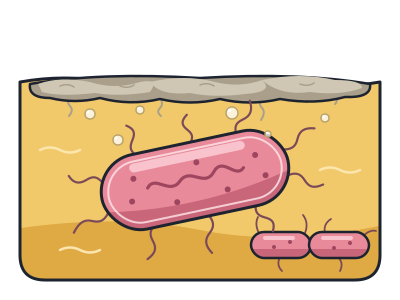
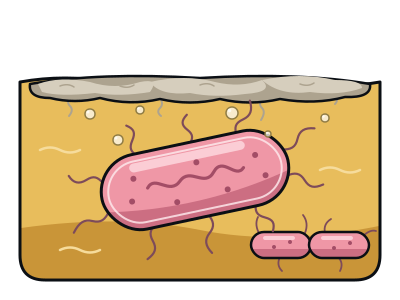
- Kombucha bacteriumSpins pure cellulose threads into the rubbery mat floating on kombucha and the jelly cubes of nata de coco.