A species
Magnet bacterium
Magnetospirillum magneticum
A pond microbe that builds its own compass needle.
You and the magnet bacterium meet in the All life branch, shown at about 4.2 billion years ago (on 1 January, in a calendar from life's shared ancestor to today).
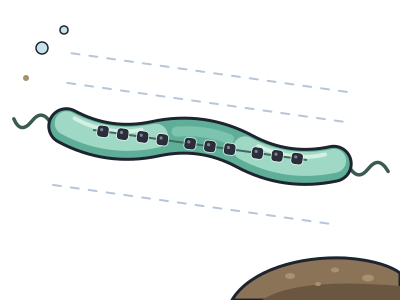
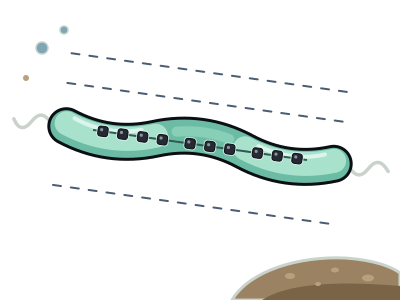
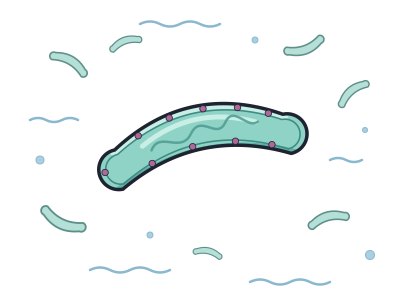
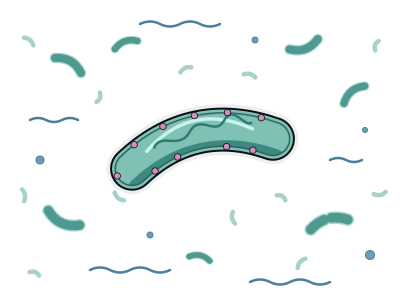
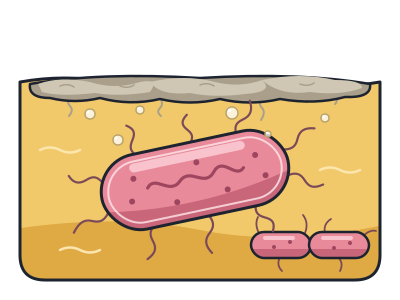
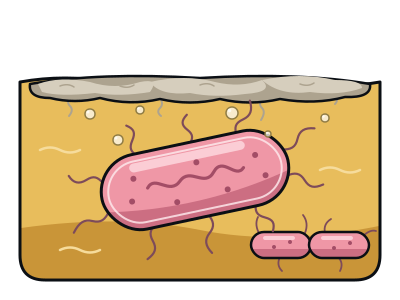
This tiny pond microbe carries its own compass. Inside its corkscrew-shaped body, it builds a neat row of a dozen or more tiny magnet crystals. Lined up, they add together into one magnetic needle. That needle swings the cell into line with Earth's magnetic field, and it swims along the field lines.
It does not pick up its magnets from the mud. It makes them itself from iron dissolved in the water. First it folds its inner skin into tiny empty bags. Then it fills each bag with a crystal of magnetite, a magnetic kind of iron. A thin protein thread helps hold the bags in a straight, evenly spaced chain.
Why bother? It lives in pond mud, where water with plenty of oxygen meets water with very little, and it prefers only a little oxygen. Following the field turns a search in every direction into a simple choice: up or down.
It has surprising relatives. It belongs to the same big group of bacteria as Wolbachia and the root-nodule bacterium. The mitochondria that power our own cells are thought to come from an ancient bacterium that belonged to this group or was a close relative of it.
Dead cells still point
Its magnets are built in, so the pull works on its own. Even dead cells swing into line with a magnetic field, just like a compass needle.
Found by accident
Magnet bacteria were first described in 1963. A scientist found them again in 1975 while looking for a different microbe in marsh mud, when he noticed them crowding to the side of a dish nearest a bar magnet.
Magnets ready in hours
In lab tests, when cells that had been kept without iron are given some, small crystals start to appear inside them within about 2 hours.
Next to it on the tree
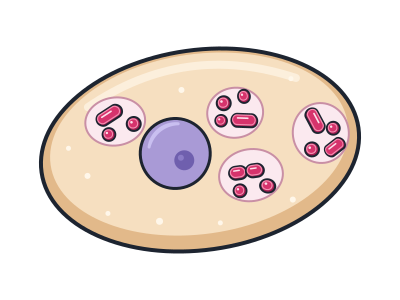
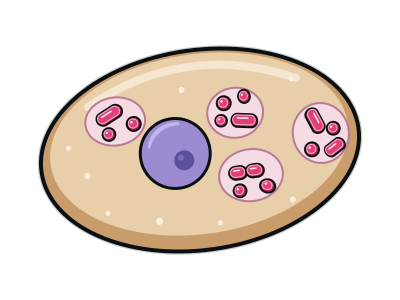
- WolbachiaLives inside the cells of most insect species, controls how they breed, and now helps stop dengue mosquitoes.
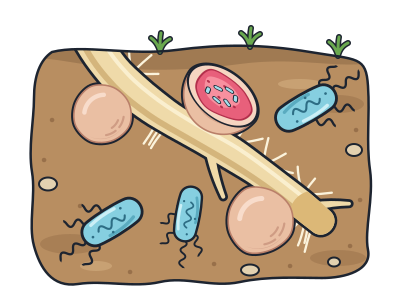
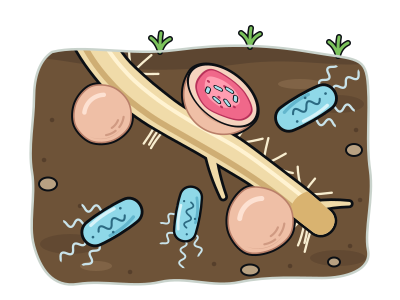
- Root-nodule bacteriumMoves into pea and bean roots and pulls nitrogen from the air, feeding the plant like free fertiliser.
- SAR11Possibly the most abundant living thing on Earth: tiny, thrifty cells filling every ocean.
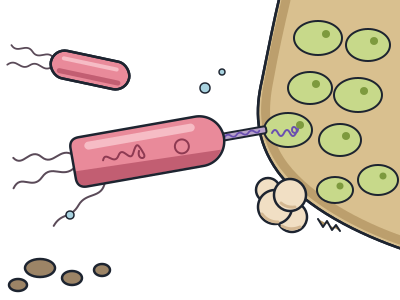
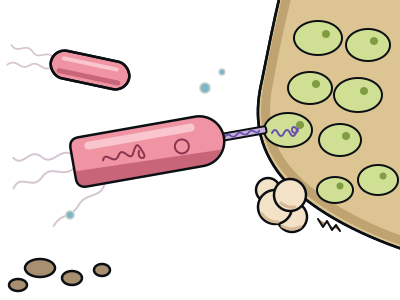
- Crown gall bacteriumNature's genetic engineer: it slips its own genes into plants, a trick scientists borrowed to breed crops.
- Vinegar bacteriumBreathes on wine and cider, turning their alcohol into the sharp acid that makes vinegar.
- Kombucha bacteriumSpins pure cellulose threads into the rubbery mat floating on kombucha and the jelly cubes of nata de coco.