A species
Vinegar bacterium
Acetobacter aceti
The tiny microbe that turns wine and cider into vinegar
You and the vinegar bacterium meet in the All life branch, shown at about 4.2 billion years ago (on 1 January, in a calendar from life's shared ancestor to today).
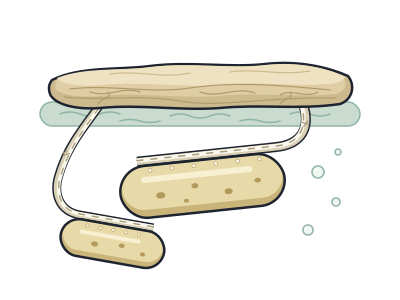
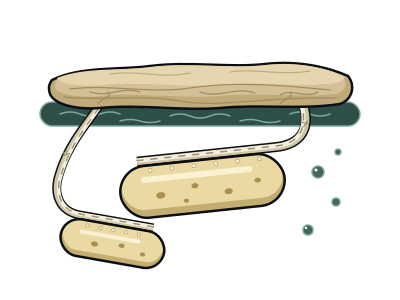
Leave a bottle of wine or cider open for a few weeks and it may turn sour. Often, bacteria like this one are at work. The vinegar bacterium uses oxygen from the air to turn the alcohol in the drink into acetic acid, the sharp-tasting acid in vinegar. It works in two steps: first it turns the alcohol into a chemical called acetaldehyde, then it turns that into acid.
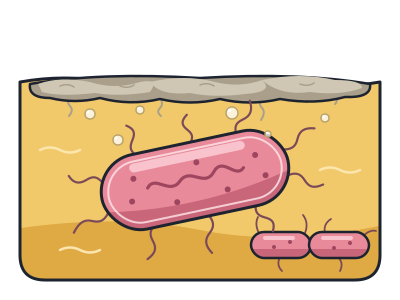
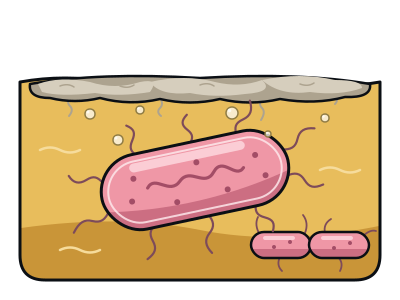
Because it needs oxygen, it grows at the top of the liquid, where the air can reach it. There, huge numbers of these bacteria, together with yeast and a stringy material called cellulose, can form a slimy grey film known as the 'mother of vinegar'. It looks odd, but it is harmless. People even add it to new batches to make vinegar faster.
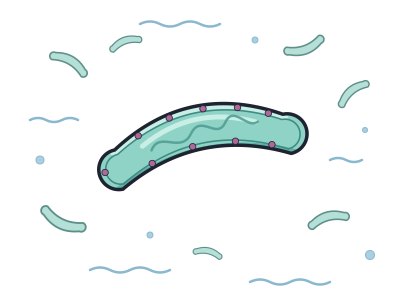
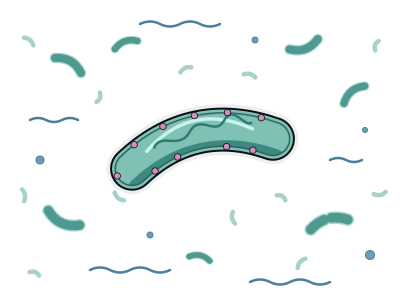
Each cell is a tiny rod. Somewhere between 20 and 100 could fit side by side across a human hair. In the wild it lives in sugary places such as flowers, fruit and honey, and also in water and soil. It likes warmth best, at about 25 to 30 °C.
Among its neighbours on the tree, it shares a family with the kombucha bacterium. It also belongs to the same large group of bacteria as the root-nodule bacterium and Wolbachia.
Acid on the inside too
Most acid-loving microbes pump acid out to keep their insides close to neutral. The vinegar bacterium lets the inside of its cell turn acidic instead, so nearly all of its proteins have evolved to work in acid.
Hitching a ride
In nature, vinegar bacteria are carried from place to place by fruit flies and by tiny worms called 'vinegar eels'.
Once mistaken for a fungus
The vinegar-making film was named in 1822 and was thought to be a fungus. In the 1860s Louis Pasteur showed that a living organism was what turned alcohol into vinegar.
Next to it on the tree
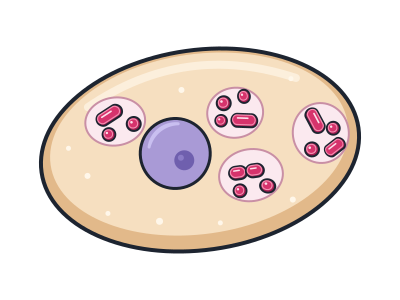
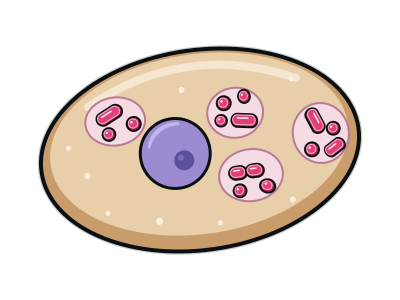
- WolbachiaLives inside the cells of most insect species, controls how they breed, and now helps stop dengue mosquitoes.
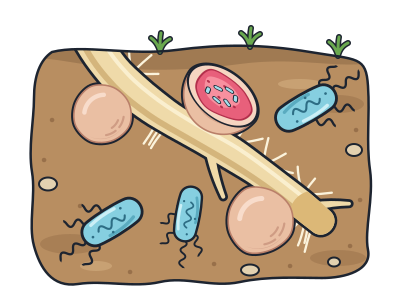
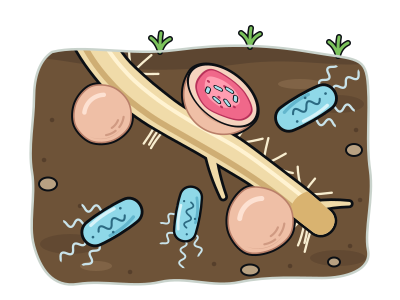
- Root-nodule bacteriumMoves into pea and bean roots and pulls nitrogen from the air, feeding the plant like free fertiliser.
- SAR11Possibly the most abundant living thing on Earth: tiny, thrifty cells filling every ocean.
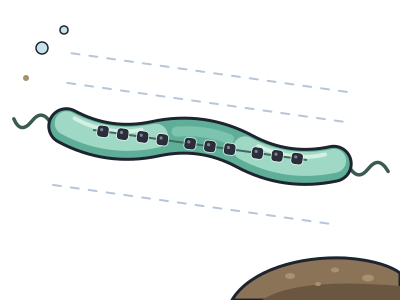
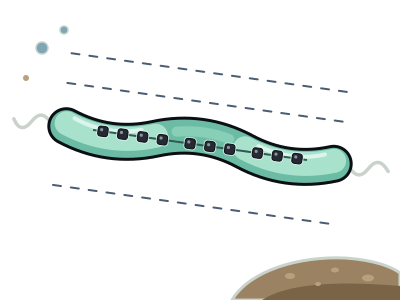
- Magnet bacteriumBuilds a chain of tiny magnets inside its body and uses it like a compass to swim along Earth's field.
- Crown gall bacteriumNature's genetic engineer: it slips its own genes into plants, a trick scientists borrowed to breed crops.
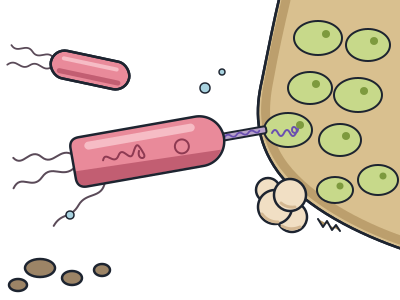
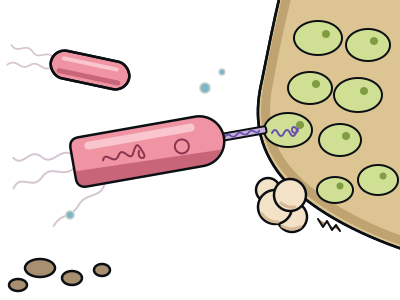
- Kombucha bacteriumSpins pure cellulose threads into the rubbery mat floating on kombucha and the jelly cubes of nata de coco.