A group of living things
Gammaproteobacteria
Gammaproteobacteria
E. coli's huge family: gut regulars, glowing sea partners, famous germs and a giant
This branch is shown at about 1.3 billion years ago; its age is a rough estimate.
You and gammaproteobacteria meet in the All life branch, shown at about 4.2 billion years ago (on 1 January, in a calendar from life's shared ancestor to today).
Right now, bacteria from this family are living quietly in your gut. The best-known member is E. coli. Most kinds of E. coli are harmless and belong in the healthy intestines of people and animals. Yet the same family also includes bacteria that glow, a few famous germs and the largest bacterium ever found.
Take the glowing squid partner. It lives inside a special light organ of the Hawaiian bobtail squid. At night, its glow hides the squid's shadow from hunters below. In return, the bacteria get food and shelter.
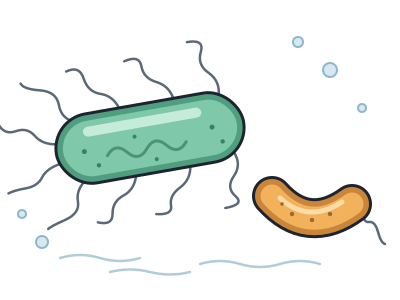
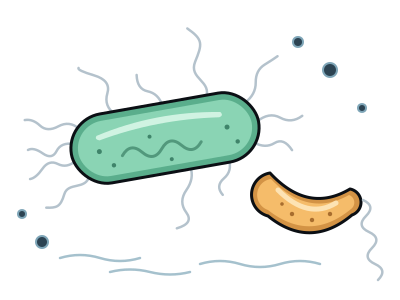
Some relatives are less friendly. The family includes the germs behind cholera and plague, and Salmonella, a common cause of food poisoning. Many others are harmless and live in soil, fresh water or the sea. Some can even break down oil, so they help clean up oil spills. Members come in many shapes: straight rods, curved rods, balls, spirals and long threads.
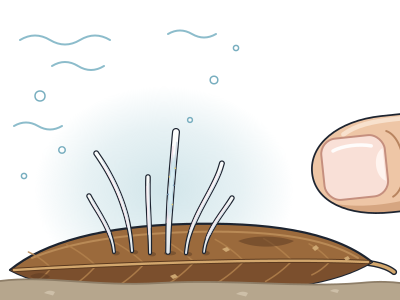
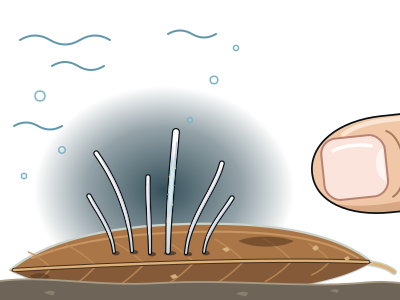
Then there is the giant. First spotted in 2009 on sunken leaves in a Caribbean mangrove swamp, it is a single cell that can grow up to about 2 centimetres long, like a white eyelash. That is about 5,000 times bigger than a typical bacterium, and you can see it without a microscope.
DNA in little pouches
The giant bacterium keeps its DNA inside small pouches called pepins, named after fruit seeds. It holds hundreds of thousands of copies of its full set of genes, which is very unusual for a bacterium.
A morning clear-out
Each morning the bobtail squid pushes out about 90% or more of the glowing bacteria in its light organ. The ones left behind multiply during the day and fill it up again before night.
All over the ocean
Somewhere between about 6 and 20 out of every 100 bacteria drifting in the ocean belong to this family.
Inside gammaproteobacteria
- E. coliLives quietly in your gut; also the lab workhorse behind insulin production.
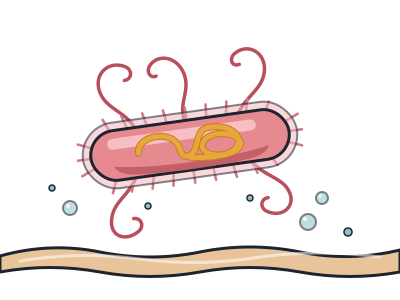
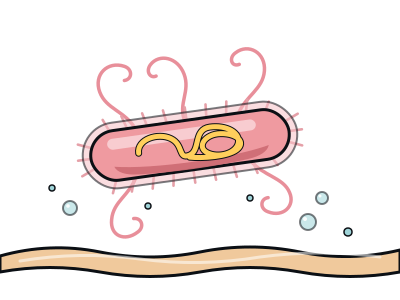
- Glowing squid partnerGlows only when enough of its friends are nearby, lighting up the Hawaiian bobtail squid like a moonlit shadow.
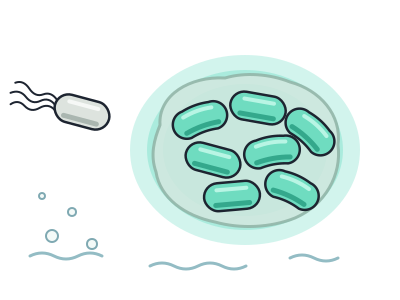
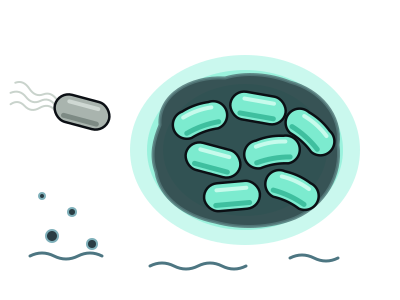
- SalmonellaA close cousin of E. coli that causes food poisoning, which is why we cook eggs and chicken well.
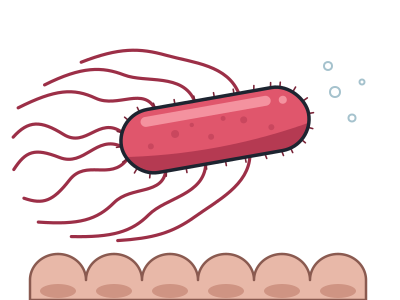
- Cholera bacteriumA comma-shaped water microbe; mapping its outbreaks in 1854 London helped invent public health.
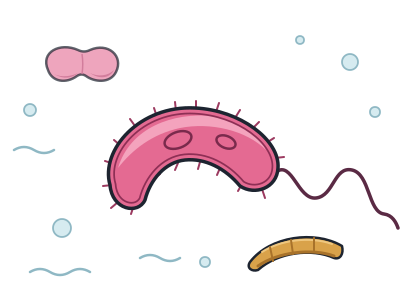
- Plague bacteriumBehind the Black Death; spread by rat fleas, it is now rare and treatable with antibiotics.
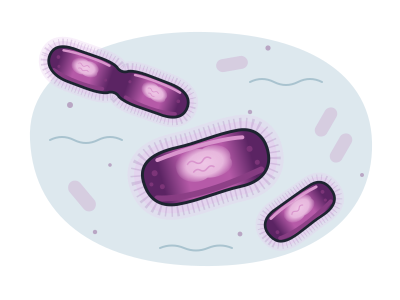
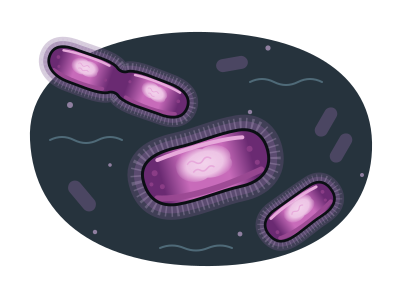
- Giant bacteriumA single bacterial cell up to 2 cm long, visible to the naked eye, found in Caribbean mangroves.
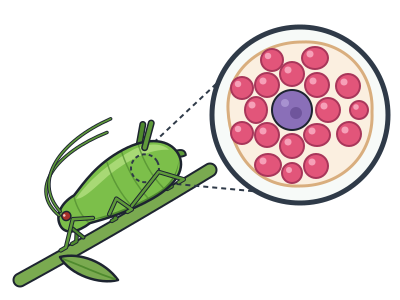
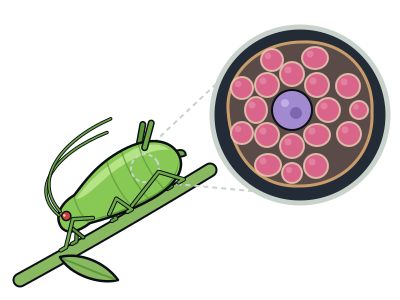
- Aphid partner bacteriumLives only inside aphid cells, making nutrients missing from plant sap, a partnership over 150 million years old.