A species
Cholera bacterium
Vibrio cholerae
A comma-shaped water microbe whose deadly outbreaks taught cities to clean up their water.
You and the cholera bacterium meet in the All life branch, shown at about 4.2 billion years ago (on 1 January, in a calendar from life's shared ancestor to today).
In 1854, cholera killed about 420 people in Soho, London, near a water pump on Broad Street. Most doctors then blamed 'bad air'. A doctor named John Snow marked each death as a dot on a map, and the dots clustered around the pump. At first, people brushed aside his idea that cholera spread through dirty water. Today his map is remembered as an early step in public health.
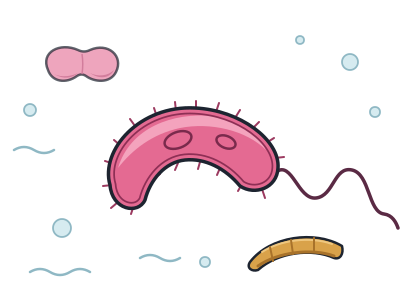
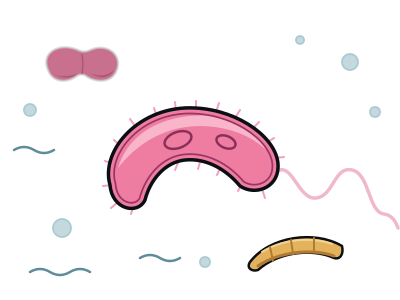
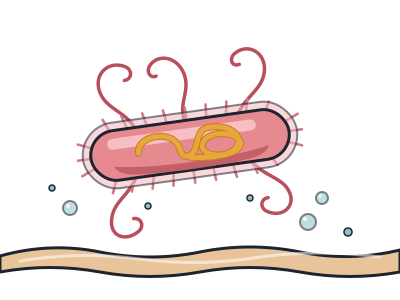
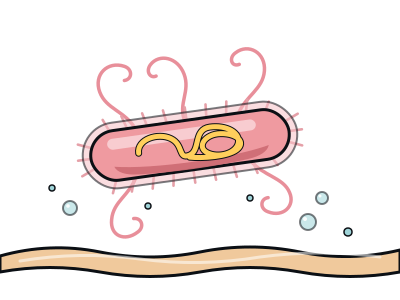
The microbe behind it is a single curved cell, shaped like a comma, far too small to see without a microscope. It swims using one whip-like tail. Its natural home is brackish and salty coastal water. There it clings to the shells of crabs and shrimp, and to copepods, which are tiny shrimp-like animals.
It belongs to a large group of bacteria that also includes E. coli, Salmonella and the plague bacterium. Of the microbes shown beside it here, its closest relative is the glowing squid partner. That microbe was once in the same genus as the cholera bacterium, and the two are still in the same family.
Cholera still spreads through water or food dirtied by faeces. Only about 1 in 10 infected people become seriously ill. Most of them can be treated with a simple drink of water mixed with salts and sugar.
Poison borrowed from a virus
The genes for the cholera toxin did not start out in the bacterium. A virus that infects bacteria carried them in and inserted them into the bacterium's DNA.
Saved by a sari
In Bangladesh in 2003, a study found that filtering pond and river water through folded old sari cloth cut cholera in villages. The cloth strained out the tiny animals that carry the bacteria.
Two sets of instructions
Most bacteria keep their main DNA in one loop. This one splits it across two loops, which hold about 3,900 genes in total.
Next to it on the tree
- E. coliLives quietly in your gut; also the lab workhorse behind insulin production.
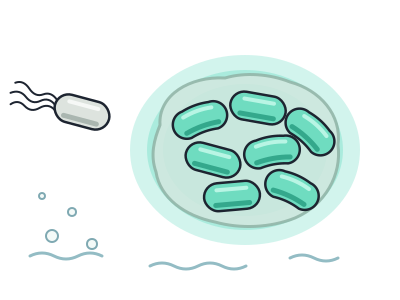
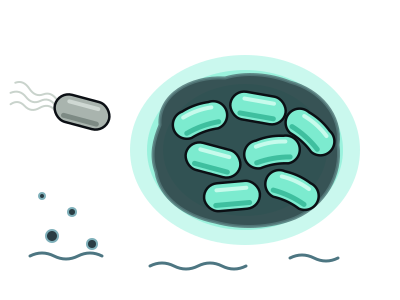
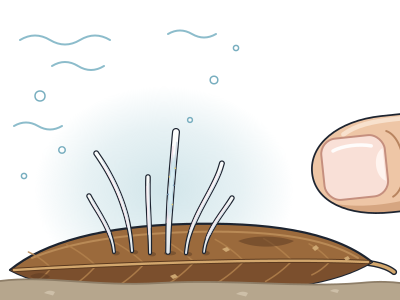
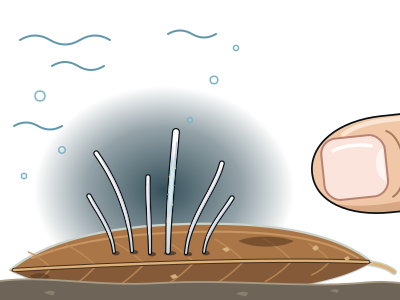
- Glowing squid partnerGlows only when enough of its friends are nearby, lighting up the Hawaiian bobtail squid like a moonlit shadow.
- SalmonellaA close cousin of E. coli that causes food poisoning, which is why we cook eggs and chicken well.
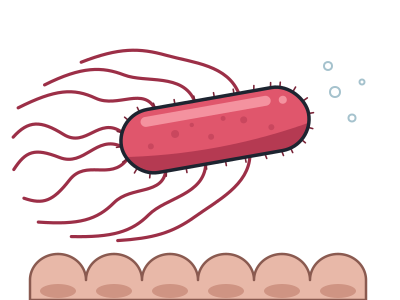
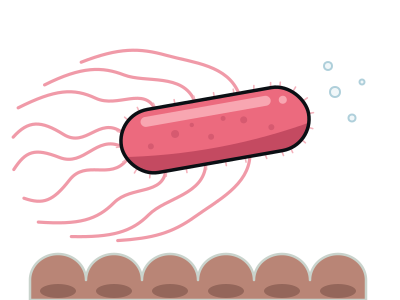
- Plague bacteriumBehind the Black Death; spread by rat fleas, it is now rare and treatable with antibiotics.
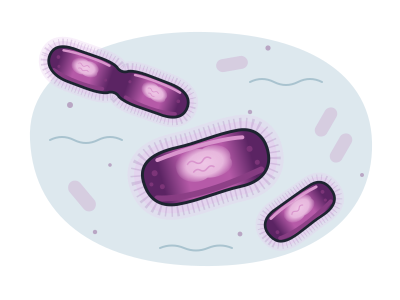
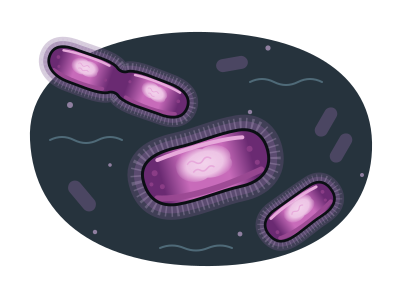
- Giant bacteriumA single bacterial cell up to 2 cm long, visible to the naked eye, found in Caribbean mangroves.
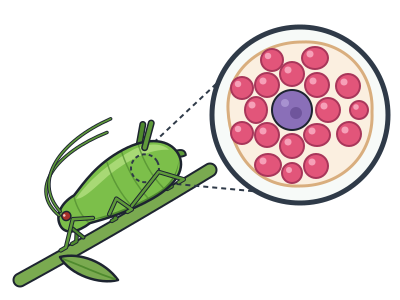
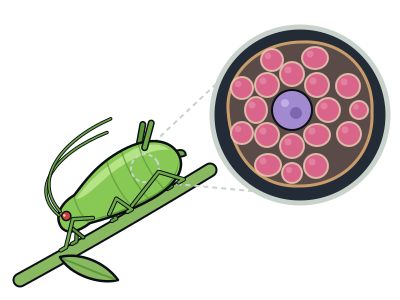
- Aphid partner bacteriumLives only inside aphid cells, making nutrients missing from plant sap, a partnership over 150 million years old.