A species
Glowing squid partner
Aliivibrio fischeri
A tiny sea bacterium that only glows in a crowd, and helps a little squid hide its shadow.
You and the glowing squid partner meet in the All life branch, shown at about 4.2 billion years ago (on 1 January, in a calendar from life's shared ancestor to today).
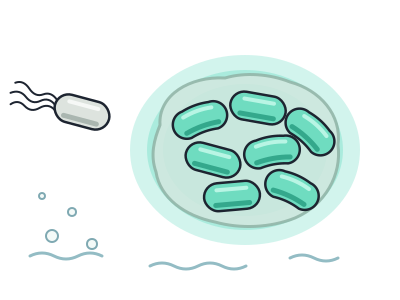
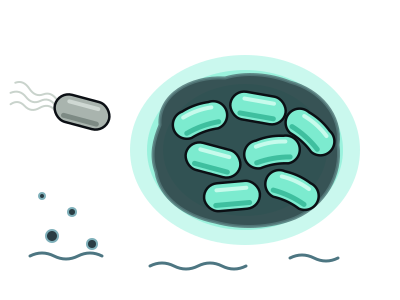
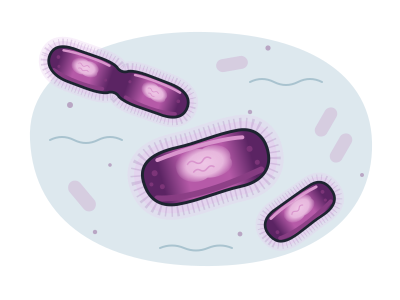
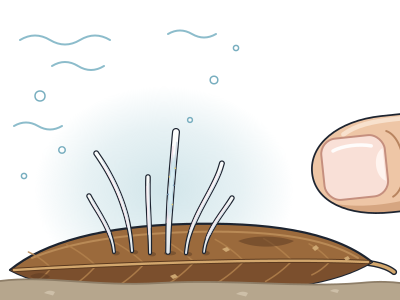
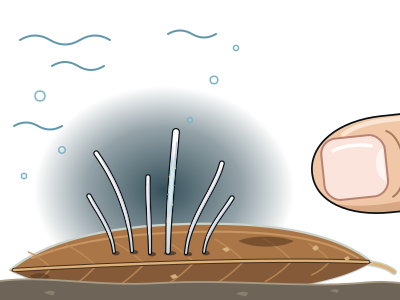
This tiny sea bacterium glows brightly only when enough of its kind are crowded close by. Each cell gives off a chemical signal. When lots of cells are packed together, the signal builds up and switches on a soft blue-green light. This head-counting is called quorum sensing, and scientists first discovered it in this bacterium.
Its best-known home is inside the Hawaiian bobtail squid, whose body is only about 3 cm long. The squid hides in the sand by day and hunts shrimp at night. The bacteria in its light organ shine downwards to match the moonlight and starlight from above. This makes the squid's shadow very hard for a predator looking up to spot. In return, the bacteria get a safe home with plenty of food.
Surprisingly, this helpful glow-maker is a relative of the cholera bacterium, and it sits near E. coli and Salmonella on the tree of life. Unlike cholera, it is harmless to people.
Baby squid hatch with no bacteria at all. They catch them from the seawater using sticky mucus. Every morning at dawn, the squid squirts out about 90 to 95% of its bacteria. The ones left behind multiply during the day, and by nightfall there are enough of them to glow again.
An old name
It was given its name in 1889 in honour of Bernhard Fischer, a German scientist who studied microbes.
Squid in space
In June 2021, NASA sent newly hatched bobtail squid to the International Space Station. The glowing bacteria were added in orbit to study how weightlessness affects friendly microbes and their animal hosts.
Brighter at home
The kind that usually lives in the bobtail squid is much dimmer in a lab flask. Inside the squid's light organ, the same bacteria glow about 1,000 times more brightly.
Next to it on the tree
- E. coliLives quietly in your gut; also the lab workhorse behind insulin production.
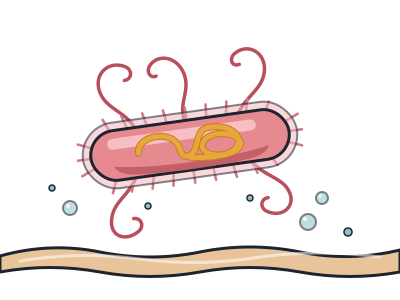
- SalmonellaA close cousin of E. coli that causes food poisoning, which is why we cook eggs and chicken well.
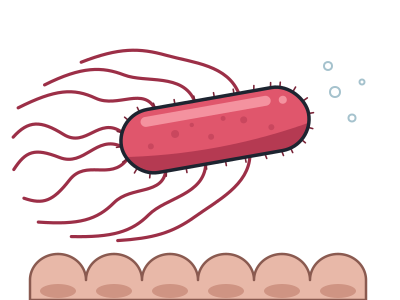
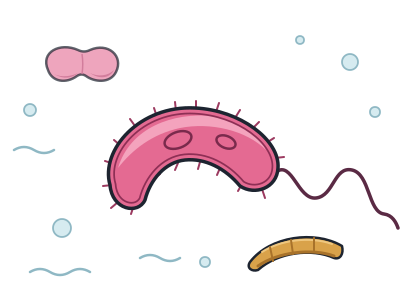
- Cholera bacteriumA comma-shaped water microbe; mapping its outbreaks in 1854 London helped invent public health.
- Plague bacteriumBehind the Black Death; spread by rat fleas, it is now rare and treatable with antibiotics.
- Giant bacteriumA single bacterial cell up to 2 cm long, visible to the naked eye, found in Caribbean mangroves.
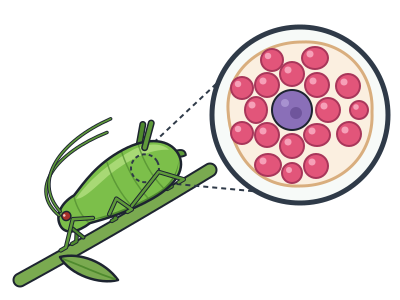
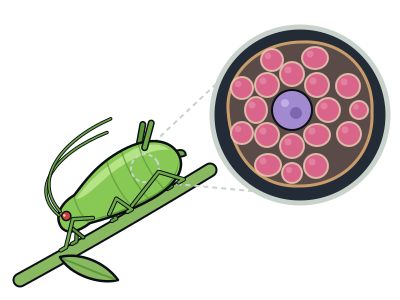
- Aphid partner bacteriumLives only inside aphid cells, making nutrients missing from plant sap, a partnership over 150 million years old.