A species
Plague bacterium
Yersinia pestis
The tiny germ behind the Black Death, now rare and curable
You and the plague bacterium meet in the All life branch, shown at about 4.2 billion years ago (on 1 January, in a calendar from life's shared ancestor to today).
This tiny bacterium caused the Black Death. Between 1347 and 1351, the Black Death killed an estimated 30 to 50 per cent of the people in Europe in about five years. Scientists confirmed that this bacterium was the cause by reading its genetic code from the teeth of victims buried in a London plague cemetery.
Its family story is surprising. It evolved from a much milder gut bacterium that usually causes nothing worse than a stomach upset. The two are very close relatives but cause very different illnesses. On the tree of life it sits in the same big branch of bacteria as E. coli and Salmonella.
People catch plague mainly from the bites of infected fleas. The classic carrier is the oriental rat flea, a small brown insect about 2 to 4 millimetres long. Inside a flea, the bacteria can form a sticky mat that blocks its gut. The hungry flea keeps biting and pushes bacteria into the bite.
Plague is rare today, but it has not disappeared. Between 2019 and 2025, most cases reported to the World Health Organization came from the Democratic Republic of the Congo and Madagascar. Without treatment it is very dangerous. But antibiotics work very well if they are given early.
Named after its discoverer
A Swiss-French doctor called Alexandre Yersin identified the bacterium in 1894, during a plague outbreak in Hong Kong. A Japanese scientist, Kitasato Shibasaburō, was studying it there at the same time. The bacterium is named after Yersin.
Not just rats
More than 200 kinds of rodent can carry plague. They include marmots, prairie dogs and gerbils.
The safety-pin look
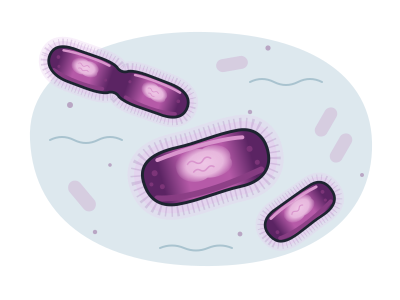
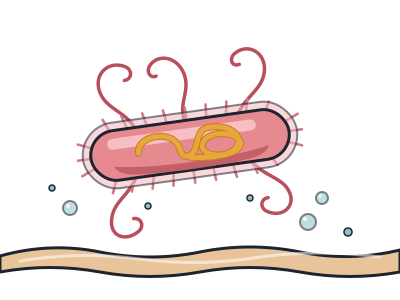
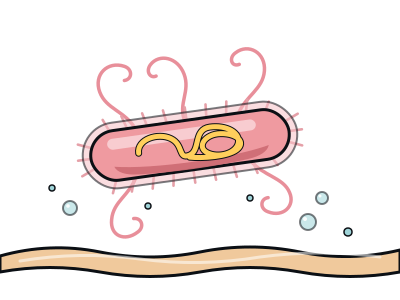
With certain stains used for the microscope, both ends of the bacterium go dark and the middle stays pale. This makes it look a bit like a safety pin.
Next to it on the tree
- E. coliLives quietly in your gut; also the lab workhorse behind insulin production.
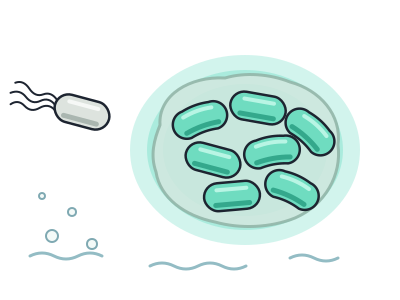
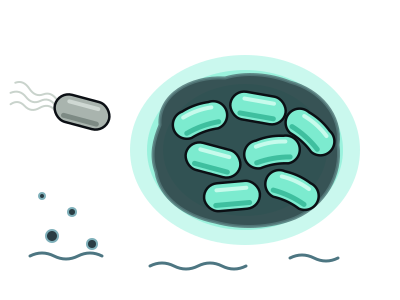
- Glowing squid partnerGlows only when enough of its friends are nearby, lighting up the Hawaiian bobtail squid like a moonlit shadow.
- SalmonellaA close cousin of E. coli that causes food poisoning, which is why we cook eggs and chicken well.
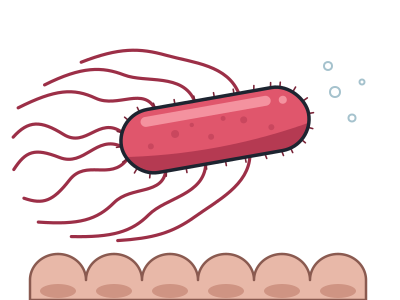
- Cholera bacteriumA comma-shaped water microbe; mapping its outbreaks in 1854 London helped invent public health.
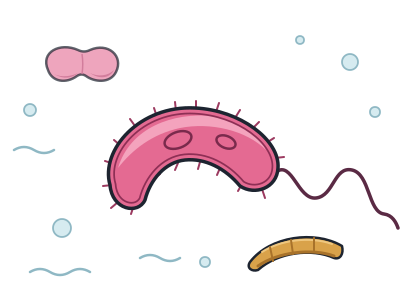
- Giant bacteriumA single bacterial cell up to 2 cm long, visible to the naked eye, found in Caribbean mangroves.
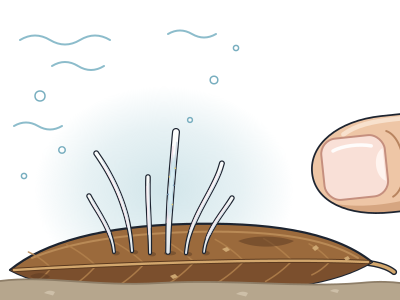
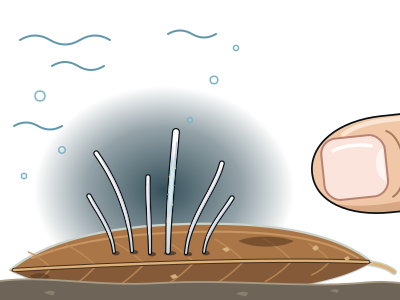
- Aphid partner bacteriumLives only inside aphid cells, making nutrients missing from plant sap, a partnership over 150 million years old.