A species
Giant bacterium
Thiomargarita magnifica
A single bacterial cell big enough to see with your own eyes.
You and the giant bacterium meet in the All life branch, shown at about 4.2 billion years ago (on 1 January, in a calendar from life's shared ancestor to today).
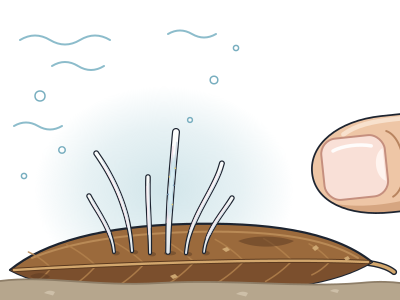
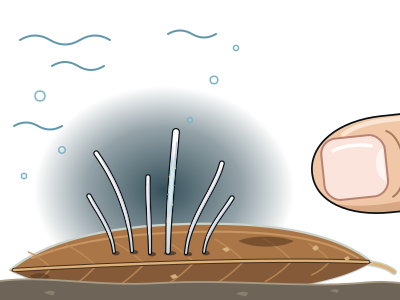
Most bacteria are far too small to see. This one is a single cell up to about 2 cm long, about the size and shape of an eyelash. You can spot it without a microscope. It looks like thin white threads in the mangrove swamps of Guadeloupe, in the Caribbean. An average cell is about 1 cm long, roughly 5,000 times bigger than most bacteria.
Surprisingly, it belongs to the same broad group of bacteria as E. coli, Salmonella and the bacteria that cause cholera and plague. All of those are microscopic. This giant often grows on sunken, rotting mangrove leaves. It makes its own food without sunlight, using energy from sulfur chemicals in the mud to turn carbon dioxide into food.
How can one cell grow so big? A huge water-filled sac takes up about three-quarters of it. The living part is just a thin layer around the edge, a few thousandths of a millimetre thick. Unusually for a bacterium, it keeps its DNA inside tiny wrapped packets called pepins. The name comes from the French word for pips, the small seeds in fruit.
Mistaken identity
It was first found in 2009. At first the team thought it was something more complex than a bacterium, such as a fungus. It was not formally described until 2022.
Budding babies
Most bacteria split in half to reproduce. This one grows small daughter cells that pinch off the tip of the thread and drift away.
Record smasher
It is about 50 times longer than any giant bacterium known before it. Its closest known relative averages only about 0.18 mm long.
Next to it on the tree
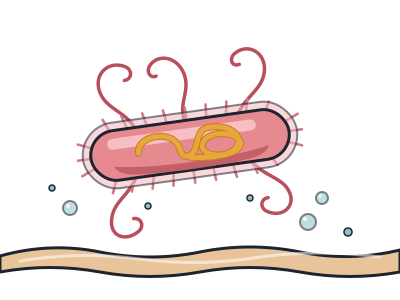
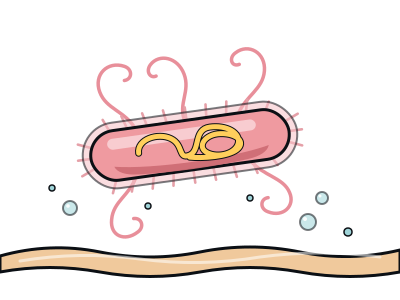
- E. coliLives quietly in your gut; also the lab workhorse behind insulin production.
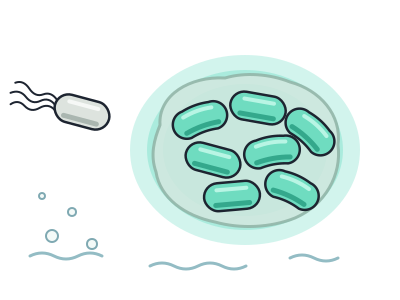
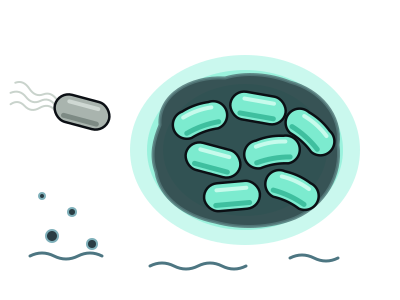
- Glowing squid partnerGlows only when enough of its friends are nearby, lighting up the Hawaiian bobtail squid like a moonlit shadow.
- SalmonellaA close cousin of E. coli that causes food poisoning, which is why we cook eggs and chicken well.
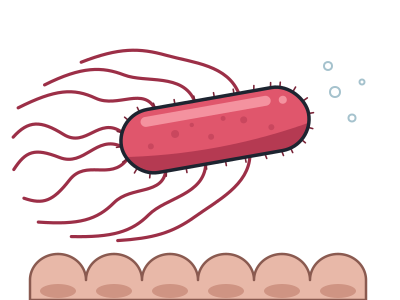
- Cholera bacteriumA comma-shaped water microbe; mapping its outbreaks in 1854 London helped invent public health.
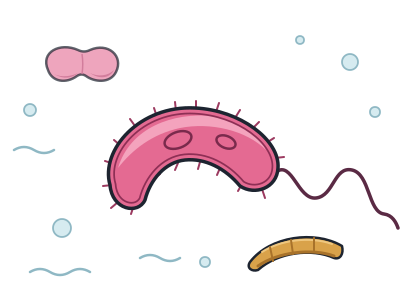
- Plague bacteriumBehind the Black Death; spread by rat fleas, it is now rare and treatable with antibiotics.
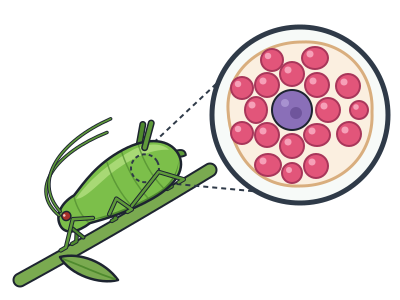
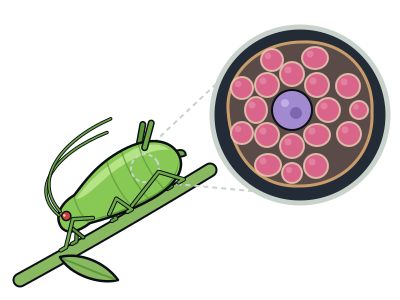
- Aphid partner bacteriumLives only inside aphid cells, making nutrients missing from plant sap, a partnership over 150 million years old.