A species
Salmonella
Salmonella enterica
E. coli's troublemaking cousin, and the reason we cook eggs and chicken well
You and the salmonella meet in the All life branch, shown at about 4.2 billion years ago (on 1 January, in a calendar from life's shared ancestor to today).
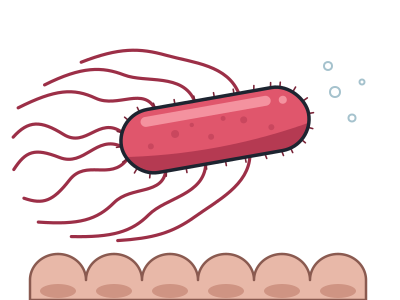
Salmonella is a close cousin of E. coli, the well-known gut bacterium. The two belong to the same bacterial family and look very alike. Both are tiny rods of about the same size and shape. Salmonella, though, is famous for causing food poisoning. It is the reason we are told to cook eggs and chicken properly.
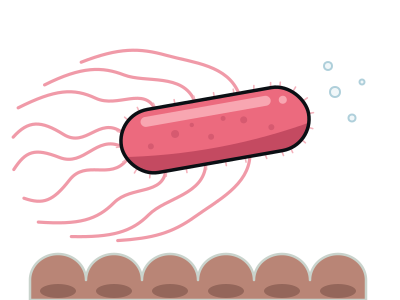
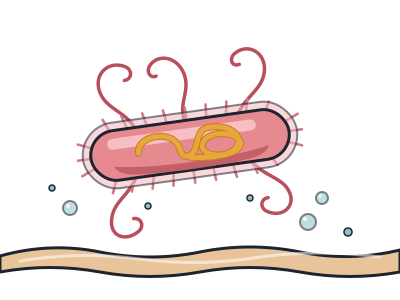
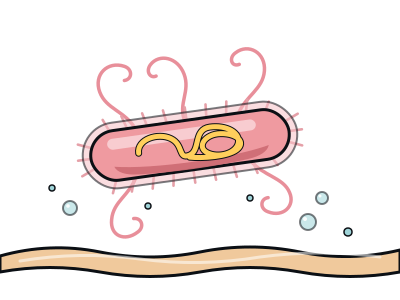
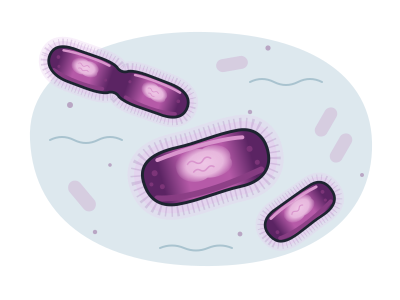
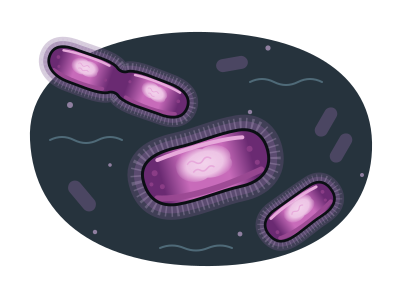
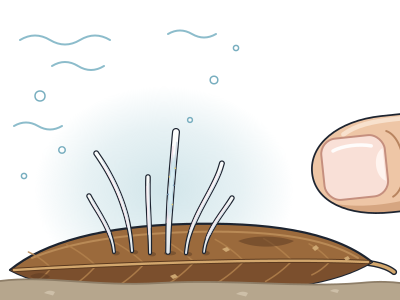
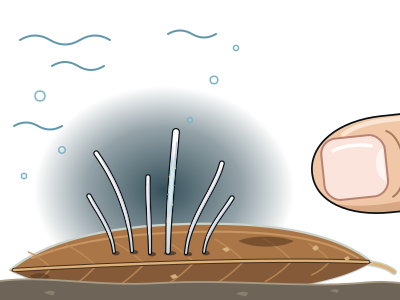
Each cell is shaped like a tiny jellybean. Most kinds are covered all over in long, whip-like tails. These spin together to push the cell through liquid. About 200 to 500 cells would fit in a row across one millimetre. It mainly lives in the guts of animals and people. Chickens, cattle, pigs and pets can all carry it.
People mostly catch it from food that comes from animals, such as eggs, chicken, meat and milk. Fresh eggs can even carry it inside a clean, uncracked shell. Fever, tummy pain, diarrhoea and feeling sick usually start about half a day to a day and a half after eating, but can take up to 3 days. They last about 2 to 7 days. Young children, older adults, pregnant women and people with weak immune systems can become seriously ill.
The good news is that heat kills it. Cooking food until the centre reaches about 71°C destroys it. Freezing does not reliably kill it.
Not named after a fish
Its name comes from an American vet, Daniel Elmer Salmon. His colleague Theobald Smith actually discovered it in 1885.
One species, many faces
This single species has more than 2,500 varieties. One of them causes typhoid fever, which spreads through unsafe food and water and causes about 9 million cases a year worldwide.
A rotten-egg giveaway
Most kinds make hydrogen sulfide, the gas behind the smell of rotten eggs. In the lab this turns their colonies black on special plates, which helps scientists spot them.
Next to it on the tree
- E. coliLives quietly in your gut; also the lab workhorse behind insulin production.
- Glowing squid partnerGlows only when enough of its friends are nearby, lighting up the Hawaiian bobtail squid like a moonlit shadow.
- Cholera bacteriumA comma-shaped water microbe; mapping its outbreaks in 1854 London helped invent public health.
- Plague bacteriumBehind the Black Death; spread by rat fleas, it is now rare and treatable with antibiotics.
- Giant bacteriumA single bacterial cell up to 2 cm long, visible to the naked eye, found in Caribbean mangroves.
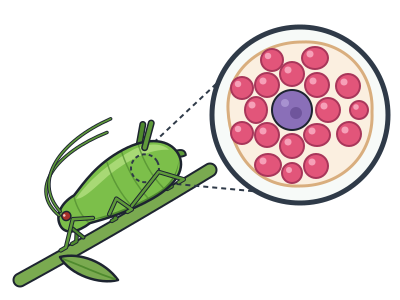
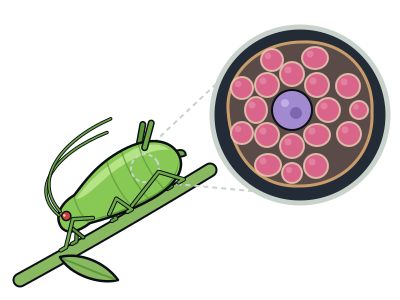
- Aphid partner bacteriumLives only inside aphid cells, making nutrients missing from plant sap, a partnership over 150 million years old.